Andor: One Way Out
Everyone has their own rebellion, sure. But each of those rebellions have their own costs. And dear or not, those costs must be paid.

"Announcement", "Narkina 5", "Nobody's Listening", "One Way Out"
Spoiler Alert: Spoilers for Episodes 7-10 of season one of Andor ahead! There shouldn’t be any spoilers from later on in the series, but there will be spoilers of other Star Wars movies and TV shows, so consider yourself warned about any Prequel or Original Trilogy (and one very minor Heir to the Empire) spoilers!
"Oppression breeds Rebellion" - Luthen Rael, "Narkina 5"
The Aldhani Heist was a big deal, and the consequences of it were immediate for both the Empire and the Rebels. For the Imperial Security Bureau (ISB), it ushered in sweeping new powers. The most significant, at least for us, was the passage of the Public Order Resentencing Directive (PORD). This allowed the Empire to lengthen sentences for any crime, while also extending existing sentences.
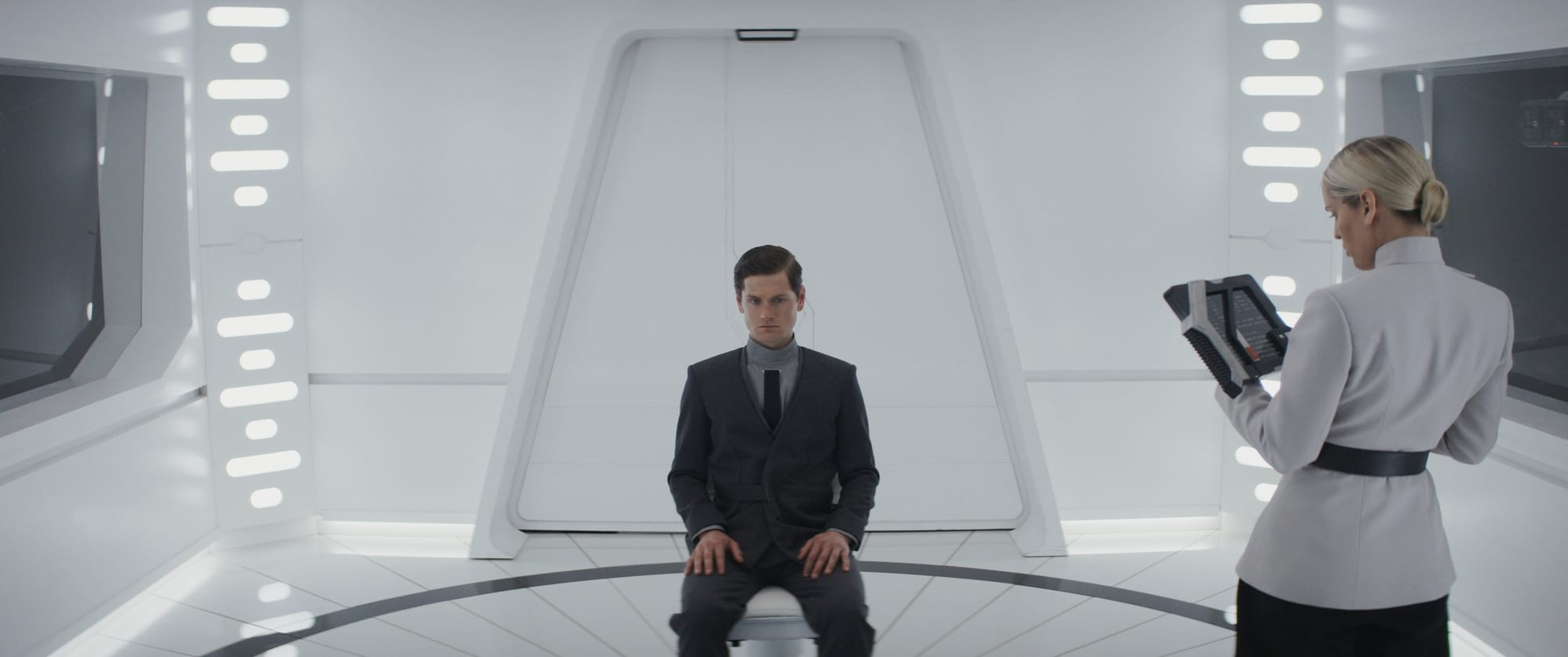
For Lt. Inspector Dedra Meero (Denise Gough), this was a moment of opportunity. With her bountiful ambition and ceaseless work ethic, she impressed upon Major Partagaz (Anton Lesser) and Colonel Yularen (Malcom Sinclair) that she found a possible connection between Aldhani and a string of robberies of Imperial equipment throughout the galaxy. Her reward was taking over control of the Morlana sector. Which included Ferrix, home to Maarva Andor (Fiona Shaw), Bix Caleen (Adria Arjona), and, of course, Cassian Andor (Diego Luna). Her hunt for “Axis” was on.
Along the way to Ferrix, Dedra came into contact with Syril Karn (Kyle Soller). He’s employed again, this time with the Bureau of Standards, courtesy of Uncle Harlo. The job is about as exciting as it sounds. But the new job isn’t enough; he just can’t quit obsessing over Cassian. He sees Cassian as the criminal that got away, and his need to exact revenge and redeem himself and become the great hero cop, defender of Imperial Justice and Order, is too much. He is able to help Dedra with her work, but she doesn’t have any use for him beyond that. At least not for now. But getting back in favor with the ISB does get him a promotion. His mom Eedy (Kathryn Hunter) must be so proud.
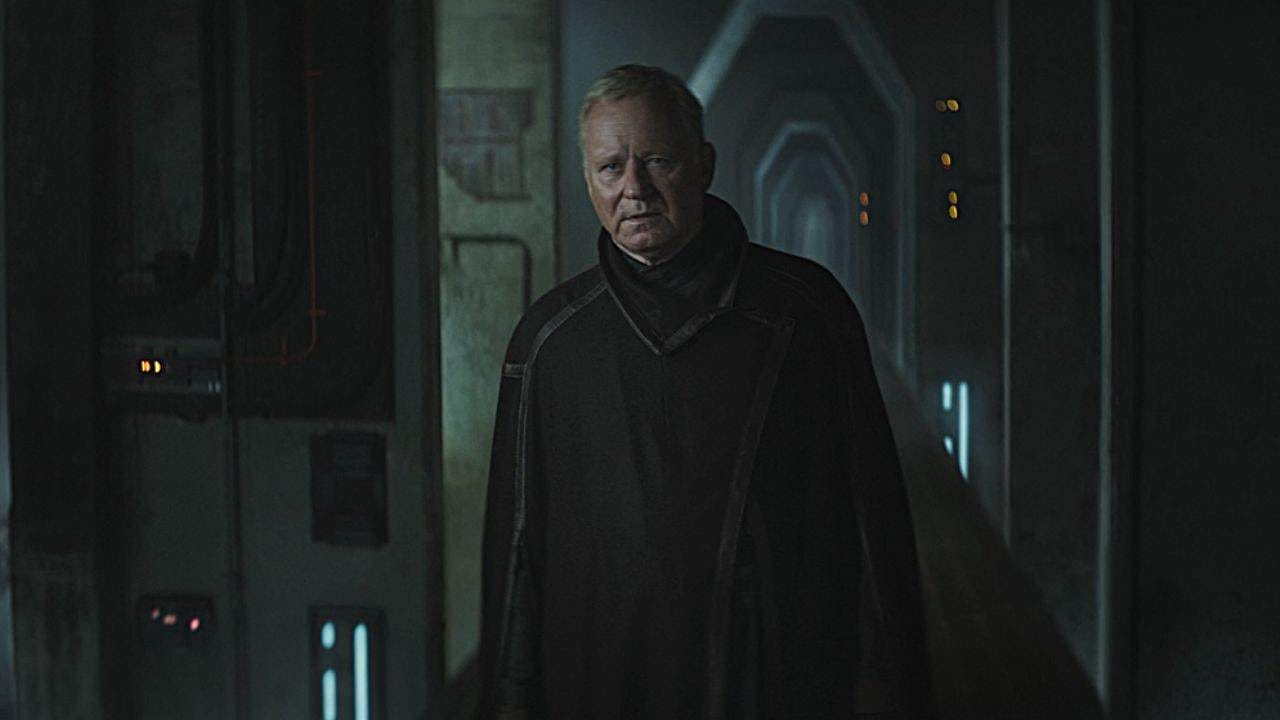
But enough about our Imperials, what of the Rebels? Are they celebrating the great heist of Aldhani and taking a much needed break? Not hardly. Vel Sartha (Faye Marsay) and Cinta Kaz (Varada Sethu) are back on the job almost immediately, as they have a loose end to tie up. You see, Cassian has seen Luthen Rael’s (Stellan Skarsgård) face. As Cassian did not join the Rebels after Aldhani, he is a liability. They must find him and kill him. This brings no one any joy.
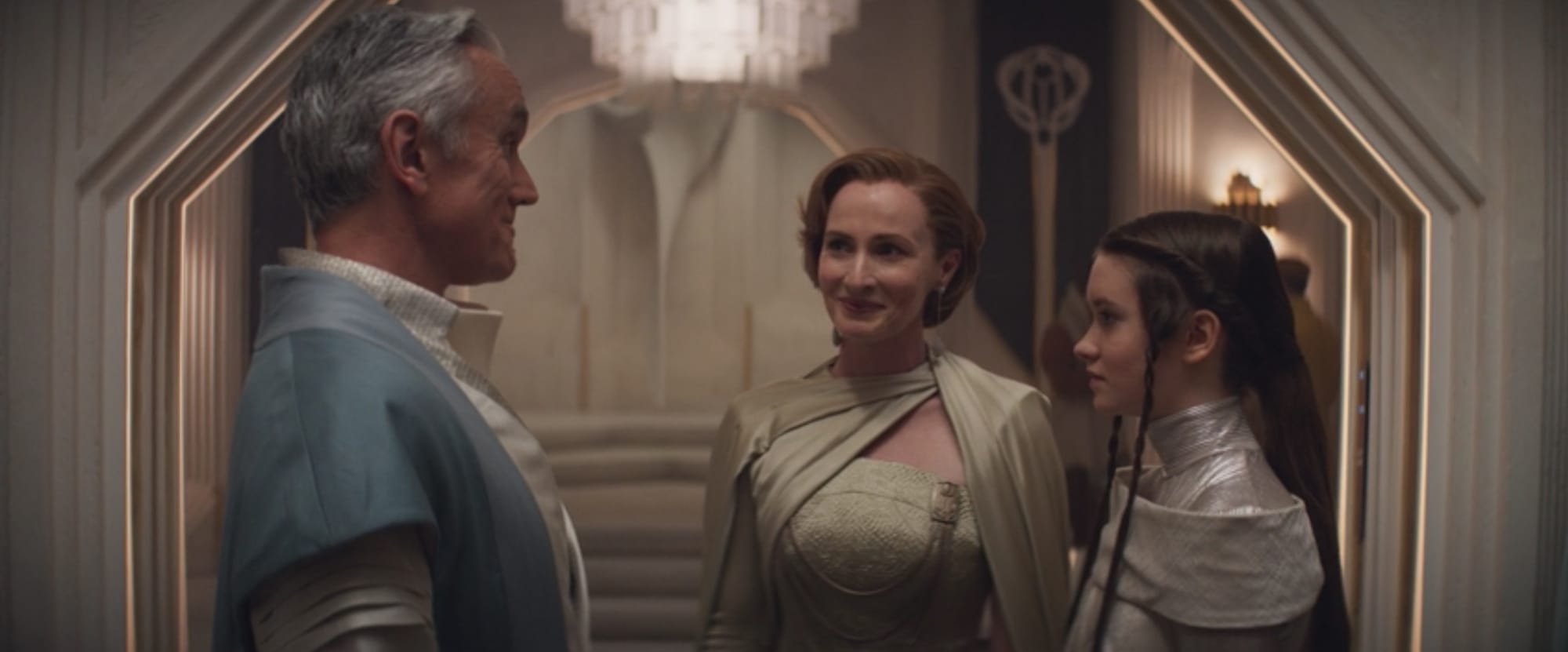
As for Mon Mothma (Genevieve O’Reilly), Aldhani is certainly no reason to celebrate. You see, her funds she gave to Luthen financed the operation. Imperial scrutiny on financial transactions has continued to pick up, and it’s almost as if the galaxy is closing in on her. She has to find a way to cover her trail fast. As for her family? Don’t ask.
What about Cassian? He is not yet a Rebel, but there’s no place for him on Ferrix either. He’s still a wanted man, and the Imperials are there in force. He does go back, however, but only to pick up Maarva and her trusty droid B2EMO and take them somewhere warm and relaxing. He also tries to say goodbye to Bix, but she’s not in a friendly mood. That tends to happen when he killed two corporate security goons, inadvertently getting her boyfriend Timm killed.
HIs business on Ferrix done, he heads back to depart with Maarva and B2EMO. On the way there, he can’t shake the memory of the death of his adoptive father Clem (Gary Beadle). Falsely accused by stormtroopers of attacking them, he was hanged above the streets of Ferrix City. It’s not the kind of thing he’d just forget, as much as he’d want to.
Cassian is not a Rebel, so he is running. But he is not running with Maarva. She is a Rebel, and isn’t afraid to tell Cassian that. She loves him and doesn’t judge him for running. She’s his mother, and she understands this is where his journey must go. She hopes he can find some way to move forward. He vows to return someday.
Jump to some time later, and Cassian is enjoying the easy life on Niamos. The sun is shining, the air is warm, and he’s spending lazy days sitting back and sipping the revnog with his girlfriend Windi (Katrina Nare). But even here, in this warm place of respite, he can’t escape the voice of Rebellion. Like literally. Nemik’s manifesto starts playing when he fumbles around looking for credits to go to the shop. They are out of revnog, and it’ll just be a quick run.
Unfortunately, Cassian is in the wrong place and the wrong time, and gets caught by an Imperial Shore Trooper chasing some runners. Just like that, Cassian is put before the Galaxy’s most over it judge and sentenced to six years in prison, courtesy of PORD. Game over, right?
Well, Cassian isn’t arrested. Instead, it’s Keef Girgo, Cassian’s fake identity, that is arrested. As such, Dedra isn’t aware that her missing piece in the “Axis” puzzle is right there in an Imperial prison. It’s the only good bit of luck he has right now, as he’s being sent to a prison factory on Narkina 5. He’s “labor-worthy”, so it’s time for him to be put to work for the good of the Empire.
“On Program”
I suppose at first glance the prison on Narkina 5 doesn’t look too bad. It’s not dirty, the opposite in fact. The prisoners have plenty to eat, and they aren’t overburdened by guards watching their every move. In fact, guards rarely get involved in the inmates’ lives, except upon arrival and other special circumstances. Sure, they peer in at the inmates on their workfloors, but that’s about it.
But look deeper, and the prison is awful as any of the other horrors that lie at the heart of the Empire. The prison complex is a giant factory, meant to produce materials for something big, although we don’t know what exactly. It’s just meant to produce them quickly and cheaply, cheaper than droids are able to, in fact. Discipline is maintained several ways. The most obvious is that the floor is electrified. With one button, an entire shift of workers can be punished, or even killed. There are no bars on the cells of the inmates, because when they are in the cells, the floors of the corridor will instantly kill them.
But the fear of being hurt or killed isn’t the only tool in the Imperial toolbox. The very act of their labor is used to control them. It isn’t just that they work for hours on end, but that they are put into competition. Each table of workers competes against the other tables in their room. Each room competes against the other rooms. The winners get flavor in their food! The losers get zapped. Its carrots and sticks, simple as that.
But the manipulation of the prison laborers doesn’t end there. In each of their cells, the number of shifts until their sentence ends counts down. It’s a sliver of hope in a sea of despair, provided by your friendly neighborhood Emperor. It says to them “hey, someday you’ll be out of here!” It gives them a buy-in to just keep their heads down, and hope someday it will all be over. A worker resigned to their fate is not a rebellious worker.
But as demoralizing and dehumanizing as Narkina 5 is, it’s still a community of people. An irregular community, where the typical actions and relationships are warped or non-existent. But still a place where people live and commune and work together. Floors communicate amongst themselves. They never actually interact person to person with anyone outside of their shift, other than the occasional guard or medical tech. But in between the shift switches the inmates are in window covered tubes. Here they have developed a language of hand signals to pass along news. News from other parts of the prison, and even news from the outside. There is little hope in a place like Narkina 5. But it is not hopeless.
From the start, Cassian has no intention to stay long. It’s not his first time with the Empire as his landlord, after all. But it's not going to be easy. And he won’t be able to pull it off alone. He’ll need to plan, and he’ll need to find people to work the problems with. But first he needs to observe. To analyze the patterns of the guards, and look for weaknesses. To probe areas that are vulnerable. To find the path across the treacherous ground. As for conspirators, what better place than his teammates on the work table? It won’t happen today, or tomorrow. But someday.
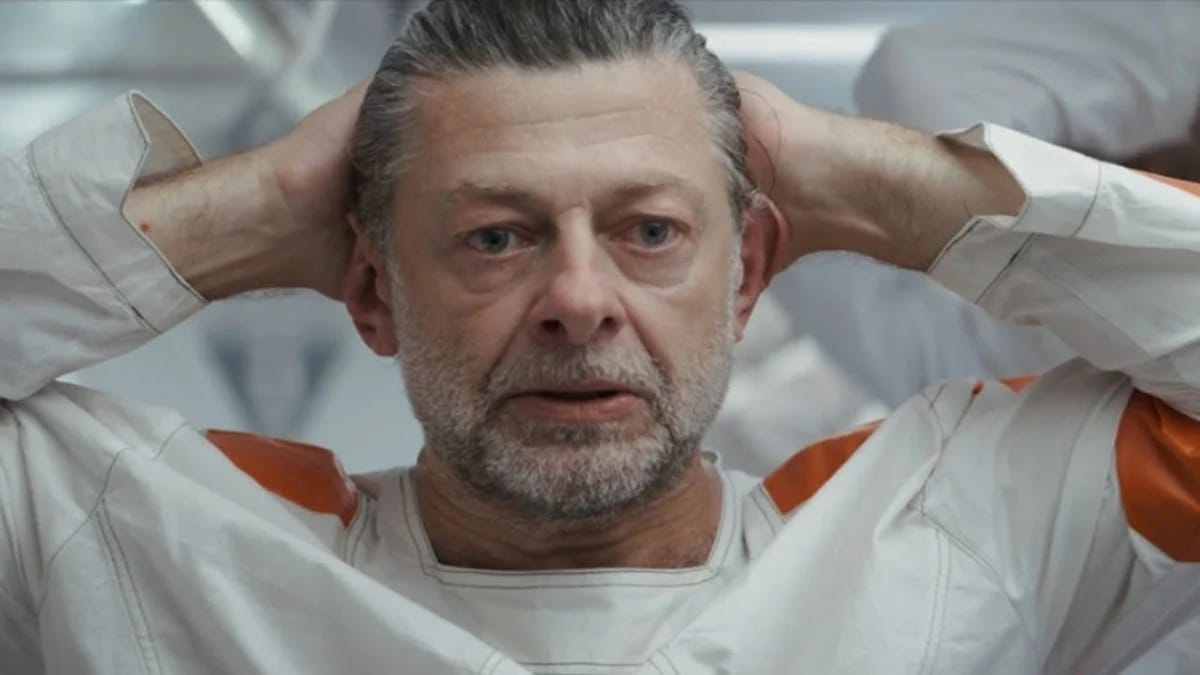
Thirty shifts after his arrival, Cassian is still looking for that day. But the shift manager, Kino Loy (Andy Serkis), disagrees. Loy is just trying to keep his head down, always counting down the shifts until he can leave. What kind of person was Kino before he ended up in prison? We don’t know. All we know is the person he is inside. He seems like a reasonable enough leader, trying to get his teams to work and do their best. But he is no Rebel. He wants everyone to go home when their shift counter hits 0. But by keeping their heads down, and doing the work.
Cassian’s plan will happen, with or without Kino Loy. But it’s important that the right moment is chosen. He and his potential conspirators are realizing a truth about the Empire. It may be big as hell, but its power and resources are not infinite. Demand cannot keep up with supply, and it’s starting to stretch thin. There are only so many guards to go around. And one day, he realizes there is a weakness even in that damned electrified floor. The elevator, used to bring prisoners in and out of the workfloor and cellblock, is not electrified. If they can hit it at the right in the right conditions, there might just be a chance. But it’s a small chance, and it’s going to require everyone to fight. Until then, Cassian will help his team, keep his head up, and wait.
The Cost of Rebellion
Saw Gerrera (Forest Whitaker) has been a rebel since before there were Rebels. Hell, he’s been a rebel since before there was an Empire. He got started fighting the Separatists trying to control his homeworld during the Clone Wars. When that brutal war ended, and the Empire tried to exert control, he switched his fight to the new target. On and on through the years, he and his band of Rebels kept the candle of freedom lit amongst the overwhelming darkness of Imperial tyranny. It has cost him dearly, but he never hesitated to pay up. He operates with a moral certainty of his cause and of his part to play in it all.
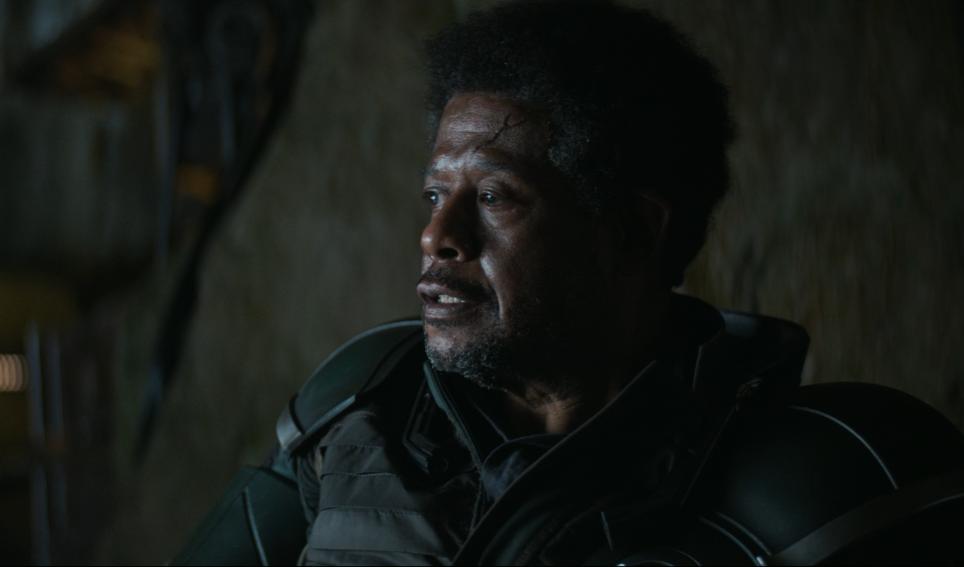
But though his forces fight hard and are something to be reckoned with, he cannot defeat the Empire alone. And neither can any of the other groups of rebels fighting the Empire. Be they Separatist dead-enders, New Republicans, planetary partisans, or anyone else. But together? Together they might have a shot. This is the vision of Rebellion that Luthen has.
It lacks the moral clarity of Saw Gerrera’s worldview. It’s compromised, and its goals can get muddled when they stray beyond the defeat of the Empire. And as deflating as defeat would be, victory can be just as liable to cause rifts that open up into new conflicts.
As the Rebellion against the Empire starts to coalesce into something meaningful, these two visions butt up against each other. But, in my opinion, it’s no real contest. To defeat a foe as ruthless and massive as the Empire, you have to put out the widest front possible. Saw, as committed to the idea of freedom as he is, cannot guarantee that. He will not lead the Rebels into the dawn of a new birth of freedom. But that doesn’t mean he must give up the fight, because he has more battles to fight. Even though, at the end, that cost will almost certainly be Saw’s life.
Everyone has their own rebellion, sure. But each of those rebellions have their own costs. And dear or not, those costs must be paid.
For Cinta and Vel, that cost they pay is their love. The Rebellion must come first, and everything else second. In a different world, they could live their lives freely. But it is not that world, as much as they would like otherwise. So they sit, watching Maarva and Bix for any signs that Cassian might have returned.
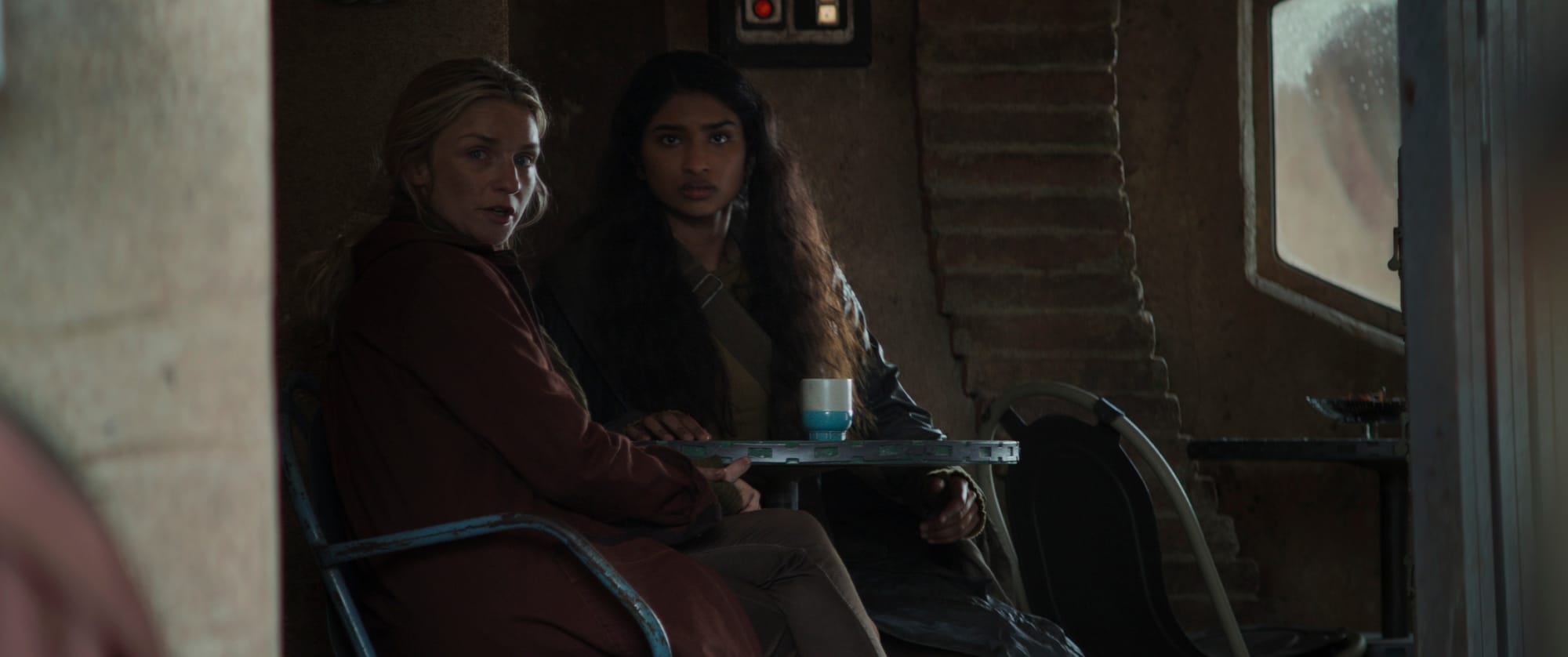
For Maarva, the cost of her Rebellion is her family. She lost her husband Clem to the Imperial noose, and Cassian to his run-ins with the Imperial legal system and with the ISB. She’s paid dearly, but she’s too tired of it all to not stand up and fight now. She may not have much left to give, but she’s going to give the Rebellion her all. She falls down trying to surveil the Imperial Garrison and gather intelligence for resistance. It’s not looking good for her, but she is ready to pay full freight if she must.
Bix is barely a Rebel, but she pays the cost nonetheless. Her boyfriend is dead, and her former lover and friend is nowhere to be seen, a fugitive from the Imperial occupiers holding Ferrix hostage. His mother, who she looks after, is dying. And then, the costs become direct for her. The Empire arrests and tortures her friend Salman Paak (Abhin Galeya). After spending so much time in a hell of ISB Interrogator Dr. Gorst’s (Joshua James) making, he gives it up that Bix has been in contact with a communication device at his store. Dedra knows Bix has been in communication with Luthen to sell him stolen Imperial goods. She has seen Luthen’s face, and that is a big problem for her. Nevertheless, she won’t talk to Dedra. The cost for her increases, as Dr. Gorst is called in to do his work on her as well.
Back on Coruscant, what of Mon Mothma? Initially the costs of her Rebellion were measured in the 400,000 credits she gave to the cause. It’s a lot of money, but her family is loaded and can afford it. But as the Imperial scrutiny closes in on her, the potential costs become more serious, and the options become fewer and farther between. She first turns to childhood friend and banker Tay Kolma (Ben Miles). In another life, she and Tay would have probably gotten married. But per Chandrilan tradition, her parents arranged a marriage for her with Perrin Ferth (Alastair Mackenzie). It isn’t just rebellion that has costs, after all.
Tay shows he is sympathetic, and she lets him in that she is more than just the mildly irritating liberal she plays in the Senate. Because of his own burgeoning radicalization and because of their mutual fondness, he agrees to help. But pretty soon, he makes it clear that there’s not a whole lot he can do to help her. Her options are to look at the less ethical bankers to help her stay clean in the eyes of the Empire. He recommends ethically challenged banker Davo Sculdun (Richard Dillane). He can launder the money for her and avoid the prying eyes of the Empire. Mon Mothma will be able to fight again another day.
But at what cost? To a man as wealthy as Davo, money doesn’t matter. But status does. He’s “new money”, which is as big of an offense to the elites of Chandrilan society as his shady business tactics. But he has a thought of how to address that. You see, in a society as rigid and aged as Chandrila, the best way to move up is to marry into one of the important families. And wouldn’t you know it, Davo has a teenage son of similar age to Mon’s daughter Leida (Bronte Carmichael). What if Leida and Davo’s son were introduced to each other? Maybe they would hit it off, right? Maybe they could see to an engagement when they come of age?
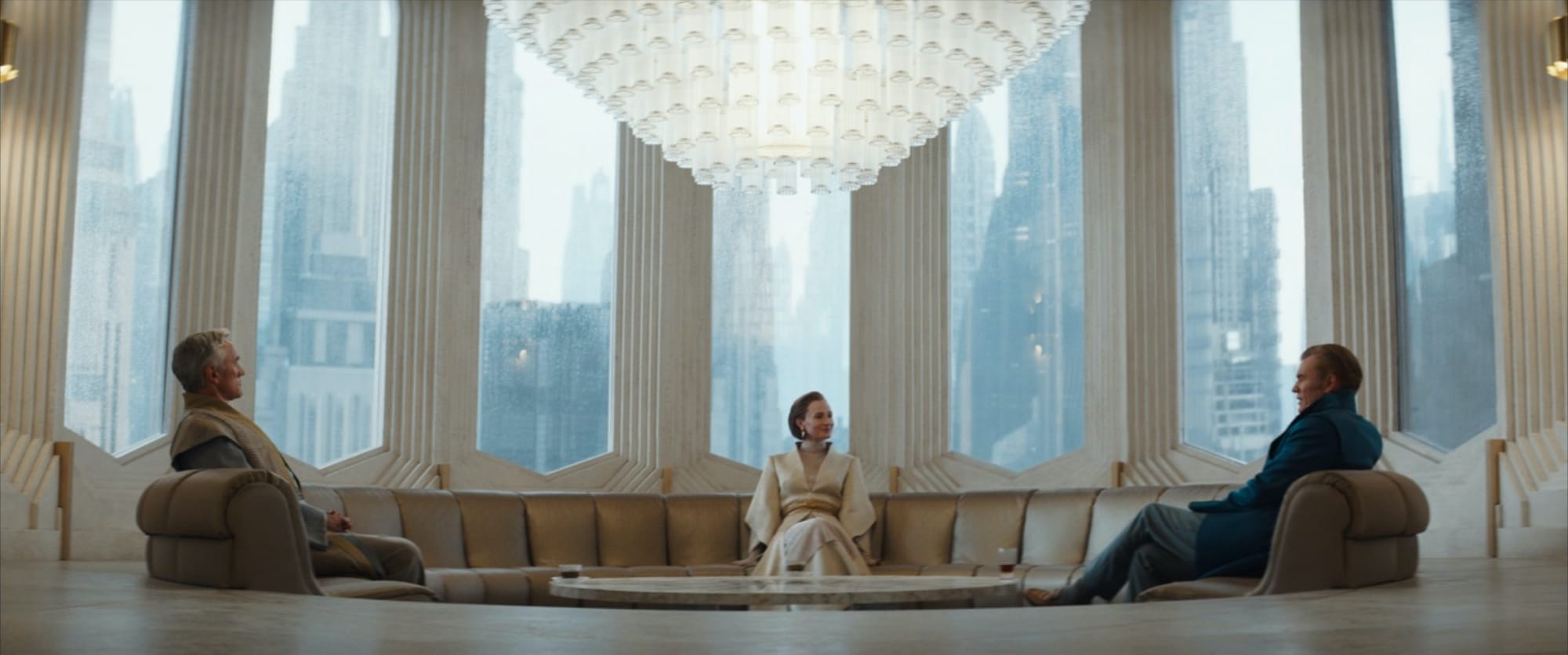
So, then, what is the price of Leida’s future? It’s a question that disgusts Mon. Regardless of how tied to Chandrilian traditions her daughter is, or how cold their relationship is, Mon is a firm believer in Leida’s autonomy to choose her own destiny. It goes against everything she believes in. It makes her visibly sick when Davo brings it up. But as much as she despises the idea, it’s clear she’s thinking about it. What is the price of Leida’s future? It might just be 400,000 credits, and the chance to keep the Rebellion going another day.
One Way Out
From the seat of the Empire to its almost forgotten prison factory on Narkina 5. Here, the costs aren’t measured in credits or in ideals. Instead, it’s the cost of living in bondage weighed against the cost of fighting for freedom. Cassian and his compatriots are still waiting for their chance. But all is not well at his team’s table. An older teammate, Ulaf (Christopher Fairbank), is falling behind in his work. It’s clear he is having health problems, but there isn’t much that can be done. It’s easier and cheaper to replace a dead prisoner than to heal one up, so there is no sick detail or infirmary for him to rest in. The rest of the team can carry him, but only so far. He is starting to slip.
Kino notices this as much as Ulaf and Cassian’s table mates. But he focuses on getting Ulaf across the finish line. Only forty shifts more to go for the old man! So what if there are rumors of something bad happening on level 2. Keep your heads down, and we’ll all get out of here. Never mind that the power just frizzled out for a bit. Keep your heads down, and get out of here alive. This is Kino’s refrain. It has kept him going for as long as he has been at Narkina 5, and he sees no reason to stop it. Even if his face says he’s starting to have doubts.
And then it happens. Ulaf has a massive stroke. His sentence is done, and he is at peace. As Kino and Cassian help the med tech (also a prisoner) with Ulaf, they get the horrifying news about floor 2. One of the inmates whose sentence ended on Floor 4 was moved to floor 2 instead of being released. Nobody is getting released from Narkina 5, except by the sweet release of death. Kino’s face breaks at this realization. There’s nothing to be gained by keeping his head down. The hope of that damnable clock is but a false hope. There is only one way out.
What’s more, the tragedy of Ulaf’s death is also an opportunity. A new prisoner will be transferred into the room during the next shift. This means the elevator will be operating. They won’t get a better shot at this, even if the time frame is short. They agree, and will keep the initial push to the day shift in room 5-2. They can’t risk detection at this late juncture.
And then just like that, it’s go time. The elevator goes down, Cassian breaks a pipe in the restroom, and a couple inmates start a mock fight to get the guards’ attention. Cassian jams up the elevator, and chaos breaks out. The guards shock the floor, but the inmates dive for their tables, and most ride it out until the water shorts out the shock floor. Now is the time to attack, and to climb.
It’s never in contest once Cassian, Kino, and the rest of the inmates reach the guards at the top of the elevator. They capture the blasters, and spread out, liberating room after room, floor after floor. Eventually the inmates reach the command center on floor 8. After some coaxing, they get one of the Imperial guards to shut the power off, and to disable the electrified floors across the facility.
To call Cassian a leader at this point is mostly inaccurate. But he is clearly showing an innate sense of leadership. An egoless leadership, defined by a willingness to do the job without taking the credit. Rebellions cannot be won without this kind of leader. This is shown by how he won the trust of his table in the workroom, and then in how he brought Kino along with their rebellion against the guards. Kino is the right one to lead the inmates into full revolt. For Cassian freedom is enough for right now.
Kino doesn’t know what to say, but he somehow finds the words. It’s a dramatic speech, given deftly by Serkis with both his words and his expressive face. He’s secret? He tells the truth. The wretched tyranny of the electrified floors is defeated, and the brave inmates who test that by jumping off their bunk are rewarded. The fresh air of freedom awaits all who wish to partake.
But taking over the prison isn’t the only obstacle to freedom. Once the free men reach the doors to the outside, they are high above a giant body of water. This is where Kino must say goodbye to Cassian, as well as fellow inmate Melshi (Duncan Pow). He can’t swim! This is the last we see of Kino, who likely never leaves the Narkina 5 prison alive. But he stood up to help others get free. It’s a powerful kind of freedom, and a variety almost impossible to stop once uncorked.
Cassian can swim, and he takes the plunge. Eventually both he and Melshi reach dry land. There’s no indication they have any idea how to get off the planet, or what will happen from there. But for now, they bask in the glory of being free.
Sharing Dreams With Ghosts
So we have seen what the Rebellion has cost so many people, some of whom aren’t even Rebels. But what has it cost Luthen? We don’t know a lot about him, this most important axle at the center of the Rebel wheel. Does he believe in anything other than the operations he manages? What has he sacrificed? Has he had that rare drink known as hot chocolate?
These are fair questions, and they are not just asked by us, watching all of this unfold from our various screens. They are asked by ISB Lt. Inspector Lonni Jung (Robert Emms)*. He’s a double agent who has worked his way up in the ISB and is a valuable source of intelligence for Luthen. But he has reached his breaking point, and now that he is a father, he doubts he can bear the cost of his Rebellion any longer. As a way of lightening the blow, Lonni gives Luthen two pieces of information.
* Maybe not that last one.
First, that Dedra has basically unearthed Luthen’s operation, even if she can’t locate him or said operations or name any of its participants. Second, that the ISB has captured a pilot of Anto Kreegyr’s, and knows all about his planned Spellhaus operation.
On the surface, these two pieces of information do look important. But Lonni doesn’t really get that Luthen isn’t going to do anything about Dedra’s investigation, at least not right now. As for Spellhaus, Luthen concedes that he’s going to have to sacrifice Kreegyr to the attack. He can’t let ISB know he knows about this information. Because Luthen refuses to let Lonni end working for him, and if the ISB suspects Luthen has a mole, Lonni is in danger.
Lonni is (understandably) angry at this. He questions if Luthen has any care for anyone, or anything. And Luthen’s response is amazing. Like seriously, it’s wild his whole speech is in the same episode as Kino’s at the end of the prison breakout. Watch it for yourself and see:
Luthen’s problem isn’t that he has no empathy. He has a lot of empathy. He is aware of the sacrifices that Lonni, Kleya, Mon Mothma, Vel, Cinta, and all of the others who gave their final sacrifice have made. It’s pretty clear that he is never not thinking about them all.
But to fight back and have a chance of winning against a foe like the Empire, sacrifice is necessary. Luthen has sacrificed any chance of a future, any hope that he’ll see the sun rise on a free galaxy. He’s damned and he knows it. But he does this all because he wants to give others a future. That’s it, that’s all he can hope to get from this. What has it cost him?
Everything.
And he can live with it. Because he must.
Next Week: We Wrap up Season One, as our Imperials and Rebels all converge on Ferrix.
Amy Wren Says What? is a newsletter that comes out at least once a week. In it I talk about television shows, books, video games, and other topics. Right now I'm running a series of posts about the Star Wars Television show Andor, which will go live every Thursday for eight editions.
Have something to say about this newsletter? Leave a comment! Or if you want have even more conversations about what I write about on here, consider supporting The Great Amy Ride. For free over there, you get access to all of my writing about movies, and paid members get access to the official Discord of me, Amy Wren, as well as other neat perks!
As always, I thank you all for your support.