Andor: Try
There are no Jedi or Sith in Andor. Everyone, from the lowest prisoner on Narkina 5 to Senator Mon Mothma, are limited to what the rest of us mere mortals possess. They can only try.

Spoiler Alert: Spoilers for Andor ahead! There are also spoilers of other Star Wars movies and TV shows, so consider yourself warned!
And here we are, at the end of our Andor journey. One final journey deep into this fantastic Star Wars story. So what should we do? Let’s talk about The Lord of the Rings*!As the story progresses, there are two main story threads. One, featuring Aragorn, is a pretty traditional story about the destined king returning peace and harmony to the kingdom. A “hero’s journey”, if you will. It’s epic, it’s tinged with mythology and destiny and dynasties falling and being reborn. His victory and coronation as King of Gondor is the dawn of a new age.But that isn’t the only story. In fact, in a lot of ways it’s the “B” story of the trilogy. The main story is about hobbits. Hobbits have few ambitions besides a good meal, good company, and a good warm hobbit hole to live in. But bad things happened, and they found themselves thrust into a larger and more dangerous world. And yet, rather than shrinking away, they joined the effort to defeat the darkness enshrouding the world. With no promise of success or recognition, they did what they must. They tried, and tried, and kept on trying. And eventually, they won. But it cost them all dearly, and cost Frodo everything.
Neither of these stories exist within a vacuum. Though they spend much of the story separated from each other, they are nevertheless intertwined and inseparable. One’s existence doesn’t take away from the other. Quite the opposite, both stories mesh together well and make the whole greater than the sum of its parts.
Do you see what I’m getting at? The Skywalker Saga is like Aragorn’s story. It’s tinged with the mythological, all dynasties and destiny and wizards in space. Likewise, Andor is somewhat like the Hobbit’s story. Whether from Ferrix, or Chandrila, or Ghorman, it’s a story of people with no special powers or secret destinies just trying to do the right thing. No matter the cost.
At first glance, it seems almost ridiculous to even link Andor to the Skywalker Saga. It’s easily the most grounded, most politically charged, and most “real” version of Star Wars around. But yet it fits nicely next to the story of the Skywalkers. After all, it’s the sacrifices of so many Rebels we meet in Andor that even gets the Death Star plans to Leia. There is no galaxy-shattering destruction, no reset of the galactic calendar, no Luke Skywalker without Andor.
* A Caveat: My references are based upon the movie series, because I have never read these books. Sorry to all of you Tolkienists!
Try: The Watchword of Andor
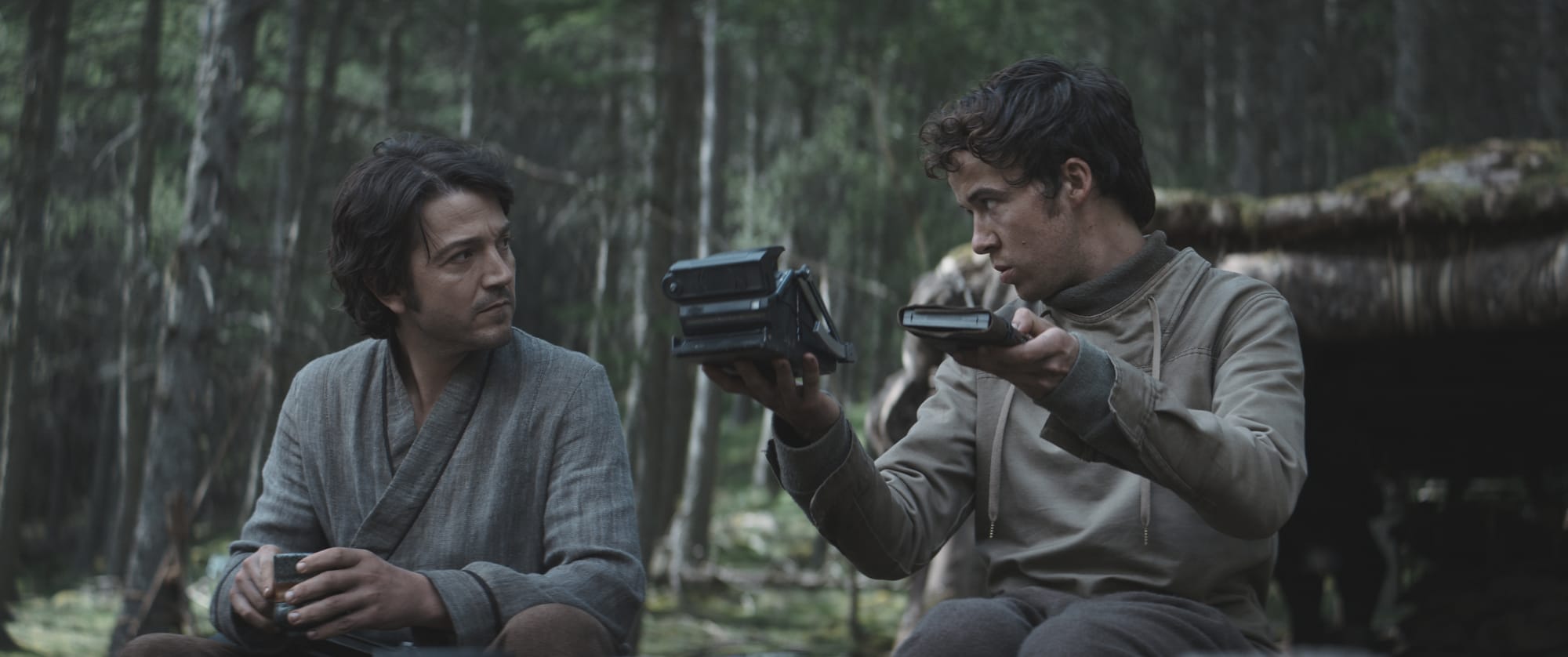
Karis Nemik and his manifesto are the beating heart of Andor. He was a true believer of the Rebel cause, giving his life during the Aldhani heist. But beyond that, he also wrote a manifesto that eventually spread throughout the galaxy, perfectly articulating what he, and every other Rebel, was fighting for. It builds and builds, until we get to its final, most powerful line “Try.”
At first glance, this is in opposition to Yoda’s famous saying “Do or do not, there is no try.” After all, one cannot both try and do or do not. But we must remember the context in The Empire Strikes Back for Yoda’s line. He is teaching Luke to believe he has the power to lift his X-Wing out of a swamp. Luke must understand that this seemingly impossible task is within his power as a Jedi. It’s a necessary part of his training, to learn how to control the flow of the Force. It is essential he believes he will do it to succeed.
But what works for a Jedi doesn’t work for the rest of us. We don’t have special powers. Everything we do is filled with uncertainty, and can be prevented by forces well beyond our ability to control. There is no guarantee we can do, but we will try.
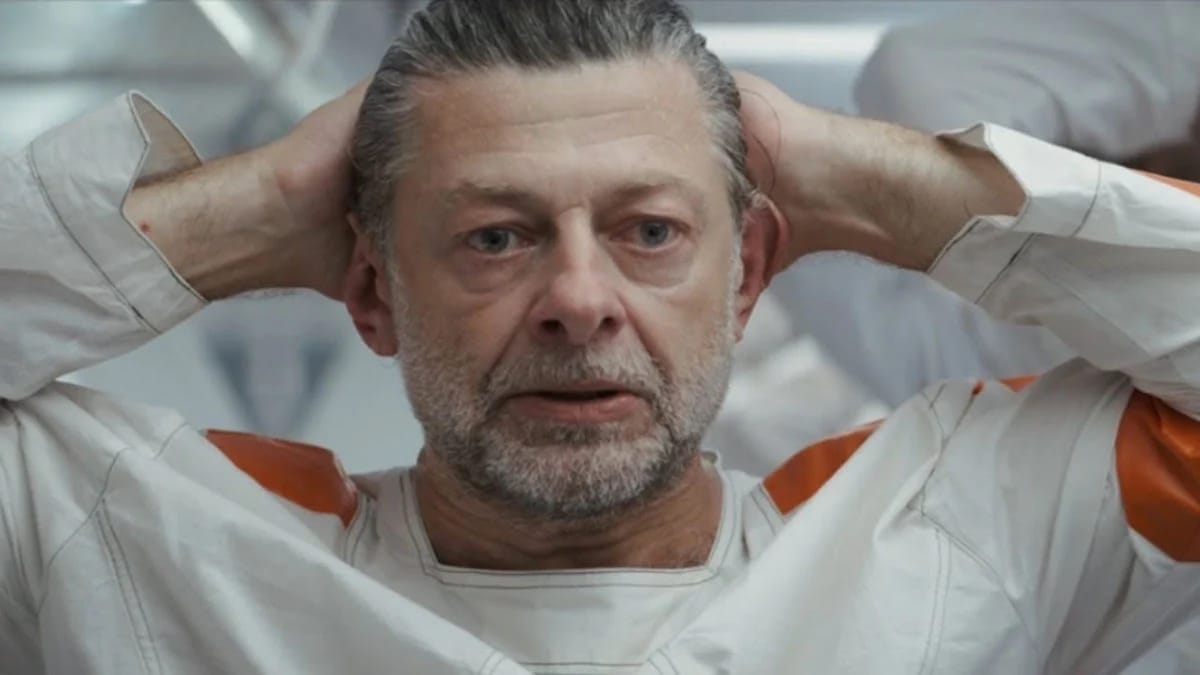
There are no Jedi or Sith in Andor**. Everyone, from the lowest prisoner on Narkina 5 to Senator Mon Mothma (Genevieve O’Reilly), are limited to what the rest of us mere mortals possess. They can only try. This is true for Kino Loy (Andy Serkis), who pushes himself and those around him from despair to action, trying to gain freedom for his fellow prisoners even as he would never leave the prison due to his inability to swim. It’s also true for Maarva Andor (Fiona Shaw), who issues a call to action from beyond the grave to her fellow Ferrixians to try and “fight these bastards”. And it’s true about the Ghorman people, who tried to save their planet from Imperial oppression, even though the deck was impossibly stacked against them.
But it isn’t just Rebels who are defined by their necessity to try. Just as Luthen (Stellan Skarsård) and Kleya (Elizabeth Dulau) sacrificed everything to build the Rebel alliance, Dedra (Denise Gough) and Major Partagaz (Anton Lesser) tried to bring them down. Because to try is neither to be good nor evil. It’s just a universal part of who we are.
And there it is. To try is pretty much universal. Just like the Force. Nemik’s directive to “try” and Yoda’s to “do or do not” are not contradictory. They are complementary.
** There is a Force healer, but there is no indication her gift goes beyond some lower level powers, and she is only in a couple scenes across two episodes.
Make It Worth It
During the run of my series of pieces on Andor, I tried to get to as much of the show as possible. But it was a sprawling series, with a pretty large main cast, to say nothing of supporting players. So, unfortunately I short-changed a few vital characters along the way. However, part of the reason I wrote this wrap-up piece is to give Vel (Faye Marsay) and Cinta (Varada Sethu), Bix (Adria Arjona), and Major Partagaz their due. All of them have series defining moments, and each of them deserve their moment in the sun.
Vel and Cinta
I really like how Vel and Cinta’s relationship is introduced in “The Axe Forgets”. It’s not really announced, just implied as Cinta meanders out of the hut she was sharing the night before with Vel. It’s confirmed to Cassian (and us in the audience) by Skeen (Eben Moss-Bachrach). It’s a matter of fact, not something that needs to be announced. And yet, though it’s just one of a galaxy’s worth of relationships, it ends up being crucial to the story of Andor.
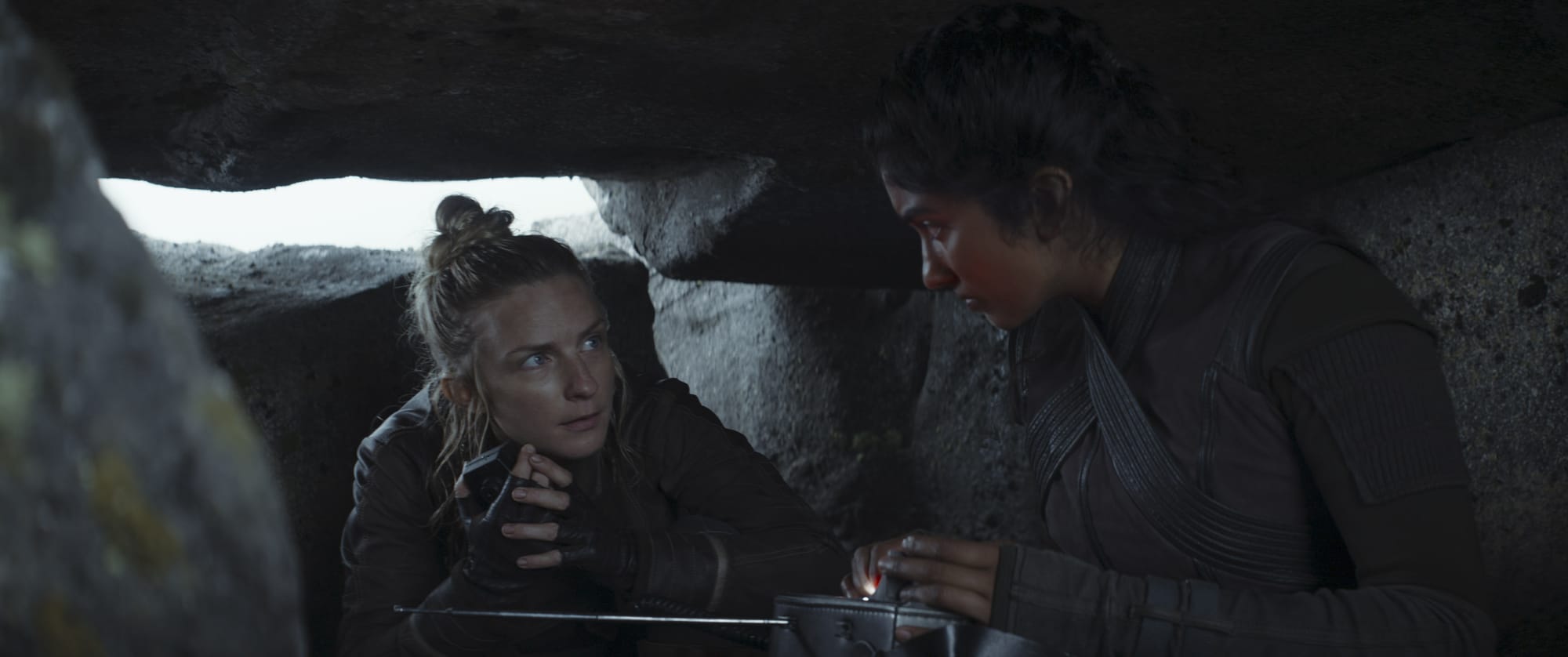
Not because of what happens, but rather what doesn’t happen. For years, they are separated or about to be separated. So often, they are forced to put the needs of the Rebellion ahead of their happiness. This is due to circumstances, sure, but also because Luthen finds them more valuable to the cause apart than together. As such, they never have enough time together to really feel what could be as a couple. And that’s precisely the point. They made a choice to fight against the Empire. This is the cost they bear.
On Ghorman in BBY 3 they get one glorious moment, where they are able to be together and speak openly and honestly about their feelings for each other. They commiserate over the cost of being apart in the past, and revel in being together in the present. And then just like that, it’s time to help the Ghorman Front pull off a grand heist of their own. A shot goes off, and Cinta goes down.
In a show full of brutally honest moments, Cinta's death is the most brutally honest of them all. Her death isn’t heroic, there isn’t even any meaning to it at all. She dies because a rookie made a mistake and didn’t follow orders. And not even an egregious, historic mistake. Just the kind of mistake overeager rookie soldiers have made throughout history. Even the heist that caused it was ultimately meaningless, happening only because the Empire desired it to happen. Cinta is just dead because some panicked. Andor doesn’t look away from the meaninglessness of her death, and it doesn’t try to redeem it. It’s just another life ended, all because someone didn’t follow orders and panicked. On the way back from the heist, Vel makes sure the rookie doesn’t look away from what he did. Because Andor doesn’t look away from what happened, and doesn’t try to say it was noble, or justified. It just lets it be what it is.
The Rebellion cost Vel so much time she could have had with Cinta, and then it took her away for good. Perhaps they could have found some happiness together if they ran away to some quiet corner of the galaxy. But making the choice to try to stop the Empire was such a fundamental part of who Cinta was. Cinta’s commitment to the Rebellion is one of the things Vel loved about her. To abandon the cause now would be as if Vel was abandoning the miracle of a person she loved so dearly. Vel must carry on.This isn’t heroism, at least not in the typical sense. Heroism is ennobling. There is nothing noble about the work Vel does as a soldier. Maybe, once the war is over, and the leaders give their grand speeches on the nobility of those who fought and sacrificed, words like “heroism” can be discussed. For now there is work yet to be done. The price paid to “try” was already so high, and the meter shows no sign of stopping.
Bix Caleen
Most of the main characters in Andor, Rebel and Imperial, are a soldier or a spy. Bix is neither of those. For much of the show she is someone who the war happens to. She’s tortured, and abused, and loses so much. By BBY 3, she’s self-medicating, trying to keep the feelings at bay as Cassian goes off around the galaxy being a Rebel for Luthen’s operation.But then, she starts to find her way back to herself. By the end of “What a Festive Evening”, she seems to be on the road to recovery, having insisted she go along with Cassian to give Imperial torturer Dr. Gorst (Joshua James) a taste of his own medicine. A year later, on Yavin IV, she and Cassian are starting to build a life together. And that’s when they meet a Force healer, who convinces her that Cassian is a “messenger”, and that he has somewhere he must be.
And it’s here, at the moment where even Andor considers that Cassian has a destiny, that Bix is given a true moment of agency. She sees how valuable Cassian is to the Rebellion. But as long as she stays with him, he will do anything to keep her safe, no matter the cost. Even if it means leaving the Rebellion.
She wants a life with Cassian. But she knows that is impossible until the Rebellion wins the war. So one night, after Cassian returned from rescuing Mon Mothma, she made a most difficult choice. She leaves Yavin IV, and asks that Cassian not try to find her until the job is done. She chooses the Rebellion for both of them.
This choice, and its terrible personal cost, makes Bix the true embodiment of what the show is saying. She doesn’t come from wealth and has no influence in galactic politics. She has no special powers, and no particular skills that are uniquely valuable to the cause. There’s no destiny for Bix Caleen. She is just a normal person in an abnormal situation, trying to do what she must for the good of Cassian, herself, and, as we see in the final shot of the series, their child.
Major Lio Partagaz
Of these four characters, I gave Partagaz the least attention in the episodic pieces. Part of this was because he was never a lead, but rather a well realized supporting character. He acted as a boss and mentor of sorts to the ISB supervisors he commanded. This was especially true for Dedra Meero.
Secondary though Partagaz was, I loved the character. Anton Lesser portrayed him as a true believer in the cause of the Empire, as well as someone who generally cared about the people who worked for him. He was a tough, but fair boss, who seemed to do his best to inspire his team to do great work. That he was so competent and caring towards his subordinates makes his callousness in the suppression and destruction of Ghorman all the more terrifying. Whether committing genocide or teaching his charges how to do their job, he was a consummate professional.
But as professional and competent as he seemed, he abjectly failed at his job as a “health care provider” to the Empire. Over the span of the show the infection of Rebellion, as he would have termed it, was not stopped. And by “Jedha. Kyber. Erso.”, it had become an epidemic. Which brings us to the final act of Major Lio Partagaz.
There are two times in the series we hear Nemik’s Manifesto. The first time we hear it was in “Rix Road”. It’s diegetic, as Cassian finally listens to it before going to rescue Bix from her jail cell on Ferrix. It’s a pivotal personal moment for Cassian for sure. But for us, we are clued in to what is happening with Cassian and how exactly a Rebellion might win in the end.
The second time we hear it is in the series finale. At first it appears to be non-diegetic, played only for the benefit of us in the audience to remember where the Rebellion came from. But then the episode cuts from Kleya on Yavin IV to Partagaz in the ISB conference room. And this is where we realize he’s listening to it. Nemik’s Manifesto, and thus the Rebellion, has spread across the galaxy. It even made it to Coruscant, the heart of the Empire.
The “infection” of the Rebellion was not yet terminal, at least not for the Empire. But it was the end of the line for Partagaz. He had tried to stop the Rebels, and had failed. He and his team couldn’t prevent Aldhani, couldn’t capture Cassian Andor or Mon Mothma, and couldn’t keep “Axis” alive. And the entire time, the Rebels had a spy working right under his nose. The look on his face as he listened to the manifesto is one of resignation. He knew what was coming, and he knew his options were narrowed drastically. Whether slowly in prison, or immediately by execution, he would die. So he took the last choice he had left, and successfully saved the Emperor the trouble by doing it himself.
We Fight To Win: Luthen and Kleya
For Luthen Rael, we begin at his end. He died in a cold, sterile hospital room, a prisoner of the Empire. The only other person with him at his death was Kleya Marki. She was his associate, his confidant, his murderer. She killed him because she must. The mission required it. There could be no loose threads. They both knew this is how it might end, for one if not both of them. Luthen’s vital signs crashed, and then he was gone. And Kleya mourned the man who both saved her and ruined her life. The man she hated, and admired, and perhaps even loved as if he were her father. And then she left, because the work must continue.
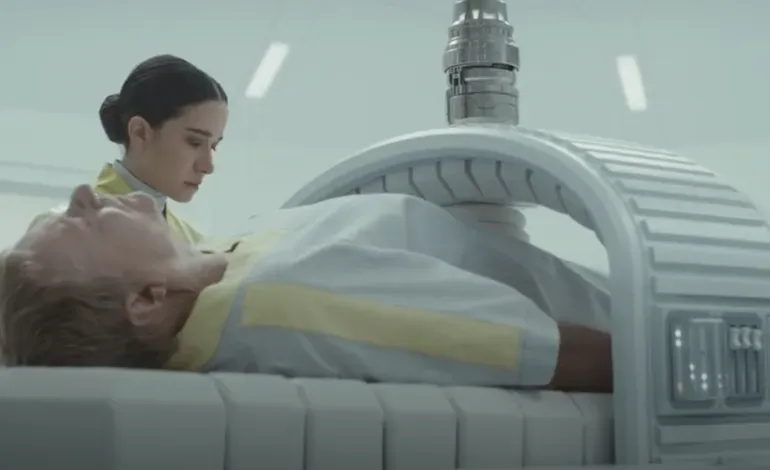
There are so many emotionally devastating scenes across both seasons of Andor. But this is the only one that made me sob. Kleya and Luthen made a choice long ago to burn any chance at a happy life to build the Rebellion from the ground up. Luthen made this choice with open eyes. Kleya made the choice with the ferocious ignorance of a child. Both paid and paid and paid some more. For years and years, they watched as the Empire kept winning and consolidating, accepting loss after loss because they had to. They worked in the shadows, and asked the impossible of their operatives. There was no guarantee of catharsis, or victory, whether next week, month, or year. Or even in their lifetimes. Friendship, honor, decency were secondary to what the cause demanded. Luthen and Kleya hollowed themselves because it was the only way they knew how to fight the Empire. The cause demands Vel and Cinta be kept apart? That Lonni Jung (Robert Emms) remains in the precarious spot as the Rebel spy within the ISB? That Ghorman must burn? So be it. It is a dark form of “try”, the darkest of the bunch.
And now Luthen was at rest. But Kleya must go on. By the opening act of “Who Else Knows?”, she was the only living Rebel who knew of the existence of the Death Star. No matter the cost, that information had to get to the Rebel base on Yavin IV. Once that was fulfilled, Kleya assumed she would follow Luthen to the grave. She had long since given up any dream of seeing another real tomorrow.
As I’ve talked about the Rebels of Andor, I keep hitting on the costs they must pay. And with good reason, as Andor holds no illusions about what it takes to try. But it’s just as important to remember why they are paying these costs. They try because they hope. Luthen burnt his hope to light up a dark galaxy. And Kleya did the same. But she was still alive, and she had friends on Yavin IV in Cassian and Vel. The former rescued her, and the latter convinced her to take a chance on regaining the ability to hope.
And so, we end on Kleya’s new beginning. On the eve of the great events that would result in the destruction of the Death Star, she took a look at the busy Rebellion on Yavin IV. She saw a real Rebel force that owed its existence to both her and Luthen. And as she saw what they had built, she realized that maybe, just maybe, she could hope to see a new dawn after all.
A Future For Those Who Dare: Dedra and Syril
So far I have mostly talked about what “try” means to Rebels. But “try” doesn’t pick sides. For Syril Karn (Kyle Soller) and Dedra Meero, Andor’s main Imperial characters, to try is vitally important as well. The difference is in what they tried to accomplish.
Syril tried so desperately to be the hero. He saw himself as an Aragorn, (or more relevant to his own galaxy) the heir to Clone Wars martyr General Anakin Skywalker. Through hard work, a clear sense of purpose, and his self-evident talent, he’d make his way to the history book. If only he got the chance.
What he truly wanted to be was a hero, which to him meant being a cop. So out to Morlana One he went. No injustice was too small for him to hunt down its perpetrator, expense and effort be damned. And when two off-duty security goons ended up dead outside a brothel, he found the springboard to eternal fame. With a bit of gumption and the exertion of his leadership skills on his team, he found the Valjean to his Javert: Cassian Andor of Ferrix.
Cassian escaped him on Ferrix, at the cost of several of his security officers and, more importantly, his job. But Syril would not be deterred. He took a job with the Bureau of Standards and did great work there. And he gave Dedra Meero vital intelligence in her quest to bring down the Rebel mastermind “Axis” (Luthen). And, during the Battle of Ferrix, he saved Dedra’s life. He was kicking butt, and he got the girl. He was well on his way to being a hero.
If it sounds like I’m being ironic, I am. For much of the series, Syril is a comedic character. It works, in part because the character captures a specific type of person who, while not always a fascist, is certainly willing to go along with them. And that makes him as scary as he is funny. He is a true believer in ideals that, in his mind, are also the Empire’s ideals. And for so long he could live in that delusion. Because in the world he lived, he was never the target of the Empire’s wrath. He could live a comfortable life with his Clone Wars action figures, dreaming of being a hero all the way. This doesn’t make him singularly evil. It makes him normal, like so many of us. Syril is scary because in the right circumstances, we could be in a similar place to him. Would we turn a blind eye to the core brutality of the Empire? Or we would look away as we continue to be complicit?
Syril Karn was a mere mortal, as much as he would like to be otherwise. His willful naivete left him open to manipulation. By both his government, by his mother (Kathryn Hunter), and by his girlfriend Dedra Meero.
Like Syril, there is nothing particularly special about Dedra. She was an orphan, but so are half the characters in Star Wars. She has a ceaseless work ethic, and a compulsion to do what it takes to win. But she works in the Imperial Security Bureau. Those are core job requirements. As focused as she may be, and as rigid and even intimidating she is to interact with, she’s just a normal person like the rest of the characters in Andor.
Although it’s not obvious at first glance, there are many similarities between Dedra and Syril. Both were true believers in the Empire, craving order above all else. Syril obsessed over catching and bringing Cassian Andor to justice, while Dedra gave up everything to bring down Luthen. Both found it hard to exist outside of their jobs, and didn’t easily connect emotionally to others. And they were both incredibly fastidious in that clean, sleek, and sterile Imperial way. It’s little wonder they ended up in a relationship together. What’s more surprising, however, is that it worked for them. Had they lived in another, less contentious time, perhaps they could have made a life together.

But what ultimately doomed their relationship, and each other, was in how they differed. Syril was a true believer in the ideals of the Empire, but he was also a true believer in doing things the right way. Dedra, meanwhile, was willing to cut corners, to use people in whatever way necessary to get the job done. To lay the ground for the destruction of Ghorman, she lied to Syril. By appealing to his need to be the hero, she used him to help prop up the Ghorman Front as a resistance group against the Empire. As they were blamed for terrorist attacks and other crimes, public opinion would turn against the Ghorman people, and give a pretext for the Empire to destroy the planet for its own purposes.
Syril loved being a spy. But then he also fell in love with the Ghorman people and its planet. As far as he knew, he was assisting Dedra to stop outside agitators and protect the Ghorman people. The idea that he was aiding in their destruction was not on his mind. At least not at first.
But then he got to know members of the Ghorman Front, like Carro Rylanz (Richard Sammel) and his daughter Enza (Alaïs Lawson). Listening to their grievances, he began to believe they had some justification. Of course, not to violently oppose the Empire. Or to oppose them non-violently either. But enough justification to avail themselves of the beneficent justice of the Emperor. Sure, he was still using them for Dedra, and to be fair, the Ghorman front was using him for information. But cracks in the facade of Imperial goodness were starting to crumble right in front of him.
By BBY 2, those cracks had become inescapable. The Empire stopped putting any effort in trying to lie about their false flag attacks on their own installation. It was so blatant, that the Ghorman Front apparently figured out what Syril was doing and wanted nothing to do with him. After a particularly egregious “attack”, which could have only been carried out by Imperial agents, Syril confronted Dedra. And that’s when his trust in the Empire, and in Dedra, effectively crumbled into dust.
But it was too late, and nothing the Ghorman, or Syril, or even the Rebels did could have stopped what was coming for Ghorman. Its fate was not decided on the battlefield, but in a catered conference for mid-level Imperial officers high atop a mountain ridge on Maltheen Divide. The Death Star needed Kalkite to function, and the only reliable source for the amount they needed was deep below the surface of Ghorman. Dedra’s mission was to make sure that when the Empire sucked the planet dry, the rest of the galaxy would try to ignore the Ghorman’s pleas for help.
The Ghorman Massacre is the fulcrum point of the Rebellion. At least until Yavin.
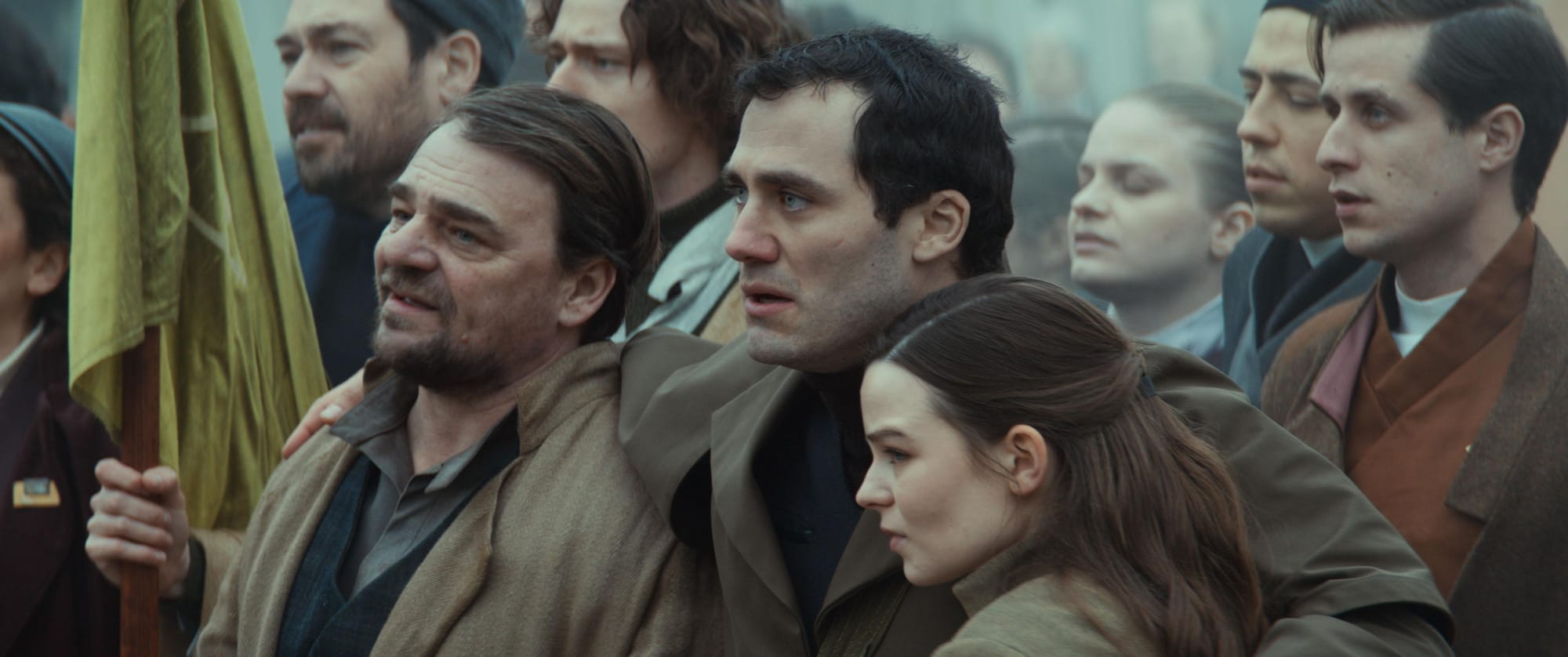
The Ghorman Massacre wasn’t just an atrocity. It was also a story of a people standing defiant to the end. Despite it never making a difference to an Empire who already settled on its course of action, they tried. They stood arms linked together, against the brutal state. They defied the complicit media to refuse to tell their story. They died. Dedra gave the order that murdered Ghorman. And Syril was there to watch everything he believed and stood for come crashing down around him. Perhaps there was hope for him yet.
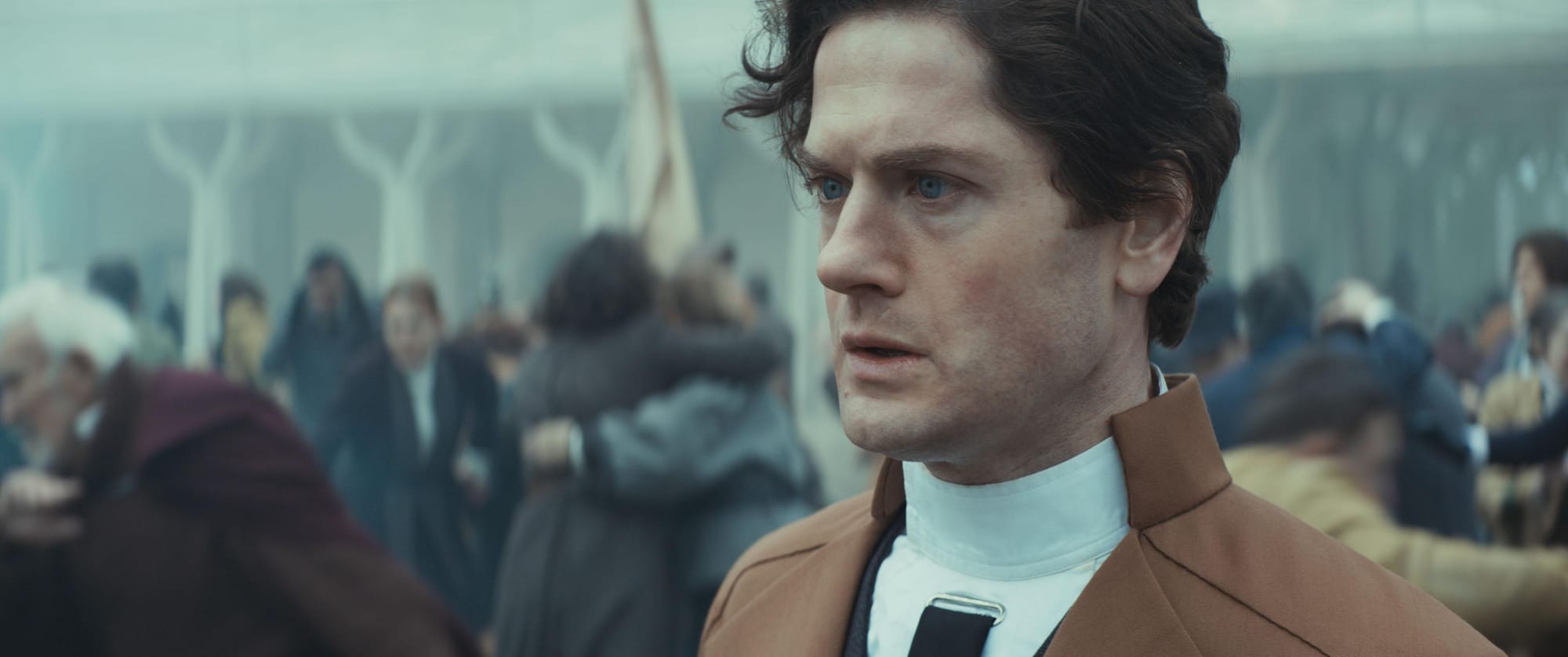
But the moment you realize your worldview is wrong and you realize you must try to make it right are seldom the exact same moment. He was looking for a scapegoat, an easy answer that could absolve him of tough choices, if not necessarily restore his prior status quo. And that’s when he looked across the bloody plaza and saw Cassian Andor.
For as much as I like to pick on Syril, I’ll grant that he was good enough to get the drop on Cassian. And he held his own in the brutal hand to hand fight that followed. Amazingly, he won, being the first to get to a blaster and this close to some sort of victory. Syril would be the hero of Ghorman, having stopped the dastardly outside agitator who caused all of this pain for Syril Karn. To be a hero was the last comforting delusion he had. And he would hold onto it as long as he could. But then Cassian uttered three little words.
“Who are you?”
His great archnemesis, the dastardly villain in his inevitable story of heroism, didn’t even know who he was! But also, did Syril still know who he was? Unable to process it all, he dropped his gun, unwilling or unable to kill Cassian. Was this the beginning of Syril Karn, Rebel?
Sadly no. The story of Syril Karn is not a story of heroic redemption. It is the story of a sad man killed in an act of vengeance by Carro Rylanz, one of the Ghorman he helped Dedra and the Empire destroy. The man who would be Syril Karn, Hero was nothing but one body amongst thousands. Only mourned by his mother, and perhaps Dedra.
The Ghorman Massacre was so brutal, even for a moment Dedra was affected by the violence of it all. For a moment. And then it was back to work. There would be no redemption for Dedra Meero, Imperial. She burnt her future to break the enemies of the Empire.
And given how successful Ghorman was, perhaps her sacrifice was justified. One year later, she was set to justify it again. Through her hard work, and a creative avoidance of Imperial data security protocols, she tracked down Luthen Rael, also known as “Axis”. Cherishing the moment, she even came with a whole routine to do before she arrested him. Acting like a prospective customer, she pulled out the old Starpath unit that Cassian had tried to sell to Luthen way back on Ferrix. The look on Luthen’s face as he realized what was happening was going to be priceless.
Here I’ll point out that Dedra is in many ways a mirror image of Luthen. Both of them burnt down any chance for a normal life in the pursuit of their cause. Both were very good at what they did, and both used those around them regardless of their feelings. Luthen was good at making moves, and Dedra was good at sussing out what those moves were and why he was making them. And now she had him, and when he went down, so would the Rebellion.
But unbeknownst to her, the Rebellion was no longer run out of Luthen’s back workshop. It had made its way to Yavin IV. Luthen had done what he had set out to do, and the Rebellion had effectively passed him by. And most importantly, though she had him, she did not have Kleya, who held the secret of the Death Star. The secret that they got from one Lonni Jung. Who got it from Dedra’s secret data storage. She had Luthen, but she was about to be in a galaxy of pain for her trouble.
And just like that, she didn’t have Luthen, at least not in a conscious way. As she got distracted by his destruction of the comms panel going on in the back of the shop, he tried to kill himself. And, while she stood in the hospital waiting for him to wake up, her former assistant Supervisor Heert (Jacob James Beswick) arrested her. Only when Director Krennic (Ben Mendelsohn) administered her interrogation did she realize how badly she messed up. She had accessed secrets at the heart of the Empire, and a Rebel spy had stolen them from her. Whether she were a Rebel spy or just incredibly incompetent, there would be no more victories for Dedra Meero. Instead, she would spend the rest of her life in prison. There, and only there, did tears come to her.
In Pursuit of Our Ideals: Mon Mothma
Senator Mon Mothma does not have special powers. But to say she doesn’t have power or influence would be a big mistake. She’s from a wealthy family on Chandrila, one of the most powerful and influential planets in the Empire. Other than Bail Organa (Ben Bratt), she is the most powerful Senator in the Imperial Senate who still stands in loyal opposition to the Emperor’s agenda. She’s not a farmer or scrap metal worker or thief. Though her life on Coruscant is filmed as if it were a prison for her, it’s a well appointed prison complete with only the finest hover car to ferry between her residence, her office, and countless parties that constitute far too much of her duties.
Though Chandrilia is a planet that is bound in ancient tradition, Mon Mothma developed a reputation as a radical of sorts in the political circles of Coruscant. She opposed many of the traditions of her homeworld, particularly arranged marriages. This stemmed in large part from her mostly loveless marriage to her arranged husband Perrin (Alistair Mackenzie). She hadn’t been able to avoid it, but it was her greatest hope that her teenage daughter Leida (Bronte Carmichael) would be able to have the agency to decide who, or even if, she married.
She remembered being a Senator in the Galactic Republic, and had served with Padme Amidala before her untimely death. From the get go, she opposed any efforts by the Emperor to concentrate his power, especially at the expense of the member systems or the Senate itself. But opposing the concentration of authority by the Emperor and actively engaging in open warfare against him are two different things with drastically different levels of risk. For as long as she could, she tried to fight back within the system.
Her fight wasn’t without the occasional victory, but even at its best it was little more than a rear guard action. And yet, she kept trying. She would whip votes and beg for support. Then she’d lose, and get up the next morning and try all over again. The years continued to pass, and any hope of restoring the Republic within the letter of the law grew dimmer and dimmer.
In the text of Andor, we don’t know how Mon Mothma got involved with the Rebel operations of Luthen. By the time we meet her in season one’s “Aldhani”, she’s already supporting Luthen financially. With her family money, Luthen was acquiring equipment and materials to distribute to various bands of Rebels fighting their own little wars against the Empire all across the galaxy. She was still trying to fight the Empire in the Senate, but she had begun to hedge her bets.
But the Empire's control over financial transactions grew tighter and tighter, and it became clear to Mon that she needed a solution beyond just withdrawing large sums of money to give to Luthen. To get around this, she brought in her childhood friend and now prominent banker Tay Kolma (Ben Miles). He helped, for a while. But then (using funds provided by Mon Mothma) the Aldhani heist happened, and a whole new level of Imperial crackdowns were put into place. Yet still Mon Mothma worked the Senate, trying to get them to agree to her measures to end the Public Order Sentencing Directive.
Mon Mothma benefited from her wealth and status as the Senator from an influential Core Planet***, sure. But one big reason she became such a respected force of opposition in the Senate was because of her commitment to her ideals. But to support the Rebellion, she began having to compromise these ideals, to prioritize the great ideal of freedom from tyranny above the rest.
At first the ideals she dispensed with were obvious ones like “you should not finance clandestine paramilitary operations against the government”. And then she moved on to “you should not hide your support for clandestine paramilitary operations against the government under the guise of charity”. But then, these compromises of her ideals were not enough. Tay Kolma helped her with some of her problems with financial irregularities. But not all of them. To do this, she’d have to do business with a less than reputed banker named Davo Sculdun (Richard Dillane).
And here is where the compromises became true sacrifices. Sculdun agreed to help launder her money, but only if she paid the price. She would have to assent to marrying Leida off to his son Stekan (Finley Glasgow). One of her core ideals, “my daughter should have agency to choose when and if she marries when she is an adult” was on the table.
Never mind that Leida seemed deeply into the regressive traditions of Chandrila. She was a child, not much older than Kleya was when she took up the banner of the Rebellion. There was no rationalizing this away. And though it would give some comfort to think she was doing to continue to aid the Rebellion, that wasn’t the whole story. In part, she did it because if she didn’t handle it, Luthen would have to. There could be no loose threads, even when that loose thread was a powerful Senator.
Despite making it her life’s work to avoid doing so, Mon Mothma, like her mother before her, betrayed her daughter’s agency. She tried to give Leida a false choice, to dump the decision to cancel out her betrayal on the shoulders of her daughter the moment before she walked out to get married. All it did was terminate their relationship once and for all. After that, throwing out the ideal of “you should not assent to the murder of a childhood friend, no matter how much it covers your ass” feels rather anticlimactic.
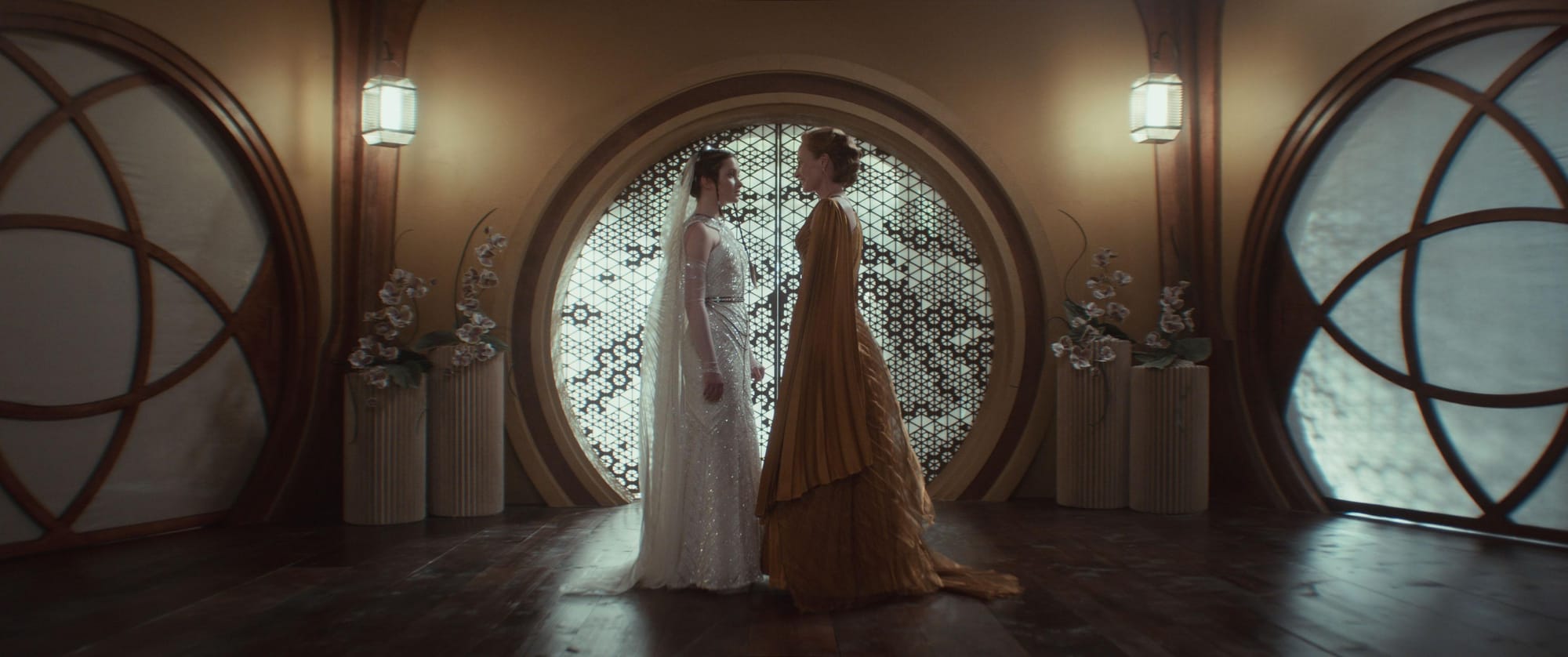
There are no clean Rebels. It’s a bloody, murky business at its best. And this goes for the leaders as much, if not more so, than the soldiers and spies. Mon Mothma would carry that betrayal of her daughter for the rest of her life. She burnt her chance for a family in order to buy another day for the Rebellion.
Even as late as BBY 2, she continued to hold out hope that she could drive resistance to the Emperor in the Senate towards some semblance of victory. But the Empire’s anti-Ghorman efforts were paying off, and even once strong allies were backing away from support. Though she kept trying, working within the system was fast approaching the end of its usefulness. She had destroyed her family, and the Empire was destroying her vocation. When would it come for her?
The Ghorman Massacre roared back its answer, as the horrors made their way to Coruscant through news channels complicit in the Imperial atrocity or not. And, as if to drive it home, her colleague, Senator Oran (Raphael Roger Levy) from Ghorman was arrested right in front of her. On that day, it became crystal clear the Senate was dead as a legitimate body, and there was only one way out for her. With a short yet powerful speech, she laid bare what so many had been thinking but were too afraid to say it.
I will always share this video -- Andor/Lucasfilm Ltd.
This is exactly what Luthen wanted Mon Mothma to do. He did not care that she despised him for what he had done to Tay Kolma, and how he had made her loyal aide Erskin Semaj (Pierro Niel-Mee) into one of his operatives. What mattered was he took a Senator admired even by many of her opponents for her ideals and made her the face of the Rebel Alliance.
And that’s what makes Mon Mothma special. Unlike so many other Rebels we’ve talked about, Mon Mothma would not be forgotten in the history books. As the leader of the Rebel cause, she did a masterful job of persuading and cajoling and outright begging each of the powerful factions that made up the Alliance into standing united against the Empire. And at the end, she would stand with her trusted lieutenant and, in some ways, surrogate daughter Leia, as they did their best to build a New Republic.
But that is years into the future of even the end of our story, and thus one for another time. Back in the time right before Scarif, she was only starting to get the hang of what it meant to be the leader of a sprawling, yet dangerously thin insurrectionary force. She no longer was imprisoned in her gilded Senate cage. Instead of fancy spreads at even fancier venues put on by the dullest dignitaries this side of Dantooine, she could look forward to a modest meal with her cousin Vel at the Yavin IV base mess. Being a leader of an army in a civil war does not end the moral compromises. Quite the opposite in fact. Far too often leadership is just making the least bad decision. But through the darkest days, she could find some comfort in never breaking that final, most important ideal, “at some point you must say this far and no farther to the tyrant, and try your best to make it so”. And so, she stood up and tried, even though she had to burn down everything in her life to get there.
Welcome to the Rebellion, Mon Mothma.
*** The Galaxy Far Far Away is organized into different regions roughly based upon where they sit in the galaxy in proximity to its center. The core is where Coruscant and other highly influential, ancient planets like Chandrila and Alderaan sit. The Outer Rim is where basically every planet you see in the Original Trilogy is located. To discuss everything in between the Core and the Outer Rims is far too complicated for this note. Suffice it to say that though the Mid-Rim is part of it, it’s far from the only part.
The Ones Who Tried: Andor’s Place in Star Wars
Beyond her importance within the galaxy itself, Mon Mothma is unique amongst Andor characters for how interconnected she is with the Skywalker Saga and with the larger Expanded Universe as well. Some characters, like Bail Organa and Saw Gerrera (Forest Whitaker), stretch from back to the prequel era. And of course, several characters in Andor are seen in Rogue One. But Mon Mothma is the only one who not only stretches back to the Prequels, but forward into the Original Trilogy, and beyond to the New Republic era. She’s the exception that proves the rule.
As such, there’s a feeling of self-containment to Andor that sets it apart from other Star Wars works, especially its shared universe heavy contemporaries series on Disney+. So many of the familiar elements of Star Wars are missing. There are no Jedi, no Sith, and no Grogus. No shoehorned Chewbacca, Artoo and Threepio****, or Boba Fett cameos. There is no Chosen One, and regrettably, no Dexter Jettster.
But what sets it apart from the rest of the Star Wars television and movie canon is what it does that nothing else in the Star Wars canon really does. It tells a serious political story, and it does it well. There are complex emotional interactions between characters, and so many of the main characters are full of subtleties and nuance with well thought out motivations. This isn’t unheard elsewhere in Star Wars, but Andor did it with more consistency. It’s a truly singular work.
But yet it’s unmistakably Star Wars. For one thing, the production design, makeup and hair, and costuming teams did an amazing job of bridging the gap between the Prequels and the Original Trilogy. Ships and houses and jackets felt worn in again, dusty and dirty and dinged up. And the visual effects teams did a great job of melding real locations and sets into digital elements that looked so good and meshed well with what came before and after it in the timeline.
But it goes beyond the technical work of the show. Despite the story being mostly self-contained to Andor and Rogue One, it all fits together really well with other works in the canon. The best example of this is “Welcome to the Rebellion”. After Cassian gets Mon Mothma out of the Senate and into Luthen and Kleya’s safe house, Cassian’s role in her rescue is finished. Instead, Gold Squadron would come to pick her up and take her the rest of the way. It’s wonderful in how it works so well in reinforcing Andor’s theme of “doing the work of Rebellion because it must be done, not because you get the credit”. But also it fits pretty smoothly with the Rebels Season Three episode “Secret Cargo”*****, where Mon Mothma (voiced in the episode by Genevieve O’Reilly) is whisked away to make the official speech announcing the Rebel Alliance. And of course, Andor ends pretty much where Rogue One begins after the Jyn Erso flashback.
But these are all details of how the show is made and structured to fit in with the rest of Star Wars. What about the big picture? The best way I can think to put it is that the Skywalker Saga is the melody, and Andor is the rhythm beneath the melody. The melody evokes heroes and grand battles and other moments of galactic importance. The rhythm goes unsung, sometimes even disappears into the background. But it is essential to making the melody work as best as it can. It’s the characters of Andor trying and trying and trying some more, strumming and drumming and plunking away to finish the work at hand. The medals and monuments and speeches by the good and the great? Those are for the heroes. Andor is for those who moved the flag forward and got nothing. It’s a reminder of those who tried.
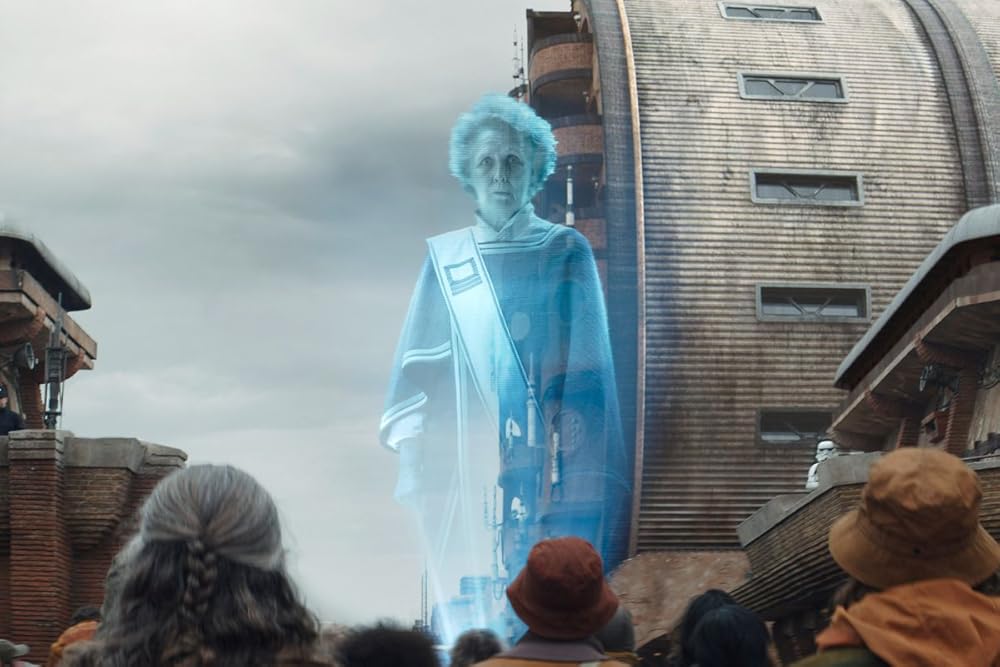
**** As gratuitous as their cameo was in Rogue One, I like that one. It has the benefit of making sense that they would be there. The really silly one is in Rebels, which in the same episode has a genuinely magnificent cameo of RX-24 (Voiced in both the ride and episode by Paul Reubens) from the original version of the Disney parks simulator ride Star Tours. Okay, I’m ending this geekout before this becomes a backdoor entry of The Reluctant Disney Adult.
***** Interestingly, “Secret Cargo” features a clip of a speech that Mon Mothma gave at the Senate before fleeing Coruscant. It’s different from the one in Andor because, I mean, different writers and no show should be beholden to another for one of its most important moments. I like the idea that it's the third speech Mon Mothma gave, besides the Senate speech and her Rebel Alliance speech, and that there’s a giant academic controversy over which one should be her “official” speech against Palpatine.
Cassian Andor, Rebel
And here, at the end of our journey, we come back to Cassian Andor. As much as Andor is a story of so many other fascinating characters, it is ultimately about Cassian’s path to where we meet him in Rogue One. It’s about how he became a Rebel, sure, but also about how he tried not to be. Time and time again, he tried to run. But eventually, he ran out of ways to run away, and could only do what remained and try to be a Rebel.
And so he went to Scarif, did what must be done, and died for the cause. For the Rebellion. There was no medal ceremony in a great hall, no monuments erected in his honor. But that’s okay, he didn’t do it for that. He did it because he must do it. Because he had to try, to do his part to bring a new day to the people of the galaxy. To give a chance for Bix and their child to see that dawn.
Cassian Andor was a messenger. He carried the message that Nemik wrote down. Not just the text itself, but its deeper meaning. The idea that the thing the Empire feared the most was that people, one by one, would stand up and try. Try to stand against the march of Imperial inevitability. Try to stand up for their neighbors and their friends and for people they didn’t even know but yet shared in the common dream of freedom. That idea found its way to Kino Loy, to Maarva Andor. It found its way into the twilleries and cafes of Ghorman, and all the way to the floor of the Imperial Senate, where Mon Mothma declared in a loud and clear voice that enough was enough. And finally, it even reached the heart of the ISB. There it rang in the ears of Major Partagaz, who didn’t see it as a clarion call for action, but a terrifying cry to be feared. These words that began in the mind of that young Rebel on Aldhani crossed the galaxy in just a few years.
Because that’s what the best ideas do. They spread out and keep spreading out and never stop. Forward they go, moving forward towards the people who need them. Those who fear these ideas try as they might to eradicate the ideas. But they can’t, because once an idea is in the air, it is next to impossible to remove it. It will build and build and build until enough people hear its call to action. And onward it goes, until the work is done.
But the truth is, the work is never done. There is no guarantee of success, and no guarantee success, once achieved, will be permanent. As history shows, it almost always isn’t. But yet we must try.
Because to try is at the heart of Andor. It celebrates those who fought and died and sacrificed everything for the job that must be done. In the end, the Rebellion won its war against the Empire. And it could not have happened without the work of those whom history does not remember. But Andor remembers. And that is enough.
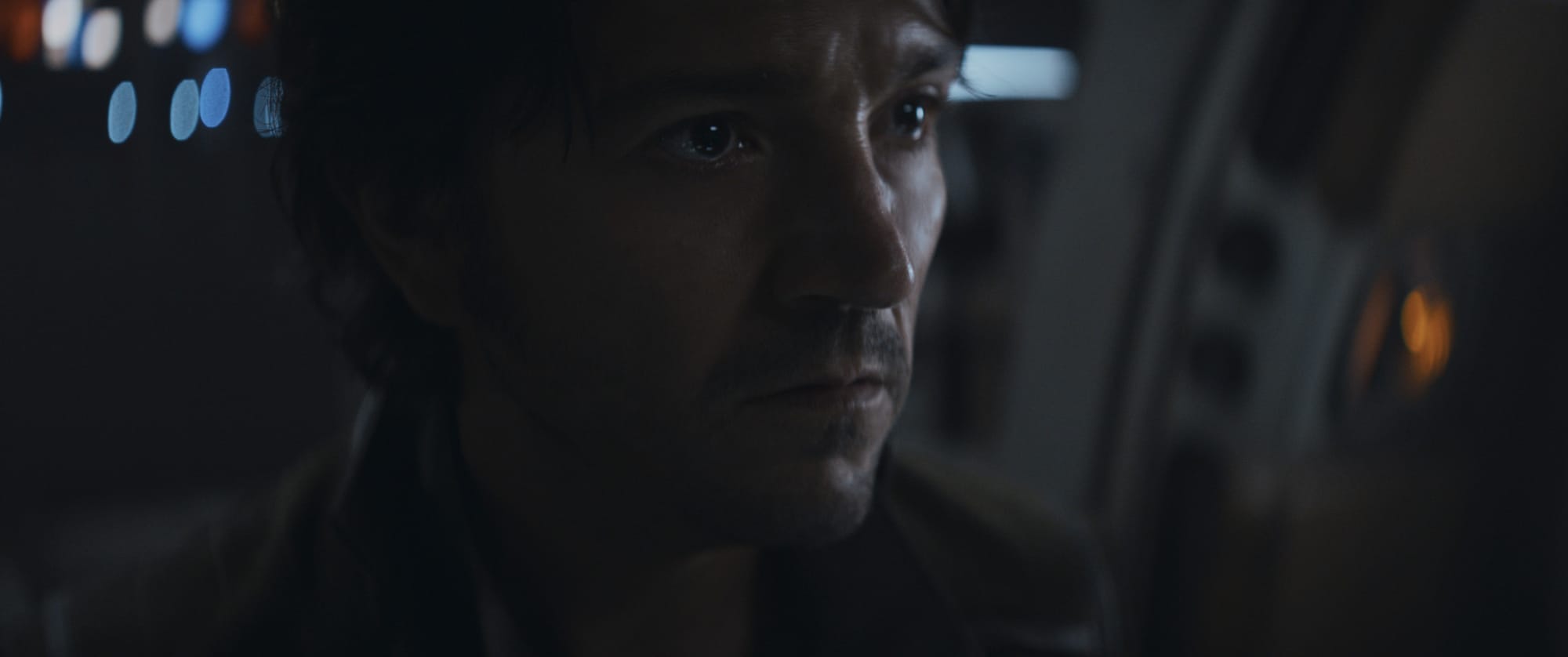
Next Week: There's no next week, at least not for Andor! We'll be on April 16 with the first issue of my Halt and Catch Fire series.
This has been amazing series to rewatch and think and write about. Much thanks to Tony Gilroy, the writers and directors on both seasons, and the amazing cast (mentioned or not in my pieces) and crew for bringing us miracle of a work of art.
Also thank you to my wife for putting up with that Disney+ sound every time I needed to watch another episode.
And finally, thank you to Dexter Jettster for everything you do.
While the words I wrote in this series mine, I took inspiration from multiple sources. Here's a page of the sources I consulted in the course of this series.
Wow, this has been a journey! If you have read all of these, or just read this one, or even just glanced at one, what'd you think? Let us all know in the Comments!
Liked what I had to say and how I just kept talking about it? Do you like movies? There's plenty more where that came from over at Amy at the Matinee on Patreon! This week, I'm kicking off a new feature, Sunday at the Matinee. To coincide with the conclusion of the Andor series, the first movie I'm covering is Rogue One. Try and make it, why don't you?
Also, to keep up with everything I am writing and creating, head over to Amy Wren Presents, my brand new website!
As always, I thank you all for your support.