Halt and Catch Fire: Like Water in the Desert
The Cardiff PC Project is underway, but that doesn't mean the road is clear. Will Joe choose to be great or successful? What is Cameron creating? What does Donna Want? And is Gordon okay?

"Close to the Metal"
Directed by Johan Renck
Written by Jonathan Lisco and Jamie Pachino
"Adventure"
Directed by Ed Bianchi
Written by Dahvi Waller and Jamie Pachino
"Landfall"
Directed by Larysa Kondracki
Written by Zach Whedon and Jamie Pachino
"Giant"
Directed by John Amiel
Written by Jamie Pachino
Is it better to be great or successful? They sound like they are the same thing, but they aren't necessarily so. To be great is to look beyond what is happening today and rise beyond merely good. It's to do something worth remembering. But that often comes with trade-offs. Sometimes what is great does not sell. And when you are in a business, being able to sell the product is paramount.
So, you can be great but not successful. And you can be successful but not great. You can make something that is merely good enough, and with the right connections, right position in the market, and just a little bit of luck, you can take that good enough product and make a lot of money. Yes, you won't make the history books, but you do get a vacation home somewhere nice.
But what is the definition of great? For Cardiff, wasn't making a portable computer that can fit in the size of a briefcase a great thing? This was what Gordon (Scoot McNairy) thought. After all, he and his team, with a big assist from his wife Donna (Kerry Bishé), did what seemed almost impossible merely months earlier.
It had been a battle to build the Cardiff PC. There were so many long nights spent piecing it together to fit the exact specifications required. And Gordon had to go to his father-in-law, with whom he had a less than loving relationship, to help strike a deal with a Japanese company to make the weight saving LCD screens. He had moved mountains and humbled himself to get the project across the finish line. It was a great PC, but also a familiar PC.
When you've sat with a product or creative work for a while, it's easy to lose track of what you have really accomplished. You stop seeing the brilliant intentions, the great ideas, and ingenious solutions. Instead, you can only see the faults and the merely ordinary. Thus, it's easy to start second guessing your work, and looking for new things to add to it, to get that amazement factor back.
At some point you just have to say this is what it is and push it out. This is true for hardware, and it's true for writing. In my own work, I can be excited about this idea or that one, but after sitting with them a while, I forget what I saw in the original ideas. Instead, I just see how incomplete the implementation of the idea was, or another idea that could have been better. Looking to improve the work is not a bad impulse, it's fundamental to making the work better. But at some point, you just have to let go and accept it's what it is. Unless you're George Lucas, I guess.
Cameron (Mackenzie Davis) did not come from a place of second guessing the product. She came by her ideas because she's a creator, and that's what she does. She took a look at the PC Gordon and his team put together. And it's not that she didn't see the quality of his work. She did. But she saw the potential to really connect people with computers. Not just those who already were into computers in 1983. But people who never thought they'd own a computer. To those kinds of people, the DOS prompt was intimidating and confusing, not an invitation to explore and create.
Thanks to a cherished stuffed toy of hers, she decided to give the computer a personality. She made the operating system (OS) of the PC interactive. It was friendly, and helpful, and eased you into using the computer for whatever you wanted to do with it.
Here in 2026, it would be easy to assume that this was some idealistic forerunner to Siri or AI chats. And, in some ways, their interfaces are similar. More accurately, though, Cameron's represented just one way to advance beyond the DOS Prompt. It's much more of the text-based RPGs of the early 1980s than AI.
Of course, we know that the development of the user interfaces for computers went a different way, given how you are almost certainly reading this on a device with a Graphical User Interface (GUI)*. But remember, this was set in 1983. The true age of GUI was yet to come.
Cameron was originally fighting a lonely battle for her personalized OS. Joe liked the idea, because he liked the idea of doing great things. But he originally turned her down, because he wanted to be successful, and the numbers told him that sticking with what they built would be successful.
Joe wanted to be successful, but he also wanted to be great. He wanted to love Cameron and be vulnerable with her. He was fascinated by her, but he also might get have gotten bored with her someday. And as much as he wanted to support her ideas and to be with her, he wasn't above manipulating her for the "good" of the project.
"Leave me alone, I've got to work." - Donna Clark, "Close to the Metal"
It's the programmer's worst nightmare. You're working along, building up your code, and then you come back to it and it's gone. Your code, the production database, all of those files. They are gone gone gone, and that's that. You pray the backups are there. But a pit grows in your stomach as you realize those are gone too.
It's happened to me, and I'm willing to bet it's happened to every single programmer who's lived long enough. Yeah, it's easier to avoid this today, what with source control and automated backups, but stuff like this still happens. It's basically a rite of passage. But that doesn't make it any less awful to endure.
And now it has happened to Cameron Howe. The disk she was building the BIOS on was lost, and all of her backups were degaussed, victims of a vacuum cleaner plugged in too close to them. She had one job, and she apparently messed it up. And on the very day Ron Cane (Michael Esper), a reporter from Wall Street Weekly magazine was on site. What a disaster!
Now, you might think that a disk was either accessible or not, and if it was not that means its contents were lost for all time. But that was not how disks, even damaged ones, always worked. If someone really knew what they are doing and wasn't afraid of a little intricate yet repetitive work, there might be data to salvage after all. Unfortunately, nobody at Cardiff was that good with memory. But Gordon knew somebody who was: Donna.
Gordon begged her to fix the problem; she agreed. She got straight to work. And she was a miracle worker. She manually spun the disk an incredibly small amount over and over and over, as she calmly directed Gordon's team members to assist her. In the end, she was able to salvage 93% of Cameron’s BIOS code. Donna (or rather Susan Fairchild, according to Ron Cane's article) really saved the day!
But did she? You see, after Donna restored Cameron's BIOS work, she looked at the supposed backup disks. Turns out they weren't used to back up the BIOS work at all but rather were full of expendable old Cardiff data. A curious thing, she went to talk to Joe to see what he knew. And wouldn't you know it; he orchestrated the little crisis to get the reporter to write about Cardiff. He justified the deception, which of course targeted someone he was currently in a relationship with, as being essential to the project that was so important. And, given how Gordon responded when Donna told him what happened, maybe he understood how at least one of the two key people he worked with?
Donna didn't tell Cameron what Joe did, but she did give her a compliment for her work. Because as sloppy as Cameron was (even if she wasn't that sloppy), she still was a wizard with the keyboard. It was game recognizing game.
"But why do you care about the answer?" - Joe MacMillan, "Landfall"
Joe and Cameron were together. Joe and Cameron were also in a manager/subordinate relationship. This was a complicated situation for them to be in even if they didn't bring a whole lot of baggage with them.
Joe desperately craved connecting with other people in general, and with Cameron in particular. He saw in her a kindred spirit. Because though Joe may be an Igniter, he saw himself as a Creator. He desperately wanted to be great.
But along with that side of him was a ruthless and self-serving side, who would say anything and do anything to be successful. Sometimes it worked to his advantage. But oftentimes it just led him to alienate those around him, and ultimately brought about destruction, until he went away, and found a new cast of characters and challenges to begin the cycle once more.
There's no one reason why someone is the way they are, no single piece of evidence you can point to. We are just much more complicated than that. However, it's clear that Joe's dual nature was inspired by the conflict of his parents. His mother was a Dreamer who was also an addict. She took him up on the roof to look at stars, but got high and didn't pay attention. He fell off the roof, and that's where his scars came from.
Joe's dad, Joe MacMillan, Sr. (John Getz), meanwhile, was a lifetime IBM company man. He was all business and was good at getting in the door by exuding a certain authority. He was practical, he was effective, and he was successful. Greatness wasn't his concern; it wasn't his department.
Further complicating matters was the fact that Joe was a bisexual. We were introduced to this when he used Travis (Travis Smith), the partner of LouLu Lutherford (Jean Smart), to get her to refuse to back Cardiff's PC Project for 80% of the share. This is something Joe often had to repress, because of the coercion of his father, his workplace, or society at large. Joe couldn't connect with others because he had never really been able to connect with himself.
Cameron, meanwhile, missed her father, who died in Vietnam when she was a child. This profound loss, coupled with being left alone with a mother who she did not get along with, left Cameron with a deep sensitivity to abandonment. Her inability to connect with others was less because she didn't know who she was, and more about her not being hurt.
Joe and Cameron's connection to each other was undeniable. There was something they needed in each other, even if they weren't quite able to articulate it. But though their connection was strong, it wasn't constant. Instead, it was as if they were two magnets, perpetually spinning. Sometimes they attracted each other, but other times they repelled.
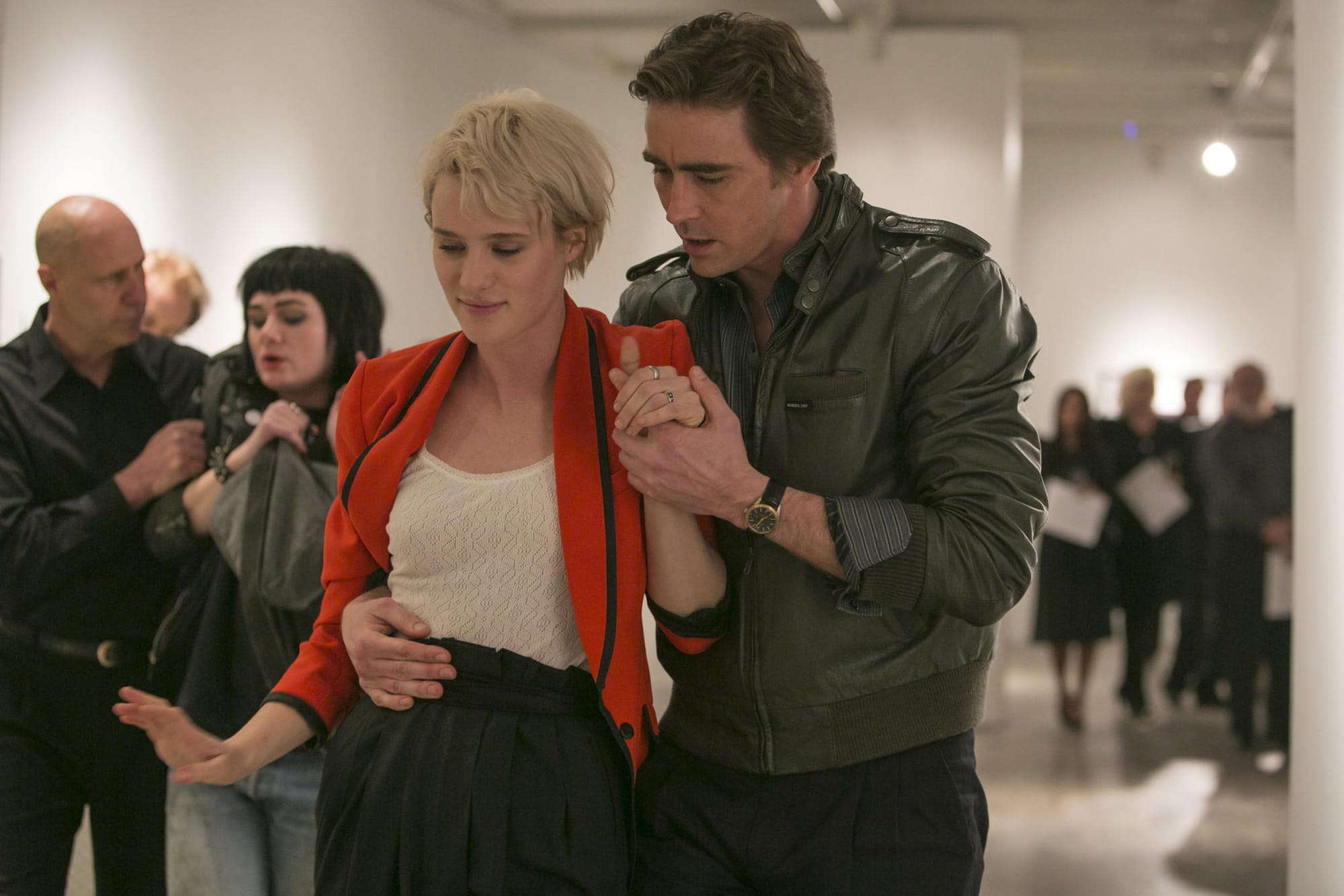
But for a while, Joe and Cameron were doing well together. Part of this was because Joe had decided to include Cameron's OS in the computer. But they were getting along. And then, Simon Church (D.B. Woodside) shows up one day. He was contacted by Joe to make a designer case for the new computer. As Cameron found out, however, Joe and Simon had a history. It turns out that for a while Joe and Simon were together, until they weren't. For someone like Cameron, who is always fearing and assuming everyone will leave her, this hits her insecurities hard. In the end, though, Joe chose Cameron. For now.
"I want to build something that makes people fall in love." - Cameron Howe, "Landfall"
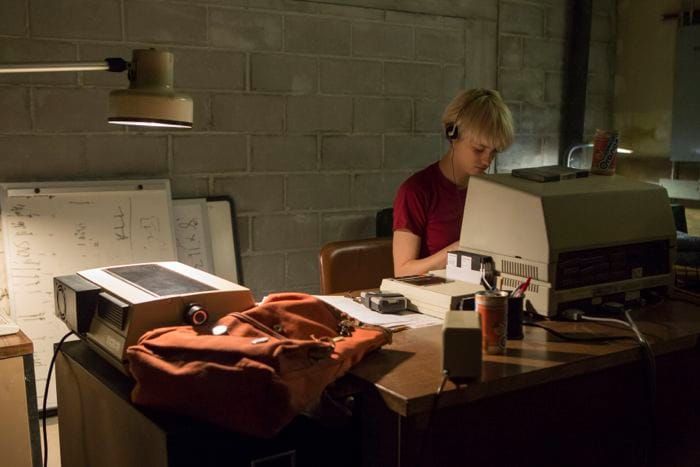
To say that Cameron had issues communicating with people would be an understatement. But when she was at her computer creating, she was at home. It was a language she understood, could communicate in fluently. The code didn't lie, didn't manipulate, didn't ask anything of her. She had the control, the ability to decide what was happening rather than having things happen to her. It was an oasis in the middle of a desert of existence for her.
She built the BIOS, even after the near disaster that Joe engineered. And she did great work. But when she got back from a much-needed break, she found that Joe had hired a team of developers, managed by Steve (Matt Burke). Steve went to
"B school" at Stanford. We know this because he always made sure to let everyone know. He got on Cameron's case about following his procedures, and assigned her print drivers, the lowest of the low tasks for a programmer in 1983. It was as if he was tailor made to infuriate Cameron.
I've watched this episode many times, and I still don't know if Joe hired Steve intentionally to annoy the hell out of Cameron. I honestly hope not, because Joe hiring him because he thinks it will make the project successful makes the story feel more organic, that Joe isn't just a master manipulator always manipulating. Whether or not it was an intentional move to get Cameron to step up and take initiative to lead the team herself, that's the result. Sitting in Joe's apartment one night, Joe Sr. told Cameron a story about how Joe straight up lied to an IBM employee about him being fired to get him out of the way for a promotion. Taking that cue, Cameron walked up to Steve and said he had been fired. Whether or not Joe intended this to happen, he blessed it, and Cameron was given control of the team of programmers.
Immediately she showed her management style. The team was overstaffed, which counterintuitively could lead to worse results for a programming team. In one fell swoop, she picked her team by asking the developers if they used backdoors to cheat when playing Adventure. Her reasoning was that to cheat at the game, you had to understand the code. Which meant you were better equipped to solve the big problems that come up during software development. The creative cheaters, including Yo-Yo Engberk (Cooper Andrews) and Malcolm "Lev" Levitan (August Emerson), were her guys.
Bit by bit, Cameron was connecting to other people. Joe, sure, but that was a particularly fraught connection. Her programmers, particularly Yo-Yo, were a healthier connection for her, but still there was some distance given she was their manager. Her strongest connection was turning out to be with John "Boz" Bosworth**. He did expect something out of her, because he was technically her boss. But he was a mentor, almost a surrogate father, to her. He was a reliable person for her to go to who would tell her the truth.
In the middle of a storm, the result of a hurricane in the Gulf of Mexico making landfall, they had a great conversation. Cameron opened up and talked about what got her into computers. It was not only because a computer was something that she could understand, but also it gave her a voice with which to communicate. Through her worked she hoped to connect with others. The flip side of this was she would get frustrated when others didn't get what she was saying.
Cameron was rarely wrong about her ideas; she was just ahead of the curve. It meant she could and would make great things. But it also meant that she couldn't always articulate why these things mattered. And even when she did, not everybody responded positively. The future meant change, and change didn't mean everything changed for the better for everyone.
"Innovation is a risk" - Boz, "Giant"
Given his age and lack of hands-on experience with technology, you might have thought Boz would be the least likely to go along with all of the changes that happened to the Cardiff. But he had seen plenty of change during his career. After all, the company started out as a manufacturer of radios before they moved into mainframes. Change had happened before; it would happen again. Besides, he really dug the work that Gordon and (especially) Cameron was doing.
This was his team, these were his people. He may not have chosen to take this course of action, but once it was chosen for him, he made it his business, and he would stand by them all, success or failure. This loyalty, this care for the company, was genuine, because he's a genuine person. It's why when it came time to present the prototype of the PC to the team, everyone demanded Boz turn it on, instead of Joe. It was a clear victory for Boz in his battle to determine who really ran things at Cardiff.
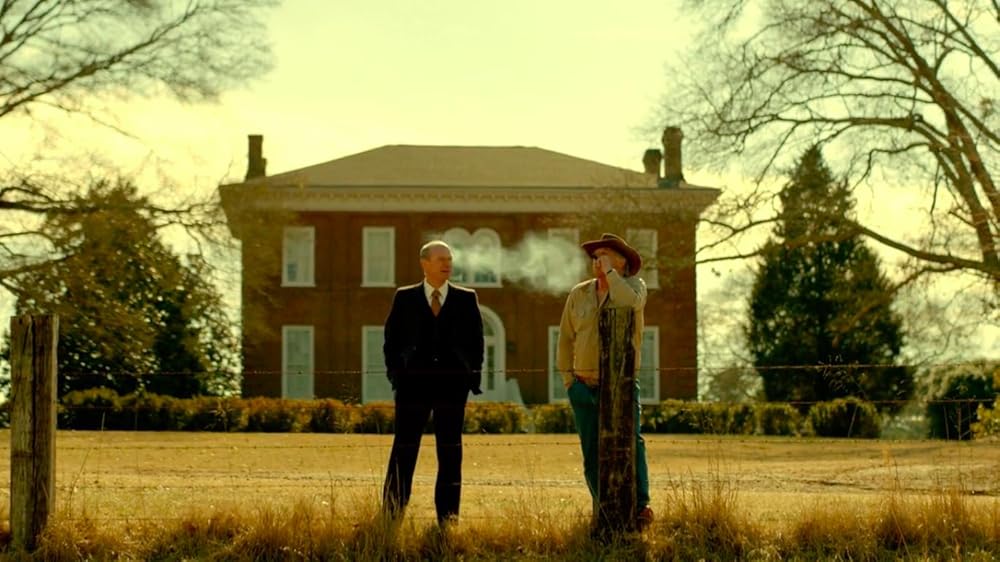
Of course, Boz wasn't without difficult relationships of his own. He was in the middle of divorcing his wife. He and Joe never really saw eye to eye. And he went to great lengths to show Joe who the boss was. As loyal and avuncular as Boz was, he had a darker side. He got a couple of his cop buddies to pull Joe over and rough him up. Boz’ ruthlessness should not have been underestimated.
But though he was willing to play dirty to show who was in control to both Joe and Nathan Cardiff (Graham Beckel), he was loyal to a fault externally. Even in the middle of the squabble between him and Joe, he did not give the reporter any dirt for him to use. And when sleazy case manufacturer Kenny Burke (Ricky Wayne) got homophobic with Joe, he punched Kenny right there in the middle of the strip club where they were meeting. To Boz, Cardiff meant the world.
Which is why it hurt him so much that the company was out of money. He tried to get Nathan to provide a loan to get them to production, but Nathan was not as emotionally involved with the project. As much as he could profit from the computers, he also saw the risk that there may not be any profits at all. He was ready to cut his losses.
But Boz was not. No matter how he did it, he would get the PC across the finish line. Whether he mortgaged his house or found other means. He read an article in Newsweek about hackers who had infiltrated various high security institutions. Would this be useful to him?
"Why don't you just call it the Cardiff Giant" - Gordon Clark, "Giant"
All of this money trouble was unknown to Gordon, who was having problems of his own. He and his team had fought and scrapped and built a damn fine computer. But then, at the last moment, Cameron suggested her interactive OS, and that threw everything off. It would eat a lot of memory, which meant an expansion of the memory in the computer. And that meant throwing off the intricate balance that he and his team had barely been able to pull off.
And even if they pulled off the expansion and still kept it within specs, the resources reserved for the OS threw its performance off. With one change from the software team that was backed by Joe, Gordon's machine was in danger of failing. And on top of it all, Joe had decided to hire Simon to build a designer case for the computer he decided to call the "Contrail". Did Simon design something that went beyond the carefully crafted specs? You bet he did.
All of this was too much for Gordon. He could never shake the ghost of the Symphonic. As the project proceeded, Gordon became more convinced this wouldn't be the Symphonic all over. However, he also became convinced that Joe didn't see this as a partnership, but as a relationship where Joe told Gordon what to do, and he did it. Success or failure, it was looking like Joe had no intention of sharing the credit with him.
And yet, Gordon ended up naming the computer: the Giant. This wasn't his preference, or the preference of anybody on his team. It was him making a reference to the Cardiff Giant. Specifically, it was him calling Joe a huckster on par with P.T. Barnum. I assume the irony was lost on Gordon that the Cardiff, NY farmer that Barnum ripped off pulled a hoax of his own.
But fighting with Joe and his fears of irrelevance, it is clear something much bigger was wrong with Gordon. His hands were shaking at times. He was having waking visions, and horrible nightmares where he screamed in his sleep so loud, he woke up everyone in the house. After his blow up with Joe, he made a mess in the house and was found by Donna digging a giant hole in the backyard in the middle of the night. He claimed he was looking for the Giant.
"Showing people who you really are, you should do that more often." - Hunt Whitmarsh, "Giant"
Donna came home left an awkward mess on her business trip to find Gordon's even bigger mess. And that was before she found him in the backyard digging a giant hole. Before then, Donna was on a roll, as she took steps to think about what she wanted from her life.
Before she came in to rescue Cardiff from what appeared to be certain doom, "want" wasn't really something Donna did. She had a full-time job, two young children, and a mopey husband to take care of. There weren't any wants or desires, only things that must be done. Up to that point, the big things that happened in the show were happening to her, rather than because of her.
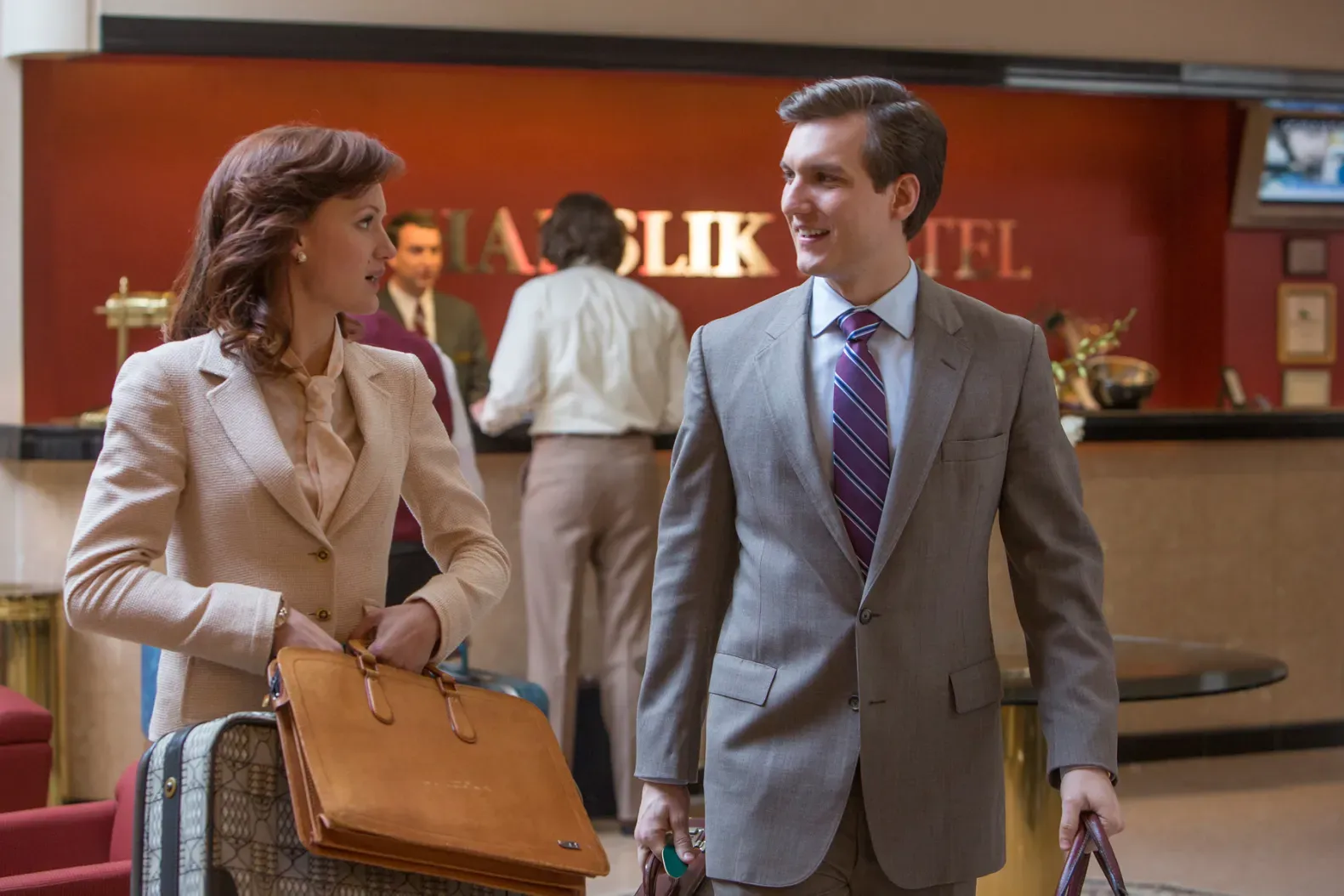
But then things started to change. She started playing music on her keyboard again. Her boss, Hunt Whitmarsh (Scott Michael Foster), liked the work she did on a report, and invited her to a meeting he was having with the Texas Instruments upper management. There she took a big chance, and told the truth to the execs. And it paid off! She capped this all off by once again donning her "Susan Fairchild" persona and played the piano at a restaurant while the normal player was taking a break. It was really great seeing her take some small steps towards making her own choices in her life.
But then she went a step too far, and kissed Hunt when he showed up at her door at the hotel. Unfortunately (fortunately?) he wasn't there for that. A fax from Gordon about the latest thing he was angry about with the Giant accidentally came to him, and he was giving it to her. It was a complete embarrassment. She rented a car and drove home immediately, unwilling to face Hunt on the flight back from Lubbock the next day.
So, it looked like an affair was off the table. But that didn't mean Donna wasn't looking for something new, something to really engage with her clear talents and skills. For now, it was enough that she was open to thinking about it.
"'Cause you're the future. Ain't nothing scarier than that." - John "Boz" Bosworth, "Landfall"
Being in the middle of a project can be a frustrating experience. It no longer has the fresh possibility of a beginning. But the end has not yet arrived. The middle means continuing to do the work, even when it feels repetitive or never-ending. In addition, the middle is defined as much by what isn't working as what is.
When telling a story, the middle shouldn't be frustrating and hopefully isn't boring. But it still has things to do and has to do it without being able to see the beginning or the end anymore. This is a great place to really start fleshing out characters, and building new connections, and changing old ones. As impatient as we all are to get on with it, it's a crucial part of the story. It's where it goes from what it can be, to what it will be.
This is true this middle section of Halt and Catch Fire's first season. While the show was still working out some of its kinks and figuring out exactly what it wanted to be, it was doing some great work. And it was setting up the great places its characters and stories would go for years to come.
Cardiff had its Giant, and Joe and Cameron had each other for now. But the money woes for Cardiff had not gone away, and in fact were even worse. Donna took steps to find out exactly what she wanted in life. Gordon built his computer, but at what cost? Where is this taking us?
We'll just have to stay tuned.
Next Week: The Cardiff gang gets ready for COMDEX in Vegas. I'm sure this will go smoothly.
CORRECTION: In last week's issue, I claimed the series was set in Austin. It's actually set in the Dallas-Fort Worth metro area. The cold open is in Austin, because that's where Joe meets Cameron.
Footnotes
* If you are not accessing this on a GUI, congratulations on living the command line life. Be sure to talk my work up on Usenet.
** From this point forward, I will refer to him as Boz, because he's Boz.
If you enjoyed this piece, share it with a friend!
Liked what I had to say and how I just kept talking about it? Do you like movies? There's plenty more where that came from over at Amy at the Matinee on Patreon! Every week, I release my feature pieces about a movie, Sunday at the Matinee. I just watched and talked about Steven Spielberg's wonderful 2012 biopic Lincoln, which turns 100 this year. This Sunday, I'll be writing about Tim Burton's first feature film, 1985's Pee-Wee's Big Adventure. Try and make it, why don't you?
Also, to keep up with everything I am writing and creating, head over to Amy Wren Presents, my website!
As always, I thank you all for your support.