Halt and Catch Fire: An Armadillo Crosses the Road...
It's 1983 in Austin, Texas. The future begins now. Joe has a plan, and Cameron and Gordon will make it work. Sounds simple, right?

"I/O"
Directed by Juan José Campanella
Written by Christopher Cantwell, Christopher C. Rogers
"FUD"
Directed by Juan José Campanella
Written by Christopher Cantwell, Christopher C. Rogers
"High Plains Hardware"
Directed by Karyn Kusama
Written by Jason Cahill
Spoiler Alert: Spoilers for Episodes 1-3 of season one of Halt and Catch Fire ahead! There shouldn't be any spoilers for things happening later in the series. References to real history don't count as spoilers, something that will come up during this series.
Let me start by asking a question.
What does the future mean to you?
I know, I know, that's a complicated question to ask. It's so simple, yet so far ranging. The future doesn't mean the same thing to everyone. Is it hopeful or fearful? Big ideas and amazing new things, or just a whole lot of thankless work?
It's also the kind of question that signifies your answer must be important. There is simply no way you can capture everything you would like to say about it. It's intimidating.
Don't worry, there won't be a test, and I don't expect you to answer right away. Or ever. But I have an answer.
The future is a story that we must tell to make it so.
Or rather, it is several stories, interwoven to create a larger story. In telling this story, I will tell the truth. I will also lie. Not to deceive or trick you. But to withhold information, to choose when and how I give it to you. Because I know how this story ends. But to get to the end, I must first begin.
So let me tell you a story about Halt and Catch Fire.
He Was an IBM Man
Joe Macmillan (Lee Pace) has a plan. While I am not privy to the exact details of his internal plan, I have it on good authority it goes something like this:
- Find a coder and put them on ice. If you can fuck and fight with them before the cold open ends, so much the better.
- Get hired at Cardiff Electric. Show John Bosworth (Toby Huss) your pay at IBM. This will get you in the door because he is just a good old boy from Texas. They love big steaks, big hats, and big checks.
- Get Gordon Clark's attention by parking in his spot and take him on your first sales call.
- Sell Gordon on your point of view, as you're selling the company. It doesn't matter whether the company signs or not. Gordon is the target.
- Keep up the hard sell. Call him at home and see if you can find out where he is, and go to him to sell him on it. It does not matter if he is at the movies with the family, you follow him and sell him.
- If he doesn't sign on that night, the next day really go for it. Tell him your plan to build an IBM compatible PC. He'll give you a lot of the usual reasons. You tell him that is what Cardiff is for. Be sure to use "Computers aren't the thing, they're the thing that gets us to the thing." It's both true and effective.
- Rebuild the BIOS with Gordon. He will do the technical work, you'll be there to help with the stuff you can.
- Once we succeed, let Dale know you and Gordon reconstructed the BIOS. IBM should threaten Cardiff with total annihilation by the end of business.
- Keep calm, because you are almost there. Nathan Cardiff (Graham Beckel) and John Bosworth will try to tear your head off and shit down your neck. They will do this because they know you've forced the issue. They will give you the PC project. Gordon will be mad you did this and didn't tell him your plan. Don't worry about this, he'll relent when he sees his new office.
- Here's the brilliant part. You know the college programmer you put on ice? Bring them out and offer them the position. Start at $20,000 and see where it goes.
- There it is, your new PC project. Time to get the work started and share your great idea with the new team.
Now, I played a little loose with things here. Some of these were not things he planned, but rather things Joe took advantage of to push his agenda forward. But this was definitely his plan:
Cardiff->Gordon->BIOS->IBM->Programmer
He came for Gordon and Cardiff. He found Cameron.
Before I continue, I'm going to rewind. What was this like from Gordon's point of view? And Cameron's?
Gordon is introduced to us all getting bailed out of jail by his wife Donna (Kerry Bishé). He's a sad shell of a man, just existing at his dead-end job and not helping out with their daughters Haley (Alana Cavanaugh and Lillian Ellen Jones) and Joanie (Maggie Elizabeth Jones and Morgan Hinkelman). You see, he is still broken up over the failure of the Symphonic, a seemingly brilliant computer he and Donna built. This is all causing strain with Donna, who is having to do everything, from raising their kids, to picking up after his mopey ass, to working at her own full-time technical job at Texas Instruments.
And then Joe comes along and convinces him to make a bad decision and reconstruct that BIOS. And as much trouble as it got him into with both Cardiff and Donna, it was the most alive he had felt in a long while. Although wary of this being Symphonic redux, Donna also notices the change in him and relents reluctantly. Gordon is a builder, and he must build.
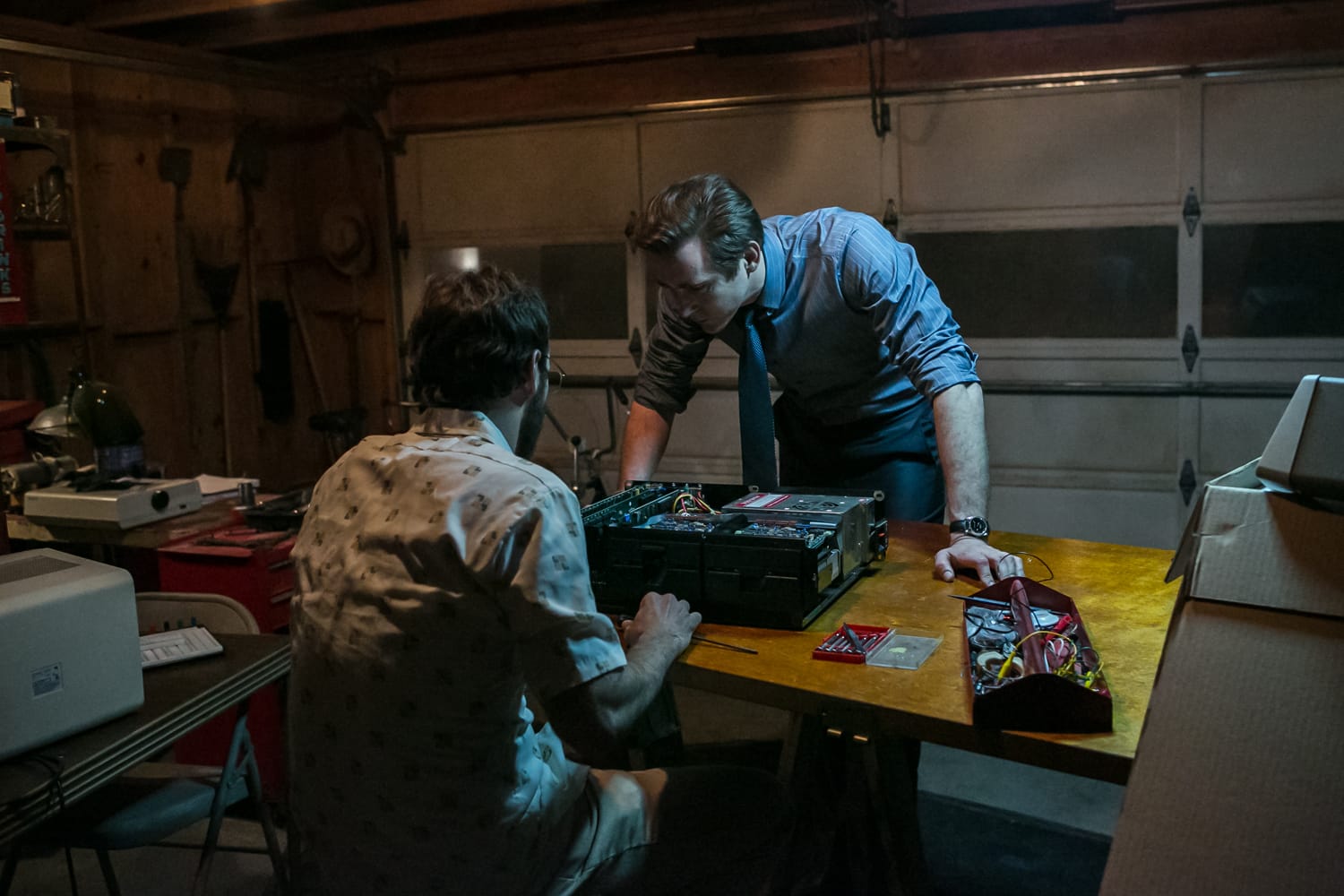
Cameron, meanwhile, is introduced clearly knowing computers, but also being reckless and mistrusting. Which, given how Joe seduces her and then drops her quickly, a lack of trust in Joe makes a hell of a lot of sense. And when Joe and Gordon come to hire her, she had just been kicked out of the bar for stealing arcade plays with a slug. An inauspicious start for Cameron Howe.
It's clear Cameron has big ideas where she thinks tech should and must go. But she's not an idle dreamer, she wants to create these ideas. And she instantly can see her worth to Joe's big project. As such, she isn't a push over in their negotiations. They all shake hands, and Cameron comes on board at Cardiff. She's the only woman on the tech staff and sticks out amongst the other women at the company who are dressed in JC Penney's finest office wear.
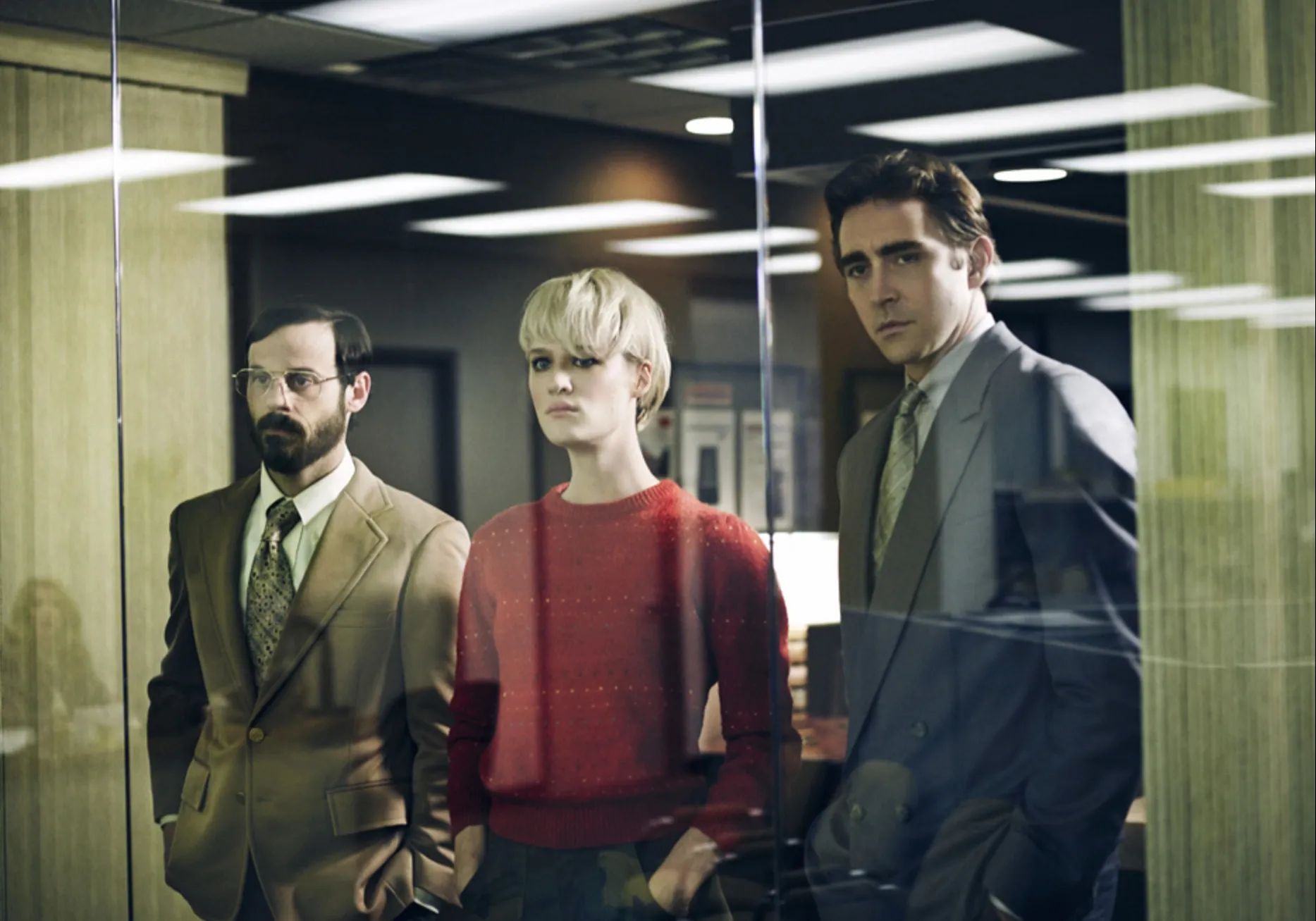
And just like that, we join Joe, Gordon, and Cameron in the big conference room, the first real moment of connection on this great project they've undertaken. It's here we get the culmination of Joe's big plan, where we are all clued in on where he sees the future going. As if bringing the Word of the Lord to the whiteboard, Joe writes:
2x FAST
1/2 PRICE
The Builder, The Creator, The Igniter
Right away, both Gordon and Cameron react negatively to Joe's magnificent idea. Gordon isn't so much derisive of it as certain it's too ambitious. At best, it doesn't conform to the realities of the marketplace. At worst, it defies the laws of physics. But he starts to work the problem.
He's a Builder, and as such is most comfortable attacking the problems at hand to build something. What the project is for, what it means is for others to care about? Not really his concern. He just wants to do the work.
Cameron thinks the idea is not ambitious at all. It's merely an evolution of the same old boring crap. There's no creativity, no pushing the boundaries of what is possible. She spends her entire time attacking the vision and then arguing with Gordon about it. And yet, she doesn't leave the room.
She's a Creator. This is different from a Dreamer. She's not afraid of hard work and has concrete ideas she wants to implement. She gets frustrated with everyone who can't see the vision. For her, only the perfect will do, and the merely good is her enemy.
The thing is, Joe knows how ambitious his idea is from an implementation perspective. He also gets that the idea isn't that ambitious on its own. But look deeper, and it’s plenty ambitious. By making the computer faster and cheaper, it opens its use up to a wider array of people. They can do more with it, and connect with it, and do great things. In his mind, the PC project isn't the thing. It's the thing that gets us all to the thing. He leaves the room to get a cup of coffee and admire the work he's started. He's neither a Builder nor a Creator. He's something else.
In my quarter century of being a web programmer and my lifetime as a writer, I have experience from all three perspectives. Much of the time my job has forced me to be a Builder. I take someone else's vision and make it a reality. As limited as it might sound, it has some advantages. You don't have to think about the why, or how to get others to buy into the vision. You just have to focus on making the darn thing work. Within that narrow scope is plenty of opportunity for creativity and inspiration. But it can be frustrating and often boring.
I've also been in positions like Cameron as well. Where the work at hand feels too small, not ambitious enough. This is my default point of view, as I am a Creator through and through. Whatever contentment and challenge I can find in the process of building is temporary, and I'll always end up burnt out. I'm always much happier working on my own ideas and building my own future, although it can be quite lonely and there is no guarantee I will connect with other people.
As for Joe, isn't he just trying to tell a story? And isn't that what I am doing right now? I am taking my accumulated and focused knowledge, analyzing it, refining it to its basic central idea, and then communicating that idea to you all. Hopefully, in a persuasive and entertaining way.
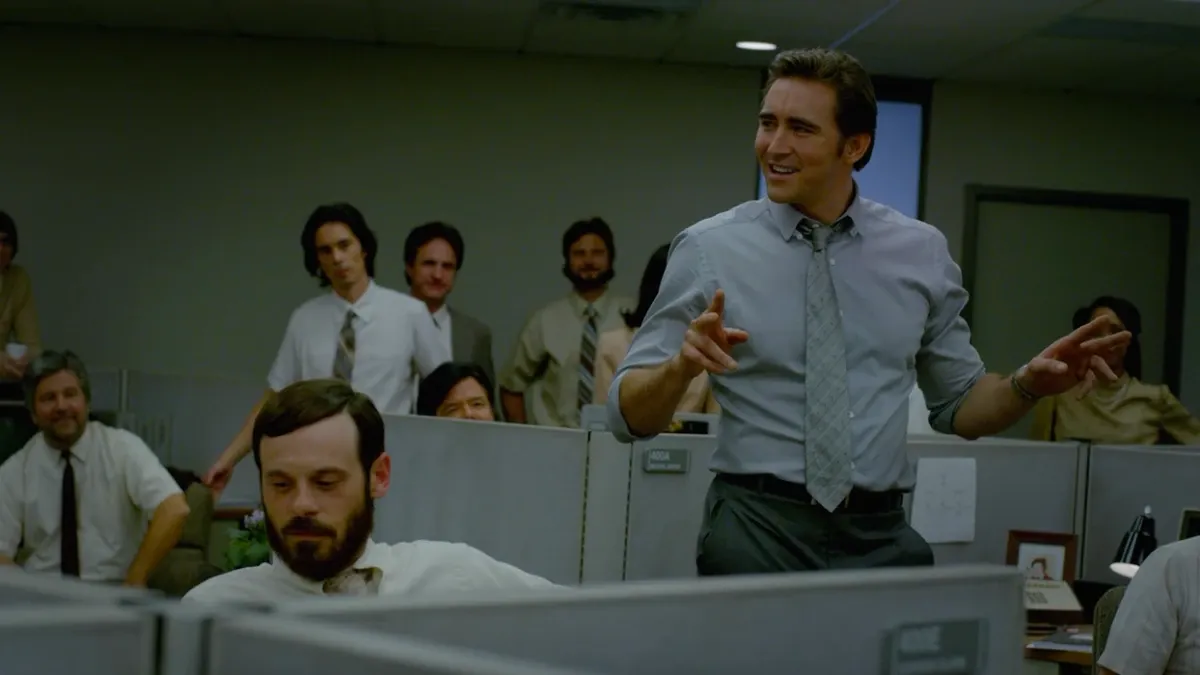
Sure, I'm not trying to get you to build a new PC, but I am trying to convince you to read this, engage with it, and use it to your own advantage, to spread the message further. My writing isn't the thing. It's the thing to get us to the thing.
Now finding a commonality with Joe MacMillan is an uncomfortable thing to admit. Because there is a fine line between persuasion and manipulation. In the pursuit of getting his PC project off the ground, he crosses that line on a regular basis. He manipulates Cameron, and Gordon, and definitely John Bosworth and Cardiff. It doesn't matter that some of his targets already want to go in the direction he pushes them. It's still manipulation.
And Joe’s not just manipulative. He doesn't seem capable of understanding that there can be consequences for his big plays. He knew that his plan to corral Cardiff into building his PC would avoid a lawsuit from IBM. But he did not anticipate what else IBM might do to retaliate besides a lawsuit. All too late he discovers IBM's plans to break Cardiff's mainframe business. Turns out a gigantic company with deep pockets can effectively stand to undercut a much smaller company's prices in a petty vendetta. It was a pretty obvious next step for IBM, and Joe didn't see it. Joe got his PC project, sure, but without meaning to he broke Cardiff's main business. A whole lot of people lost their jobs and had their lives upended. All because Joe had to build his PC.
If Gordon is a Builder and Cameron is a Creator, what is Joe? If all he did was come in and get great projects going, convince others to take ideas and turn them into reality, he'd be a Starter or a Founder or Seer or something like that. But the ability to light a spark can both create and destroy. It can both light a candle in the darkness and start a fire that burns the building down. What is Joe? He is an Igniter.
"So whatever this is son, I'm on the hook for it." - John Bosworth, "I/O"
The project has started, and the ideas and potential must now be put to the test. The practical acts of creating and building must be executed if Joe, Gordon, Cameron, and the rest of the team can deliver this PC. And they have the constraints of Cardiff no longer having its mainframe business to prop them up as they work. The stakes are incredibly high for them all, and they have one more constraint. Gordon, who is in charge of possibly defying the laws of physics to build the hardware, cannot talk to Cameron, who is building the BIOS from scratch. It's a generally agreed upon fact that hardware and software must communicate to make a computer work. However, it's an unavoidable constraint, due to the ever-looming threat of Big Blue's lawyers raining fire down upon them all if they don't.
The pressure of it all is enormous. And yet, they must go forward and make this project a reality. Which means doing the work. Gordon would prefer to be close to the metal in the machine, building it out day in and day out. But he is managing the hardware side of the project. Which means most of his workday is making decisions. And often, that means making the least bad decision. Not every decision you make will make everyone happy. This is true whether you are deciding to fire someone or deciding where to place a component in the case of a computer. Gordon loved the new office and the sense of respect he got being the boss now. But he also learned it wasn’t as great as he had hoped. Especially when the other person you are managing the project with has a tendency to make destructive decisions.
Nevertheless, the work must be done. Gordon and his team try to figure out how to make Joe's great idea a reality. He's assisted by his co-worker and neighbor Brian (Will Greenberg). Brian is a trusted advisor, always telling Gordon, very reasonably, why this all can't work. He makes reasonable points that point out how unreasonable some of the solutions Gordon was thinking up were. For example, as Gordon was trying to figure out a chip alignment problem, Donna took a look and suggested they stack the chips to save horizontal space. It was a brilliant idea and would make a big dent in moving forward on the project. Brian very reasonably argued that this idea would fail. After all, would Intel or any of the other board providers change their board manufacturing just for this project? Gordon would have to face facts and just accept this project could not be done the way Joe (or Gordon) would like. But then the very reasonable Brian ran a stop sign and got into a wreck as they went home from work. Gordon fired him on the spot and walked home.
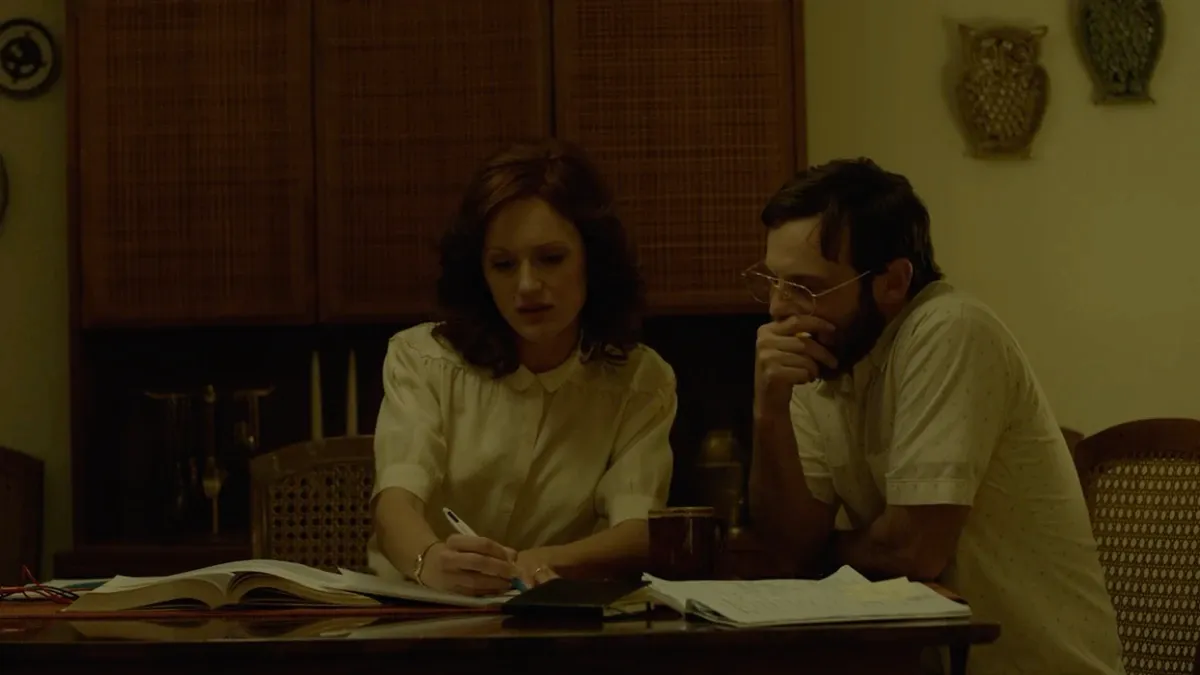
Being reasonable is good. In some jobs, like accountancy, being reasonable is essential to its function. And you can't be unreasonable all the time. Sometimes you have to make the less risky choice. But when you are trying to do something big, you have to do the unreasonable. You have to take that risk. The trick of it is that you don't always know when the right time to be reasonable or not is.
For Cameron, the stresses are different. This is her first real job. Which means butting up against the expectations of working in an office, both from a professional standpoint and how the society of the early 1980s viewed women in the workplace. But it also means finding a way to develop a working rhythm, now that the work is real. It's a learning process, and the only real way to do it is to do it.
It helps to have a mentor, somebody to go to for advice and who can speak the truth to you. But her options are limited. She can't go to Gordon even if she wanted to, because she's legally barred from doing so. She could go to Joe, but he is her boss, and, well, it's complicated. Joe has a tendency to try to micro-manage her and manipulate her into looking at the reconstructed BIOS. He does this because he is panicking after IBM raided Cardiff. And because he doesn't realize that what looks like she is messing around writing a whole lot of stuff on a whiteboard is genius coding. Gordon does, but, well, he can't say that to her.
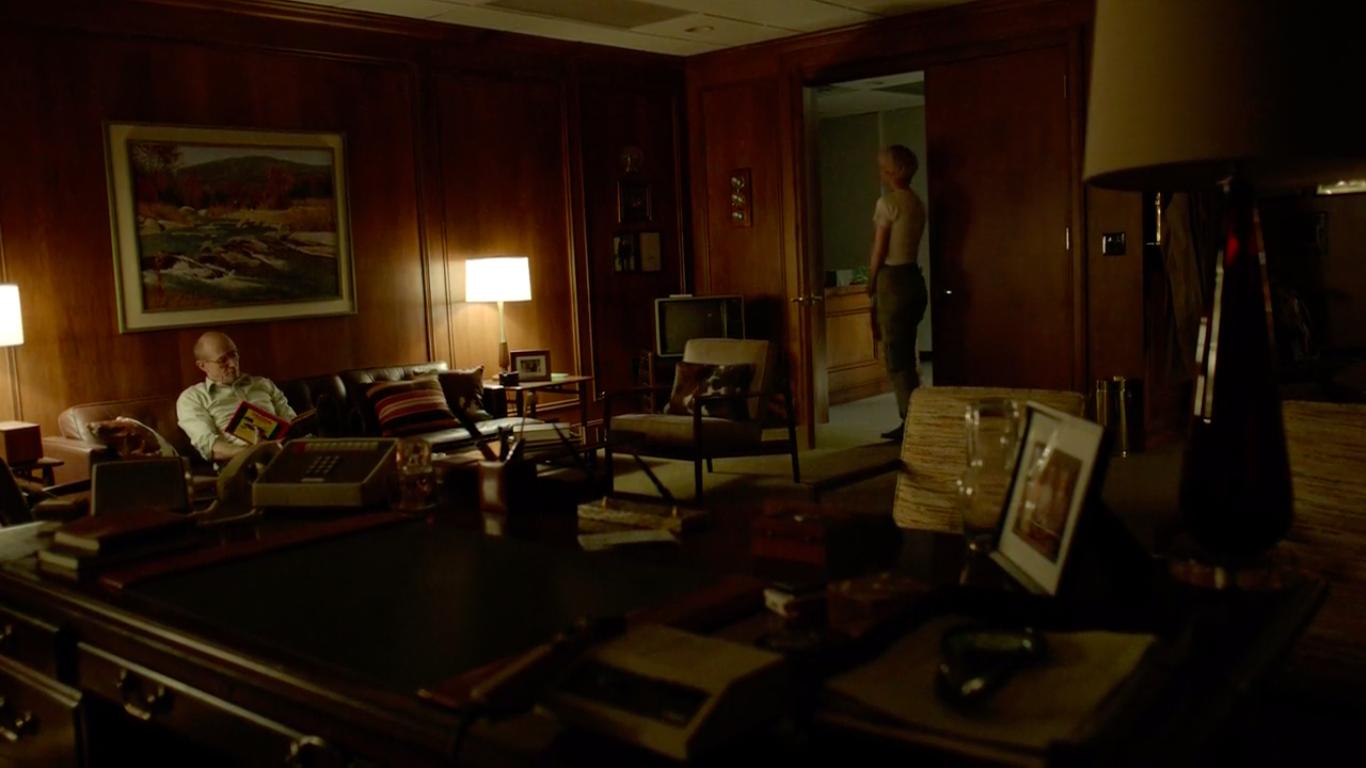
She stumbles into John Bosworth as he appears to be working late in the office. The first time these two crossed paths, Bosworth was all piss and vinegar, yelling at them all, but mostly Gordon and Joe for ruining the good, stable thing that Cardiff was. This time, however, he's much calmer and friendlier. He gently reminds her that the bowling shoes she's wearing belonged to one of the Cardiff employees laid off because of the IBM raid. He asks her a programming question, as he is trying to familiarize himself with the new business he's in. And, as she leaves, he reminds her that she can't live at the office. Judging by his still being at the office, this comes from experience.
Of course, living elsewhere is easier said than done for Cameron, as it's pretty clear she was homeless when she got the job. Fortunately, her first paycheck would help alleviate that somewhat, as she made almost $400 (almost $1300 in 2026). It's clearly the most money she's ever seen at one time, and she splurges on junk food and a hotel room to party with some other Austin street kids. But the job is still on her mind. She tries to work the problem she's stuck on, but she can't. So, she goes to Joe to help her unstick it. With sex.
I told you their relationship is… complicated.
"Yeah, well, let's just hope Joe was right." - Donna Clark, "FUD"
As I wrap this story up, I want to talk about the big final scene of "FUD" involving Cameron, Joe, and Gordon.
Joe stuck it to IBM (and by proxy, his father), but IBM stuck him right back, less hurting him than a whole bunch of other people who had nothing to do with the Joe MacMillan vs. IBM story. He built his PC team with the hardware man of his choice, and a promising coder. But Gordon is miffed at being manipulated. And Cameron wants him to back off, except for when she wants him to do the opposite of that. What's a visionary to do? Bring everybody together for his great new idea:
A Handle!
This really did not go over well with "the gang," particularly Gordon. If you investigate what Joe is meaning, he's trying to say portability is the next big thing for computers, ultimately even hinting at computers becoming laptops or even smaller and more portable. But he's not selling the benefit, or the advantage. He's selling the feature. And it just sounds downright silly. So silly, it ticks Gordon off enough to get into a fight with Joe and rip his shirt.
And that's where we see that Joe has scars all over his body. He goes into a whole story about how he ran off a roof being chased by bullies because he cared more about Sputnik than the "Greatest Game Ever Played"*. It's a horrifying story that Joe is milking for all the emotional manipulation he can get out of it.
If that was how the episode ended, it would be as if the show asked us to take the story at face value. But even in its early days, Halt and Catch Fire is a better show than that. The next morning, Cameron goes to Joe and calls him on the fact that Sputnik had come down over a year before the big game. The show is letting us in on the fact that Joe was using his scars to manipulate. Even when supposedly at his most vulnerable, he is just telling another story.
So is Joe telling the truth about his childhood trauma? Or is he full of it? In my notes for "FUD", I wrote this at the end of the episode:
The beauty of Joe MacMillan is that he is both totally full of shit and completely genuine.
All of those scars are not fake; they are very real for Joe. They have seriously affected him and continue to affect him to this day. But he is more than willing to use them to manipulate people to get what he wants. Will he learn to live with his past pain, and begin to grow beyond it, to truly start connecting with people? Or will he continue to perpetuate a cycle of manipulation in a bid for connection and creation that ultimately decays into alienation and destruction? You'll just have to stay tuned to find out.
GOTO: concludeAndNextWeek
This is a story about the act of creation. Not just an idea, but the execution of an idea. It’s about the Igniter, who with his gift of fire can light the way or burn everything down. About the Builder, who must make the impossible possible with only the tools and materials and skills at hand. And about the Creator, who sees most clearly what can be brought about if only we move beyond where we are.
It's also a story about destruction. Though destruction is the opposite of creation, it isn't inherently bad. Many times, something must be destroyed to create something even better in its place. Destruction is change at its purest, and that change is often abrupt, unintentional, and even violent. And, for better or worse, something new is created from that destruction. So it goes, creation connects to destruction, and destruction connects again to creation.
As such, this is also a story of connection. Connections already in existence before this story began, like Gordon and Donna's marriage, or John Bosworth’s long connection to Cardiff. But new connections as well, such as Joe, Gordon, and Cameron on the PC project. What happens as these, and future connections, grow and evolve and decay is the lifeblood of the story. Because though this is a story of creation and destruction, what good is any of it without connections? This is true for us in the audience, and the characters at the center of this story.
In short, this is a story about creation, destruction, and connection. And we've only just begun.
Next Week: Cameron's No Good, Horrible, Very Bad Day, and Donna Steps Up
Footnotes
* The 1958 NFL Championship Game between the New York Giants and the Baltimore Colts. Remembered so fondly because it was the first sudden-death overtime game in the NFL and was a nationally televised sporting event when that was still a fairly novel thing.
I've been looking forward to writing about Halt and Catch Fire, one of my favorite TV shows ever, for a long time. The fun is just getting started. What do you think about these first three episodes of the show? Let us all know in the Comments!
Liked what I had to say and how I just kept talking about it? Do you like movies? There's plenty more where that came from over at Amy at the Matinee on Patreon! Every week, I release my feature pieces about a movie, Sunday at the Matinee. I just watched and talked about Buster Keaton's classic comedy The General, which turns 100 this year. This Sunday, I'll be writing about Steven Spielberg's excellent 2012 biopic Lincoln. Try and make it, why don't you?
Also, to keep up with everything I am writing and creating, head over to Amy Wren Presents, my brand new website!
As always, I thank you all for your support.