Halt and Catch Fire: What's Next?
COMDEX '83 was a memory. Joe (Lee Pace) and Gordon (Scoot McNairy) held off a late charge from the copy-cat Slingshot. The Giant had faced near impossible odds, and yet Joe had sold 100,000 units to Computerland. It was gonna be a success. What's next?

"1984"
Directed by Juan José Campanella
Written by Christopher Cantwell, Christopher C. Rogers
Note: Sorry, this is going out so late. I had intended this to post at the usual 11:00 slot on Saturday, but my second computer in the last year failed in the middle of wrapping this up. Sadly, this isn't a trick by Joe MacMillan. Going forward, this shouldn't impact future editions of this series. Enjoy!
"I'm not talking about money, I'm talking about legacy." - Joe MacMillan, "1984"
COMDEX '83 was a memory. Joe (Lee Pace) and Gordon (Scoot McNairy) held off a late charge from the copy-cat Slingshot. The Giant had faced near impossible odds, and yet Joe had sold 100,000 units to Computerland. It was gonna be a success.
The fight that had started in Vegas between Gordon and Donna (Kerry Bishé) smoldered into December. Finally, Donna took the initiative and told Gordon the facts. His point was made; it was time for him to stop sleeping on the couch and come back to bed. After all, it was Christmas time, not fighting time.
Cameron (Mackenzie Davis), without a job and a boyfriend, had little to do but rage. One day, the Phone Company technician (Mark Lainer) came out to repair her phone. Apparently, it had "fallen" across the room and "accidentally" smashed into her computer monitor. After borrowing Cameron's wire-stripper, the repair man suggested she get a job with the Phone Company. They were always hiring. At least it wasn't VCR repair.
Joe and Gordon went back to Cardiff, where they faced one last challenge. They had made the Giant a success. But it wouldn’t matter if Nathan Cardiff (Graham Beckel) up and sold the company from under them. This project had wrecked the life of his friend, John Bosworth, and given his reputation in Dallas a black eye. Why not just sell it outright?
Joe first tried to use the numbers: 100,000 computers meant a projected net income of $40 million. Nathan shot back he was 65, what use did he have for the trouble $40 million might bring when he could be rid of the whole business for $5 million? Joe changed tack, and used an appeal to Nathan’s legacy, to continue the tradition his father started when he began manufacturing radios back in 1934. It worked, Nathan asked that Joe and Gordon run the company as the rattlesnake and the brains in charge.
From here it was just negotiations. Cardiff stomped around like Yosemite Sam, and Joe and Gordon countered with what a pain in the ass it would be for Nathan to run a PC company. It worked. Joe and Gordon would get 4% each of the company in exchange for running it. Joe and Gordon had won.
But to Joe it tasted like ash. He had lost Cameron, and he had lost the battle. He had seen the future in suite 1492 and it was named Macintosh. As 1983 ended and 1984 began, he could not shake the feeling that the Giant as it was would be little more than a footnote. This was further confirmed by Apple's famous "1984" Super Bowl Commercial. Joe wanted to pop a GUI onto the Giant, or at least come up with a new killer app. Even if it meant delaying the Giant. Gordon adamantly refused. The launch was set, best not mess with it. Besides, he was confident the Mac was little more than a flashy toy*.
Shortly thereafter, a big day happened for Cardiff. The test batch of Giants arrived! Now would be the time for everyone to come together and test the computers in depth, to make sure they were ready to release to the public. It was a celebratory moment, particularly for Gordon. All of his and his team's hard work had paid off. He was gonna sell a computer. He graciously gave Debbie her very own Giant, a magnanimous gesture for having put up with Joe. He could afford magnanimity. Gordon had won.
Sadly, Debbie's gift was broken. It would randomly shut down on her. It was a hell of a bug, and one that was clearly not a manufacturing issue. The team had tested five computers when Debbie's malfunctioned. If that 20% failure rate held, there would be no choice but to hold the launch and fix it before release. Gordon and his team were getting worried. Joe was downright happy. Perhaps his killer app would happen after all.
Did Joe sabotage Debbie's computer? He had already done that with Cameron's BIOS work. Why wouldn't he try something like that again? It was pretty unlikely; Joe wouldn't have the tech capabilities to introduce something this random and the only people likely to be able to do it were Gordon, Gordon's wife Donna, and possibly Cameron. Odds were Joe was just taking advantage of the situation. But whether or not he did it wasn't important. Gordon couldn’t dismiss the question outright. And that was bad enough on its own.
Whatever the cause, Joe immediately went to work with the idle programming team. He asked for their killer app ideas, and they gladly obliged. The air in the programmer bullpen was tinged with electricity as the programmers prepared to give their pitches. Joe made it through two (A lunar calendar calculator and a Beekeeping simulator) and stopped everything. These were fun ideas for an app, but not a killer app. Joe was frustrated that the only programmer with real ideas was Cameron. Did they expect him to come up with the idea? He was the Igniter, not the Idea-Maker.
Joe knew there was only one option for him.
"Except you're not the future. You're a footnote." - Cameron Howe, "1984"
Joe knocked on Cameron's door. He was desperate, he couldn't stop thinking about her.
Unexpectedly, Cameron opened the door.
He made his case. She could come back to Cardiff and work on whatever she wanted. She didn't have to work for Cardiff; she could start her own business as he'd sign a contract. She'd never have to see him. Better yet, he'd quit and go wherever she wanted to go. He needed her...incredible ability to create wonderful things out of nothing.
It was possible Cameron opened the door to hear Joe out about why they should get back together as boyfriend and girlfriend. It seems less possible that Cameron had any intention of ever working with Joe again. But amazingly she seemed receptive to the idea that they could build a partnership together and make their own future. Was this the moment when a chastised Joe was forgiven by Cameron, and the Igniter sparks a fantastic new creation with the Creator?
Well...I'll let Cameron take this one.
Yeah. Except you're not the future. You're a footnote.
For a while, you had me fooled. I mean, I thought I heard a heartbeat. But it wasn't a heartbeat. It was an echo.
I loved you, because you recited my own ideas back to me and pretended they were your own.
You want to know the truth? You're still exactly what you were the day your mom let you fall off that roof. Yeah. Just a sad little boy... with a lot of wasted potential.
Joe built himself up as a visionary, someone who could move mountains, or at least convince others to move mountains for him. But here, on Cameron's doorstep, he was dismantled by Cameron's verdict. Joe wasn't a great creator. He wasn't even a bad creator. He was incapable of creating anything new of any value. He was an echo.
Cameron shut the door on Joe.
"Well...that's the best part." - Gordon Clark, "1984"
With Gordon running the Cardiff Giant team with Joe, the Clarks were suddenly flush with cash. Which meant that Donna was able to quit her job at Texas Instruments. Or rather, she failed her performance review so badly she was fired on the spot. Gordon met her in the parking lot to take her to lunch in his new Porsche. Gordon had won, and Donna was reaping the benefits.
For the first time in forever, she enjoyed some real time off. Like, really enjoyed it, in that "pigtails and robe all day" way. When Gordon got home from work one day, and the girls were elsewhere, Gordon and Donna had their own sleepover.
Day in and day out, Donna had no work responsibilities. She wasn't worried about Gordon, who was doing great at Cardiff, and the girls were off at school most days. She killed time packing away her work stuff, finding old bags of marijuana, and eating a hell of a lot of Twist-O's. This was Mrs. Donna Clark's life. And it was fine. Totally fine.
The one bit of excitement in her new life was when Gordon came home, angry that Joe was so bent on delaying the Giant. He came up with a plan to blackmail Joe using the one weakness Joe had: Cameron. He would threaten to turn Cameron in to the FBI for helping Boz steal Cardiff's money unless Joe agreed to let the Giant ship on schedule. Gordon wasn't a monster, he wasn't actually gonna turn Cameron in. But he wanted to threaten it. And besides, Gordon didn't have any proof. His wife gave him the proof he needed: A print driver and a story to tell about it. Joe wouldn't know the difference.
All of this subterfuge wasn't necessary, because Joe was done with his "killer app" obsession. Cameron's evisceration of him at her doorstep took away whatever spark he had left. He showed up late to the office to the ire of Gordon, who had more bad news. The entire programming team had quit to work for a new startup: Mutiny. And that startup was founded by none other than Cameron Howe.
Joe was done. The Giant would ship. Gordon had won.
"Why me?" - Donna Clark, "1984"
Mutiny was born from the ashes of Cameron's career at Cardiff. While working for the Phone Company, She realized their networks were much faster than advertised. By tweaking a modem a little bit, she could get it to reach upwards of 9600 Baud! That doesn't mean much to us here in 2026, but back in 1984, that was like driving on the Autobahn when everyone else was still on dirt roads. That meant Cameron and her programmers could put up killer games on their network, and people could pay to play.
Mutiny was an instant hit, getting a steady stream of customers right from the start. But with growth came problems. Software was important to Mutiny's business model, but hardware was essential. Because they had to manage servers and connections and everything else that came with running a network. Mutiny had a lot of spunk and determination and programming power. But it didn't have hardware know-how.
Meanwhile, Donna faced her first crisis as an unemployed woman. She was out of Twist-O's! Whatever would she do?
There was a knock at the door. Did someone read her mind and bring her Twist-O's? That would be a fun, but silly, surprise. However, it wouldn't have been as big of a surprise as who was actually at the door.
Cameron Howe.
She was not here to settle the score with Gordon. She was here for Donna. She remembered what Donna did that one horrible day, when it looked like Cameron had lost the BIOS work for the Giant. Donna had saved the day. It didn't matter that it was all a lie concocted by Joe. Donna had shown her mettle with the metal.
Donna knew her way around a computer. And she was free. And she could afford to work without a salary, with only a promise of equity to tide her over. Gordon had won, after all. Donna got shit done. And Cameron wanted her to get it done for Mutiny.
Donna eyed Cameron with suspicion. After all, didn't her husband and Joe screw Cameron over? Was this just another one of their little mind games? Donna wasn't gonna go against Gordon if that was her idea. Donna asked and Cameron denied.
Donna was intrigued. But a start-up, run by Cameron Howe? How was that gonna work? Gordon's hefty salary atop the Giant team reduced her risk, but it also meant she didn't have to take any offer that came along. Gordon had won; Donna had no intention of losing that for them. She could always get more Twisty-O's. Donna said thanks, but no thanks. Cameron, disappointed, didn't push the issue. She refused to burn that bridge with Donna.
"I'll 'darf' you to the day I 'zof'" - Gordon Clark, "1984"
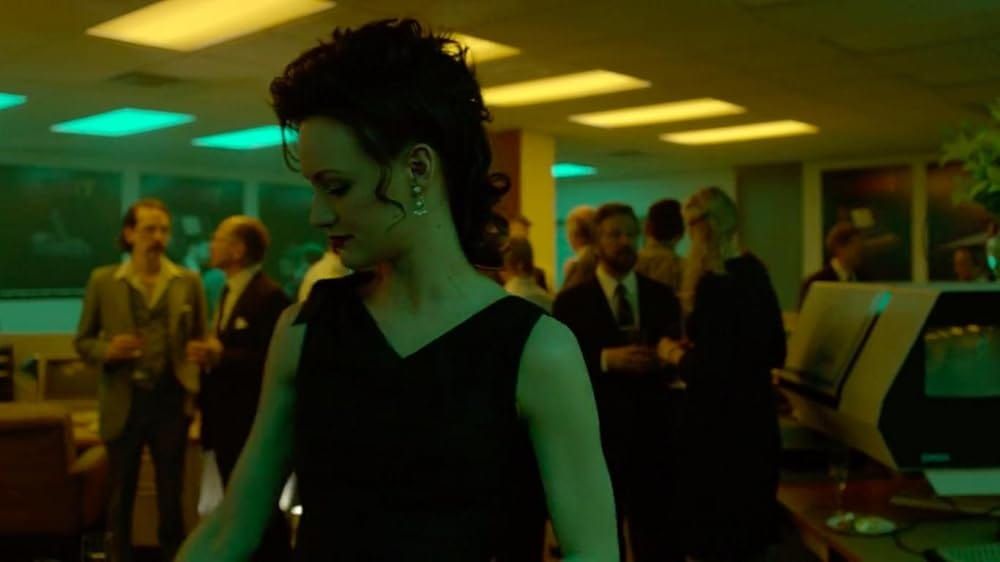
Finally, the day of the Giant's launch party arrived. This was Gordon's big victory, and as such he and Donna had to appear as victors. Donna put on her best makeup, her most stylish little black dress, and piled her hair high in the hottest style of 1984. She looked the part.
Gordon, for his part, put on a suit that was cut just right. Naturally, he didn't think it fit at first. But he grew accustomed to it. But something still felt off. He realized what it was and excused himself. Minutes later he came out of the bathroom a new man, the failure beard shaved clean from his face. He looked the part.
To the party Mr. and Mrs. Gordon Clark went. The mood was celebratory, the drinks flowed, and the lighting was a sickly green that made the event look as if it was at the center of a horror film. Something didn't feel right in the room. But how could that be? The Giant was getting shipped. Gordon and his guys (and his wife) had made it happen. Why did it feel so wrong?
In the horrifying green light, Donna's makeup looked garish, almost frightening. It clashed with the off color of the party. Whatever it looked like to us in the audience, the partygoers didn't notice anything off. They just saw Donna, the wife of Giant co-runner Gordon Clark. She looked the part.
Partway through the party, Gordon grabbed Donna and took her into the Kill Room. He got down on one knee and handed her a ring. The ring, with the decoder for the polyalphabetic cipher that he and Donna had shared in college. The one he had bought as an engagement ring for Donna, and she had pawned to get him his Altair computer kit. As he had promised her, Gordon gave her the ring after he sold his first computer. It was a sweet moment for Gordon and Donna Clark, and Donna said, in response:
I 'darf' you very 'gerp'.
The main floor of Cardiff might have had that awful lighting that made everything feel wrong. But in the kill room, where the light wasn't so awful, things felt right. Their marriage had held. The Giant had sold. They were Mr. and Mrs. Gordon Clark. They looked the part.
The touching moment in the Kill Room concluded, Gordon led everyone outside to christen the shipping truck holding the first shipment of Giants. He thanked Joe for being there with him and thanked his wife for standing by him. The party had been a success, and the Giant was on its way to the stores. Gordon drove Mrs. Clark home in his red Porsche. She dozed off in a drunken stupor, having had too many glasses of champagne at the party. She was the wife of a successful computer executive. Gordon had won.
And then there was a bump on the back bumper of the Porsche. Who would hit a Porsche? Gordon got out to give the clumsy oaf what for.
That was a big mistake. Two men got out of the car that had bumped Gordon's new toy and threw Gordon to the ground. One got back in the car they came in, the other into the driver's seat of the Porsche. Next to Donna, who was still asleep. Just like that, Gordon's great symbol of victory, the red beacon of the new life for him, Donna, and the girls, was gone. The carjackers had won.
For a moment it looked like they would take Donna with them. But the Porsche stopped momentarily, and out Donna fell. She was alive, but her forearm was broken. Donna and Gordon returned home, down one Porsche. They were silent as they sat down in the early morning hours. The phone rang. A call this early was never good news. Donna didn't answer it. She didn't cry. She just sat and stared. Gordon would have to get that.
The next few weeks Donna continued to sit and stare. If she answered Gordon at all, it was with one or two words, and she'd go back to her standard position. Gordon had a lot on his plate. He had to take Haley (Alana Cavanaugh) and Joanie (Morgan Hinkleman) to school. He traded in the family station wagon for a brand-new minivan. Joe had left him a burnt delivery truck and an entire company to run. He gave Donna some time, but enough was enough.
Gordon spoke the truth lovingly to Donna. It was time for her to be herself again. He said all of this with tenderness and eloquence. Finally, he got to the real meat of his request:
Whatever you want to do, I'll support it.
Right here, he made it about what Donna wanted. It was the sweet, right gesture. And Donna was moved by it. And then he said something else.
And I hope you'll come work with me at Cardiff.
Right after focusing on what she wanted, he went right back and focused it on what he wanted her to want. He wasn't trying to trick her; the offer was genuine. Donna went through a whole range of emotions. She considered the offer. She considered getting into a fight. She considered what she wanted. Whatever her answer was, she was back to being Donna.
She thanked Gordon for asking her that. It meant a lot to her. But Cardiff was not a good place for her to be at that time. However, she had another job offer someone had given her.
For the first time in forever, Donna Clark knew what she wanted.
"Thought I’d take the scenic route." - Joe MacMillan, "1984"
While Gordon and Donna had a very rotten end to the Launch party celebration, Joe had other plans. He stole the delivery truck and drove it out to the country. He doused the truck and the pallets of new computers in gasoline. And did what all great Igniters do. He lit a fire.
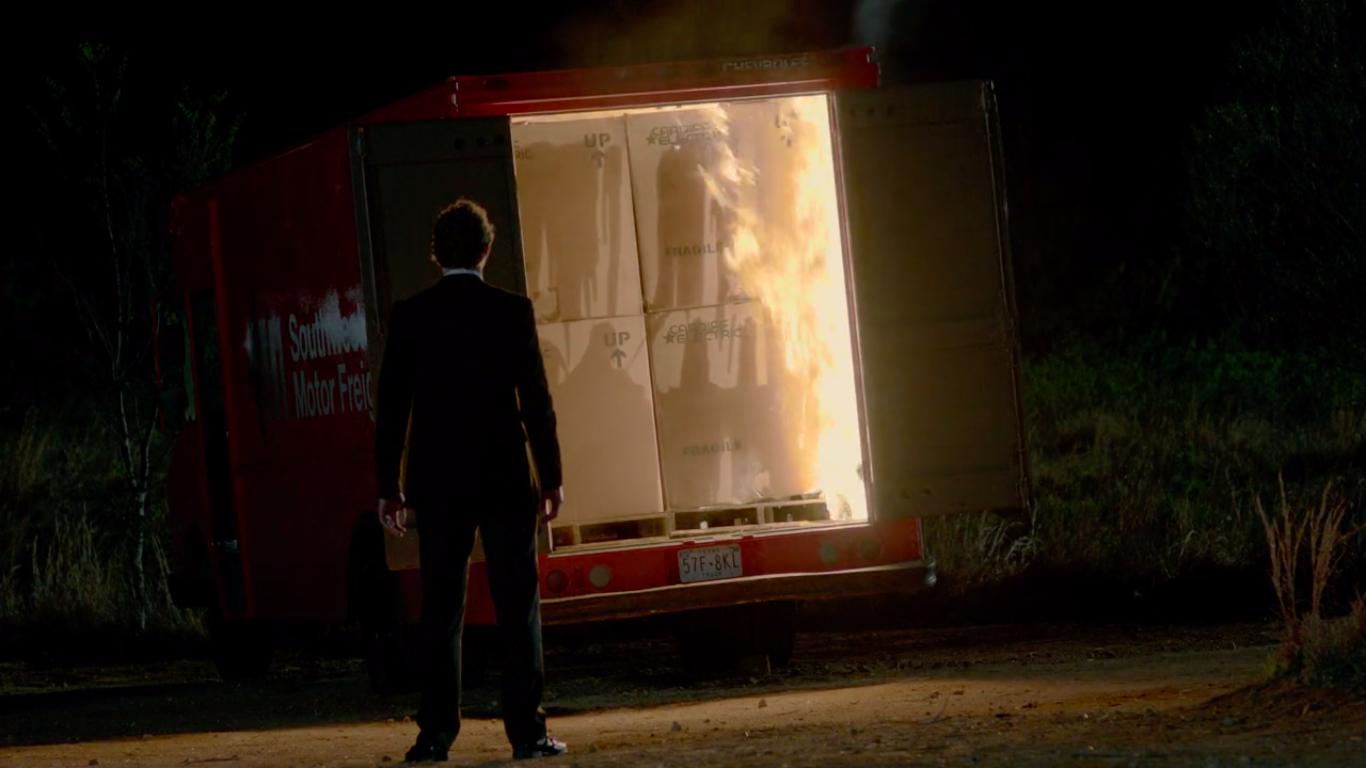
Joe had chosen success over being great and had lost Cameron. Then he chose destruction over success and walked away from his partnership with Gordon. It was just one truck; the Giant would sell without him. He had other plans.
He headed into the hill country, leaving his truck at a gas station. From there he would walk, looking to reach an observatory where a single solitary person could be found. Who was it? We don't know. I assume Joe knew. He would walk to find her. Night fell as he hiked deep into the heart of Texas, the stars above big and bright.
As for Gordon, he alone remained at Cardiff. He had built a computer that was "2x Fast, 1/2 Price". It even had a handle. It shipped on time (minus the one shipment Joe torched). The reviews were fine. The Giant was a reasonable, affordable portable PC. It was good enough.
Gordon had won. What's next?
"Also, this isn't my thing. It's our thing." - Cameron Howe, "1984"
The Igniter, the Builder, and the Creator had come together to build the Cardiff Giant. Defying the odds, they had succeeded. The Cardiff Giant lived. Its cost was the destruction of the connections that held its creators together. Its story has now ended.
But our story continues. Though they were no longer a team, Joe, Gordon, and Cameron would continue. Joe looked to find himself in the Texas Hills. Gordon would continue on at Cardiff, trying to catch lightning in a bottle twice. And Cameron created her own story by founding Mutiny.
But what about Donna? After all, she saved Cameron's code, gave Gordon some of his best ideas, and drove the team to Vegas. The Giant could not have lived without her help. Gordon offered to include her in the next chapter of Cardiff Electric. Instead, she had her own ideas for her story. She chose Mutiny.
She didn't knock on the door, she walked right in. There, she saw Cameron, giving a speech to the Mutiny team. Cameron saw her and smiled. She finished her speech:
Uh and just one last thing. A lot of people are gonna want us to fail. But that's because we're the future. And there's nothing scarier than that.
The team clapped for the speech. Cameron, always so blunt, smiled warmly and shyly. She welcomed Donna to the team and introduced her to her new coworkers.
Throughout our story we have seen so many connections come and go. Donna and Gordon's marriage still survived, despite some rocky seas. Joe and Cameron’s relationship was in shambles. Joe apparently burnt his bridge with Gordon when he torched that delivery truck. Bos*** and Cameron were still close friends when we last left them, but Bos was heading to prison. No telling when or if he'll be back.
Donna and Cameron had a connection teased but never really considered. Until Cameron knocked on Donna's door, and Donna showed up at Cameron's. And now they were working together, to build a community one user at a time.
Welcome to Mutiny.
Footnotes
* Gordon was right in the short term. The Mac struggled to be useful for years and its disappointing sales directly led to Steve Jobs getting fired. In the long term, however, it won big. Not only because of the behemoth Apple became upon Jobs' return, but also because Microsoft stole its concept for Windows** and made it possible to get most of its benefits onto more affordable machines. As long as you didn't mind an occasional Blue Screen of Death.
** The obligatory note that Apple took some of the killer Mac features from Xerox' Palo Alto Research Center (PARC) under less than honorable terms.
*** From hereon I'm gonna use 'Bos' and not 'Boz' because most sources that call him 'Bos' use the s, even if the sound the character uses is a 'z'. I will keep it 'Boz' in the two prior pieces for transparency's sake.
Next Week: We take a break from this series to give y'all my hottest TV take around. In two weeks, we'll see how 1985 is treating Joe, Gordon, Cameron, and Donna I start season two!
If you enjoyed this piece, share it with a friend!
Liked what I had to say and how I just kept talking about it? Do you like movies? There's plenty more where that came from over at Amy at the Matinee on Patreon! Until the computer situation is permanently sorted out, "Sunday at the Matinee" will be paused. Unless, like you and a few dozen of your closest friends want to help! Still, there's still some good stuff over there, most of it free gratis. Join us, why don't you?
Also, to keep up with everything I am writing and creating, head over to Amy Wren Presents, my website!
As always, I thank you all for your support.