Halt and Catch Fire: Burn It to the Ground
What is the cost of success? We have a tendency to worry more about the cost of failure. But success has its own costs, and they can be dear. The costs in money and in time are the most obvious. Less obvious, but just as important, are the costs to our happiness, and our relationships.

"The 214s"
Directed by Daisy von Scherler Mayer
Written by Dahvi Waller, Zack Whedon, Jamie Pachino
"Up Helly Aa"
Directed by Terry McDonough
Written by Jason Cahill, Jamie Pachino
What is the cost of success?
We have a tendency to worry more about the cost of failure. But success has its own costs, and they can be dear.
The costs in money and in time are the most obvious. Less obvious, but just as important, are the costs to our happiness, and our relationships.
The most difficult to account for is the cost of the road not taken. What if you sacrifice future greatness to be successful today? Could you live with forgoing success to make a great failure?
As the Giant reaches completion, Joe (Lee Pace), Cameron (Mackenzie Davis), Gordon (Scoot McNairy), Donna (Kerry Bishé), and John "Boz" Bosworth (Toby Huss) must ask themselves this question. Which costs are they willing to pay, and which are they not?
"You two are perfect for each other, you're both psychotic." - Gordon Clark, "The 214s"
It was a moment of triumph. Cardiff was about to head to Las Vegas to demo the Giant at COMDEX. Then the cops came and escorted Boz away in handcuffs. They also took every computer they could find with them. Including, if they found it, the Giant.
However, Gordon was one step ahead of the cops. As they took all of the computers off the desks of the programmers and other staff members, he walked into the Kill Room* and made a quick choice. He took the Giant apart, and spread its pieces around, looking like it was just random parts scattered around the room. The cops were only looking for complete computers, not pieces and parts. Gordon saved the Giant by dismantling it.
Meanwhile, Cameron and Joe went into an out of the way office to talk. Turned out that Cameron had helped Boz hack into Cardiff's bank account to fund the PC project when its money ran out. For once, Joe wasn't involved in a rash decision that would have serious consequences for everyone at Cardiff. Before Joe and Cameron could continue their discussion, a cop told them to get out. Gordon, Cameron, and Joe would regroup elsewhere.
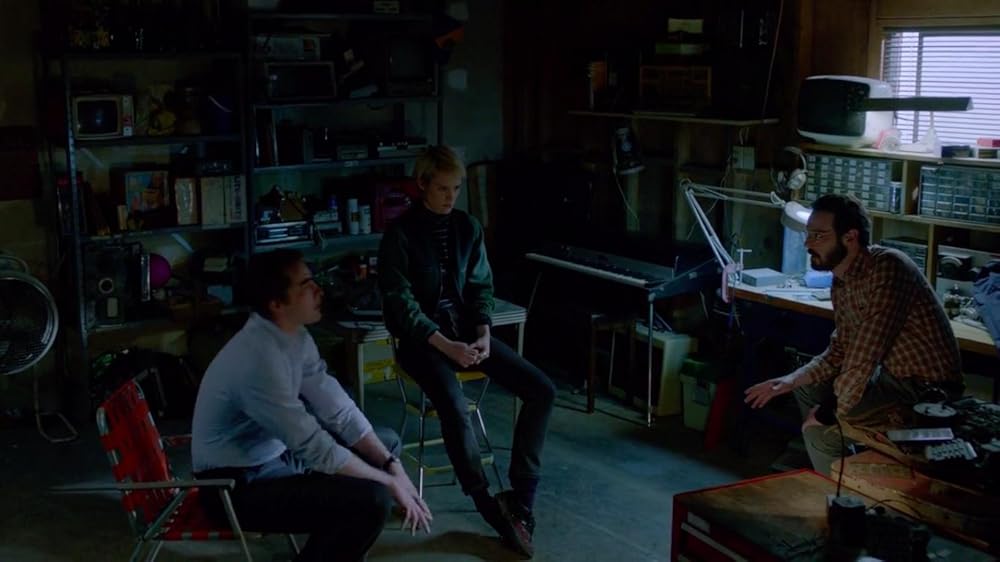
The future they built around Joe's whiteboard faced its reckoning in Gordon's garage. Joe wasn't sure anything was left to do, while Gordon thought it all would blow over. At least until Cameron admitted she helped Boz steal the money. The Builder, the Creator, and the Igniter turned on each other in this moment of crisis.
Gordon was mad at both Cameron and Joe, but Joe tried to claim he was just as mad at Cameron as Gordon was. He would have none of that, telling Joe:
"Every time something terrible happens, you seem to benefit."
Then he told Cameron what Joe did to her code. And finally, he went in for the kill, saying:
"You gave it a name and a handle. You didn't build a damn thing."
Gordon would not for a second consider Joe anything other than what he was.
Cameron, who up to Gordon's revelation seemed as mad at him as Joe, was now focused entirely on Joe. She knew how desperately Joe wanted to be someone who made things. She attacked him there:
"You only destroy things. You never create anything."
Joe was hurt by this. Cameron was one of the few people he ever showed anything close to his true self to. He could only reply one way.
"I created both of you."
Every accusation in the garage was true. Joe hadn't built a thing. He was a destroyer. Joe did benefit, every time, from disaster. And Joe had created Gordon and Cameron. The truth didn't set them free. It just made them angrier.
Cameron punched Joe. Meeting adjourned.
"I guess I am crazy." - Donna Clark, "The 214s"
Just when it looked like all hope was lost for the Cardiff PC gang, Gordon took the initiative. He stole the dismantled Giant, because he had a plan. He took the Giant back to his garage and got to work putting it back together. Donna woke up and realized Gordon wasn't in bed. She went looking for him and found him hard at work.
For us in the audience, this scene makes some sense. We saw Gordon dismantle the Giant; we shared that secret with him. Donna didn't know he had done that; didn't know he was thinking two steps ahead for once. All she saw was the man she married who had failed again to make a successful PC doing God knows what at 2 in the morning.
Her look of concern was obvious to Gordon, who immediately told her that this wasn't the Symphonic. To drive that point home, Gordon threw the computer on the ground, busting it into pieces. It's a moment that could be read as Gordon finally falling apart. Or when Gordon finally put the failure of the Symphonic behind him and committed to seeing the Giant through.
Ever the optimistic sort, I read it as the latter. In my life as both a writer and a programmer, I've had successes and I've had failures. And the only way to give yourself a chance to make something great with your new work is to let go and focus on the work at hand. I've never literally destroyed my past work to do so, but I understand the impulse.
Gordon was aware of how he looked. Pleading with her to join him in this project, he said:
"I know it's crazy. But you're crazy too. Look, be crazy with me."
As much as he was looking to throw the failure of the Symphonic off his back and see to the future of the Giant, he appealed to their shared past with this. He asked Donna to go back before the crushing disappointment of the Symphonic, and remember when they were both young risk takers, doing the crazy thing of getting into computers when almost no-one was. He wanted to do the great thing, and he wanted Donna there with him.
As romantic as this feels, I can see how Donna didn't take it that way. Remember that just a few months earlier she came home to Gordon digging a giant hole in the backyard, because he was "looking for the Giant". A leap of faith wouldn't look much different than a desperate break from reality. Donna was finally waking up to asking what she wanted in life, and she definitely didn't want to start over from square one with a man broken by failure. She called her mom Susan (Annette O'Toole) and said she and the girls would be coming to stay with her for a while.
Gordon went off to convince Cameron and Joe of his wild-ass plan to take the Giant to COMDEX come hell or high water. He found Cameron at a barcade, and plied her with flattery ("we're the talent, not Joe") while also painting her a picture of how awful his keynote was going to be. Cameron was in.
Meanwhile, as Gordon was getting the band back together, Donna surveyed the wreckage of both the Symphonic and her marriage. She played around with the Giant's interactive OS, asking it "FIND MY WAY BACK", a question it couldn't possibly answer any more than she could. She began picking up the pieces of the Symphonic, that for all of the strife it caused, meant a lot to her. Looking for a tool in the worktable's drawer, she found a ring box. She broke down crying, touched by the sight of it.
Still waiting for Joe, Cameron and Gordon ate pizza and, for the first time in the series, really had a conversation. Here, Gordon filled us in on the ring mystery. The computer dorks that they were, they had developed their own polyalphabetic cipher to encrypt their love notes. He planned to propose using the decoder ring, but Donna had pawned it to pay for an Altair computer kit. In response to his protest, she had said:
“You can buy me a ring, once we've sold our first PC."
That story is very interesting. For one, it's pretty sweet, the kind a married couple holds onto even as the marriage becomes more and more turbulent. But it's also a clear sign at how confident Gordon was feeling about the Giant. The ring box was the ring he planned to give Donna when the Giant sold. There was no guarantee he would succeed. But damn if Gordon wasn't going to give it his best shot.
Where was Joe during all of this? He was in New York, confronting his father Joe, Sr. (John Getz) over IBM building its own portable PC. They had a fight over what had set Joe off when he left IBM. Apparently, his father had told him his mother had died when he was a child, when she had actually still been alive and had only recently died.
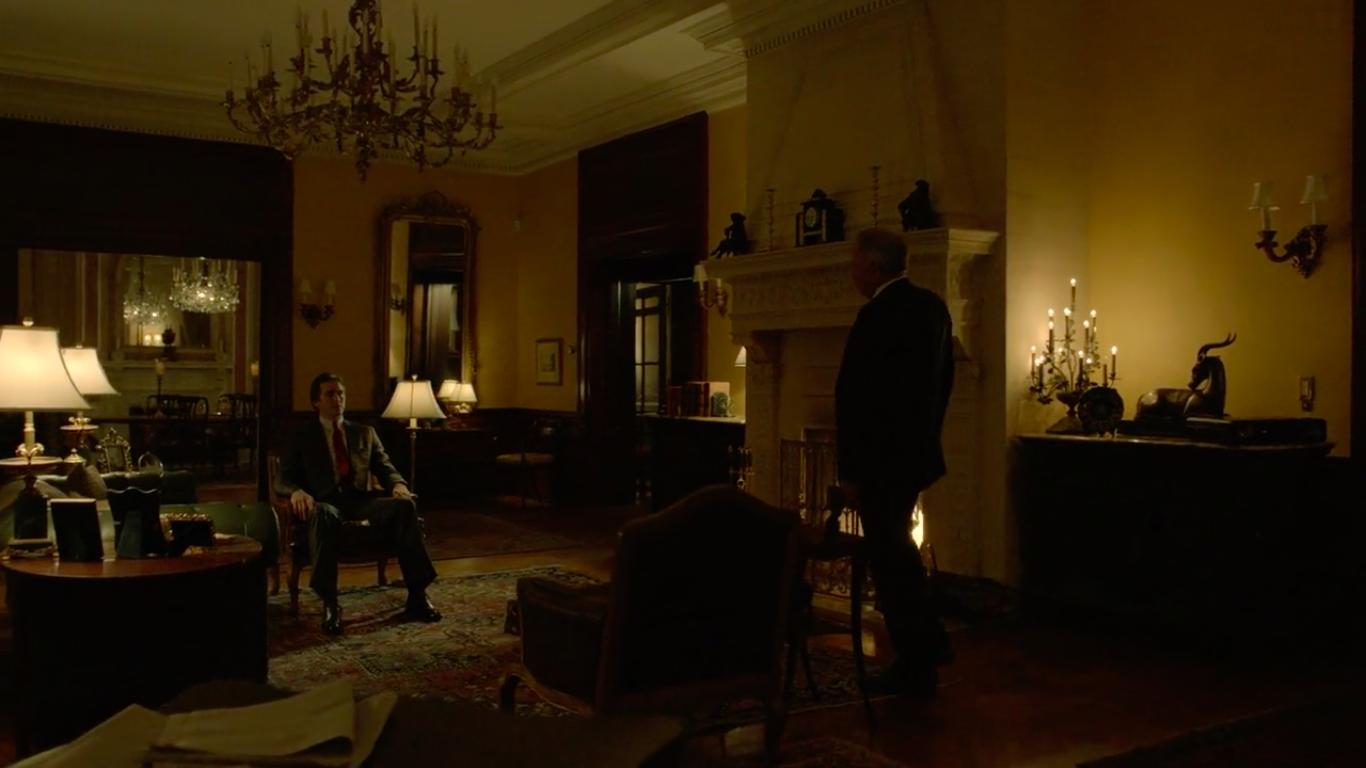
Right here, in this conversation, it became clear that Joe's internal battle between being great and being successful was a replay of the battle between his mother and father. His mother was a dreamer who showed him the stars, but she was also the person who almost killed him. His father was a very successful man who taught him to succeed but asked him to keep his head down. Out of options, Joe relented and took his father's lifeline. He even negotiated himself a sweet gig as the head of the IBM portable project. Joe would be successful.
With this all settled, Joe returned to his apartment the next morning, where Gordon and Cameron had spent the night. Joe and Gordon continue their fight from the garage, and it all feels a little repetitive and overwrought. But when Joe slammed Gordon against the wall, it's clear that Gordon was riling Joe up. Joe would be great. But without his car, because they needed the money for the trip to Vegas.
Gordon had Joe and Cameron taking the leap with him, but what about Donna? When Gordon returned home to get his bags for the trip, he saw Donna was packed and sitting at the dining room table. It appeared like she was about to leave Gordon. But instead, she decided she was going with them. The Giant was going to Vegas.
"Go to COMDEX. Knock 'em dead. Do that for me." - John "Boz" Bosworth, "The 214s"
But not everybody would be going. Boz was staying behind, out on bail courtesy of his friend Barry (Mike Pniewski) but unable to leave Texas. He made sure the Giant was able to be finished. It cost him everything but his life, and he would have no part in whatever success the Giant and its creators would have. The company man did a damn fool thing because he believed in the Giant. He believed in Cameron.
Therefore, he did his homework, reciting back to Cameron in convincing fashion exactly how "he" exploited the bank's system vulnerability. He would take the fall. It was a big sacrifice, one that almost certainly ended any chance at a normal life in Dallas for him. But he was at peace with his choice.
Boz and Cameron hugged and said their goodbyes. The Giant was going to Vegas. He wasn't.
"Then the winners burn it to the ground." - Joe MacMillan, "Up Helly Aa"
Through the night Donna drove. Joe wrote. And Cameron ate a burger. They arrived just behind the sun.
Chaos arrived with them. Cardiff's card was declined. No room. COMDEX was off.
The Protonix boys had a room. Gordon had a plan. He heckled. Joe played the IBM man. They got the room. Shrimp included.
Donna got them a booth. It was small. Cameron solved the problem. Spray paint, chains, and Styrofoam.
The Giant wouldn't run. Joe sold it anyway. Donna brought booth babes. A party ensued.
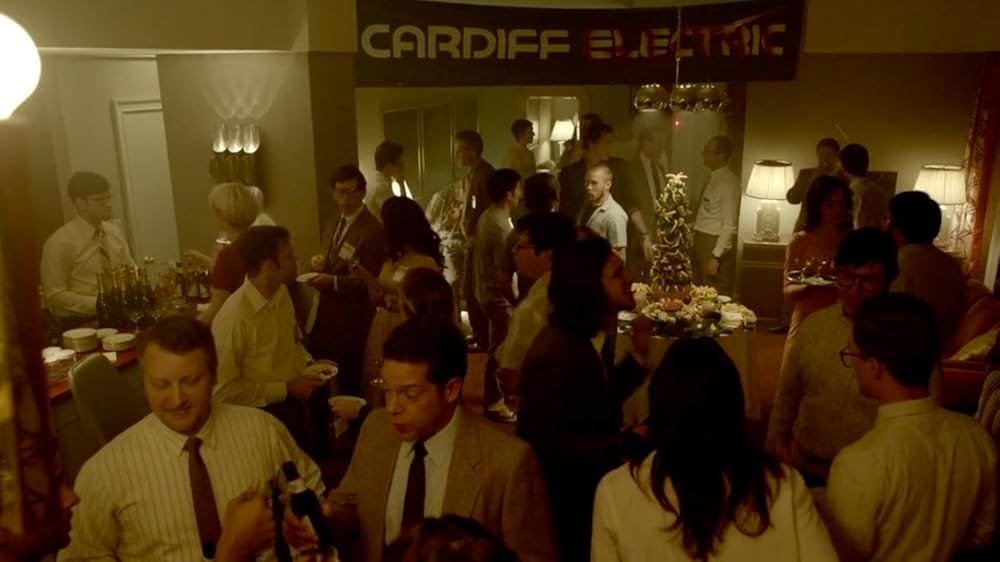
Gordon got the Giant to run. Joe made a sale. Cameron went for pancakes with a coder. Gordon and Donna celebrated in bed.
For twelve hours, the plan worked. They won.
"We're married, Gordon. We already jumped." - Donna Clark, "Up Helly Aa"
As the sun rose on day two of COMDEX, Gordon and Donna relaxed in the afterglow of victory. They were together again, and on the verge of success. Their marriage had almost fallen apart, but after a whirlwind of a road trip and a masterclass in improvised sales work, they were finally talking. Not in the frenzied passion of romance, but in the honest, yet gentle, way a couple who went through a tough time can do once the tough times are finished.
Donna finally told Gordon what she wanted. And it wasn't her dead-end job at Texas Instruments or sending her children off to her mom's. She wanted to do something, to be a part of something that mattered. Not necessarily that she wanted to join Cardiff, but she would have liked to have been asked. Gordon didn't ask her to join Cardiff because he was afraid that she wouldn't jump with him. But they were married. Whether or not she was a part of Cardiff, he had jumped for the both of them.
In the other bedroom in the suite, Cameron returned from her night out and plunked down a piece of concrete from the Hoover Dam, waking Joe up. As Joe listened half-awake, she talked about how simple the Hoover Dam appears, saying "It is what it does." After the pancakes, she and the Xerox boys she was with watched the sunrise at the dam. From her tone it was clear it was a formative experience for her.
She admitted to Joe that when Boz came to her, she should have come to Joe. Joe didn't respond to her, instead suggesting that she should go out to California to get into the great things happening out there. At some point, Cameron going to Silicon Valley was a safe bet. But she wanted to go with Joe.
Later on, they all came together to walk the COMDEX floor. And they were having a good time. Donna teased Gordon about him getting yet another AMD t-shirt. Joe walked along, his coat over his shoulder, his hand in his pocket, as relaxed as he could be. Cameron and Joe talked about the new things they were excited about. Gordon played the know-it-all. And Donna got excited over storage. They were four people who enjoyed each other's company. They were a team.
And then Joe noticed someone's demo was attracting a crowd.
In front of the crowd stood Hunt Whitmarsh (Scott Michael Foster) and Brian Braswell (Will Greenberg), selling their own version of the Giant. As the Giant team looked on in growing horror, Hunt introduced the new computer:
"Victory goes not to the swift, nor to the strong. But to the little guy who strikes first."
They had won. But it didn't matter. The Slingshot got there first.
"It wasn't an affair. But it should've been." - Donna Clark, "Up Helly Aa"
Donna attacked Hunt. In front of Gordon, and the Giant team, and everyone watching the Slingshot's demo. It didn't help, and the team retreated to the suite. Joe and Cameron worked through the implications for the Giant. Donna started thinking through how Hunt could have gotten his hands on the specs. Gordon slammed the door on Joe and Cameron. He had only one question on his mind for Donna:
"Are you sleeping with him?"
Donna replied:
"No. I kissed him, once."
Gordon, trying to stay calm, asked:
"Yeah, you kissed him and not the other way around?"
The truth was coming out now, and Donna regained her footing. She replied:
"Yeah, Gordon. I kissed him. And for two and a half seconds, I felt better than I've felt in two years."
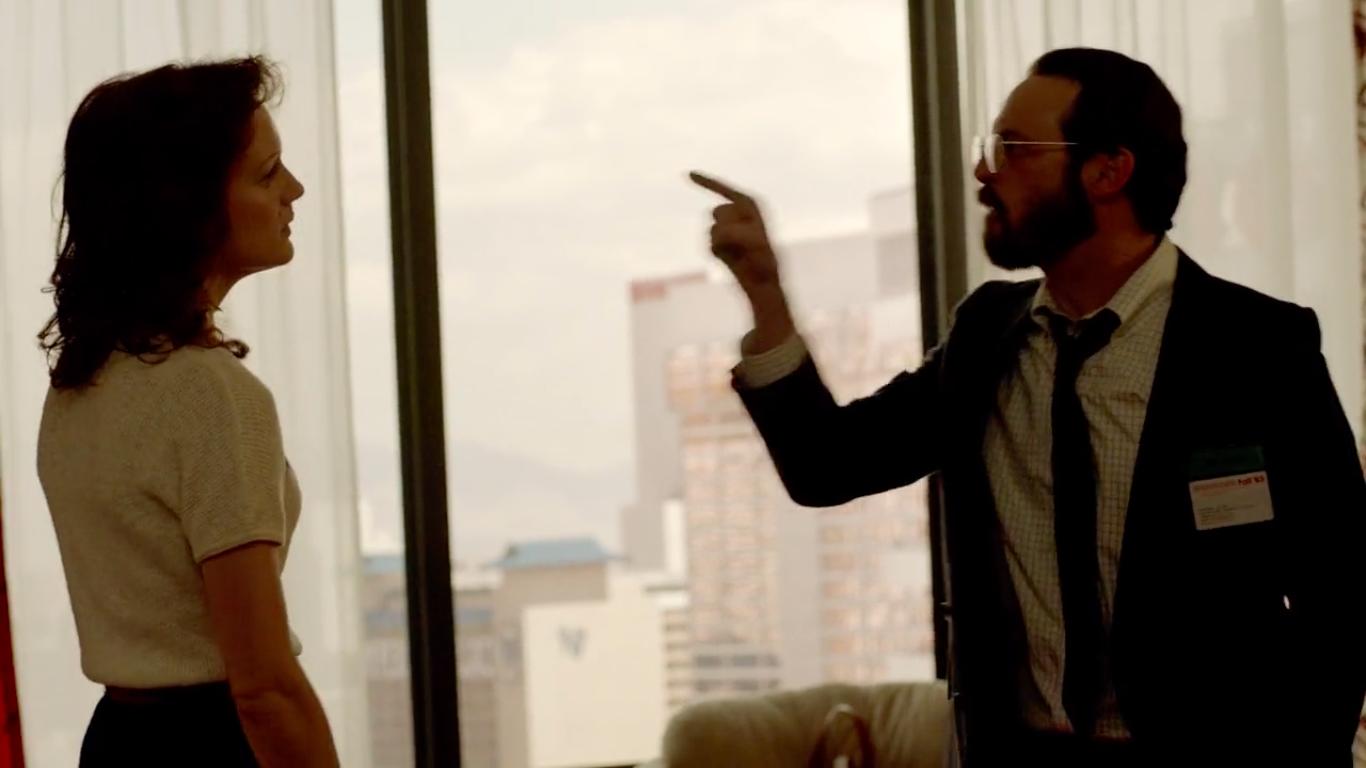
Donna wasn't interested in forgiveness. She was making a case. The kiss wasn't a mistake; it was evidence that something had been missing in her life. Gordon tried to pathologize her:
"Christ, Donna, you're a child."
But Donna refused his framing:
"There was nothing childish about it. I wanted him, and there were reasons."
She continued her argument and didn't let Gordon interrupt her:
"There were you-and-me reasons because you can't pretend we were on some moonlit carriage ride."
Gordon responded:
"He used you! He used you!"
Like his fight with Cameron and Joe in the garage, Gordon used the truth as a weapon. Hunt did use Donna as he worked to copy the Giant. But Gordon using that invalidated her feelings, her truth about how, momentarily as it was, kissing Hunt made her feel better than she had in over two years. Donna being used by Hunt and her being felt seen weren't mutually exclusive. But Gordon didn't want to hear that, so he focused on the former to better ignore the latter.
Donna saw this for what it was, and replied:
"At least he encouraged me and rewarded me."
That attempt at refocusing the argument denied, Donna brought her argument around to what she really wanted to say:
"And you never even picked me up out of a hole in the ground. I lifted you so many times, I carried you and the kids. And I was tired and miserable, and you didn't give a shit."
Donna had literally picked Gordon up out of a hole, while being in a hole of her own at the same time. And Gordon never even thought to look. This fight started about Hunt and Donna, but it was firmly about much deeper problems that Gordon and Donna had with their marriage. Now Donna went for the kill:
"It wasn't an affair. But it should’ve been."
This could have been Donna's final note, as she left the room, and ended their marriage. It wasn't a declaration of the end. It was a notice of how it could have ended but didn't.
From here, their fight continued. Gordon suggested that Donna should go see if Hunt would take her in. And Donna replied:
"I would go, but it's all ruined for me now, because that's what you want. You want to be right more than you want me."
This fight wasn't about a mistake, and it wasn't even about Gordon's neglect. It was about structural problems with their marriage. Gordon didn't just want to be married. He wanted to win it. And Donna didn't try to have an affair with Hunt just because he was attractive. She wanted it because Hunt wasn't trying to be right about her. It wasn't about Hunt. It was about her.
Gordon replied by admitting his faults:
"You know what, Donna, maybe your parents were right about me. I'm just a small-minded, petty, resentful little tyrant. You know, part-time alcoholic, full-time failure as a father."
It was an admission by Gordon that he hadn't been the best husband or father. In almost every way he had been a failure, except for one. He continued:
"But I knew what I had with you, Donna. And I never stopped trying to live up to that. To you, Donna. To you, I never, ever gave up."
That was Gordon's closing statement, and it mirrored Donna's. Donna confessed she'd almost left because Gordon hadn't seen her. Gordon confessed he had failed as a husband and father but never gave up on trying to live up to Donna. Two confessions doing the same work in opposite directions. Both spouses revealed what the other one missed.
These two closing statements by Donna and Gordon don't resolve anything. There's no bitter separation, and certainly no tearful reconciliation. The argument was over. Gordon stomped into the bedroom. Donna stomped out of the suite. Joe walked in.
"They changed their mind."
"It's empty." - Cameron Howe, "Up Helly Aa"
Joe did not parse words. The Slingshot was a hit with the retailers. It was faster and cheaper than the Giant. That meant the Giant was dead.
Joe left the suite to threaten Hunt. Gordon stayed and opened a beer. He had an idea.
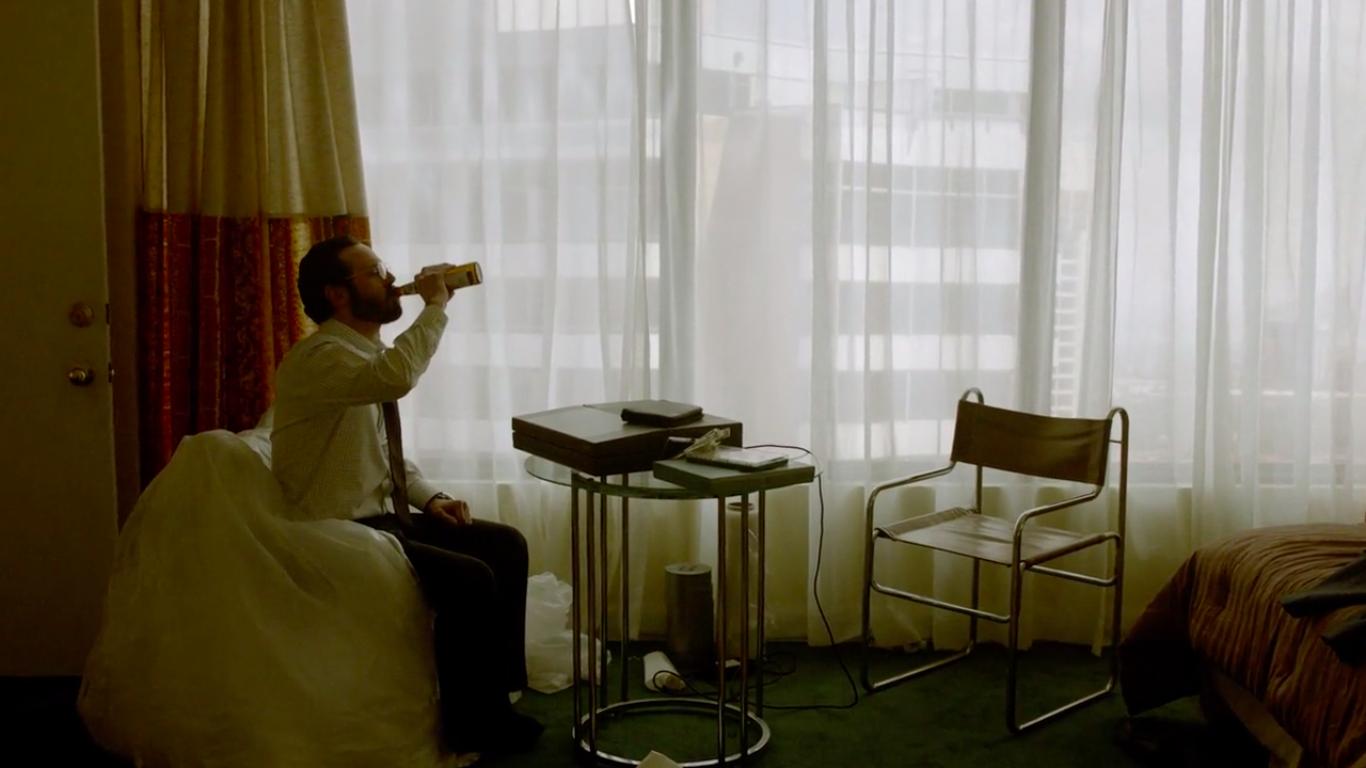
A daughterboard was specifically added by the Giant team to account for the additional memory necessary to run Cameron's OS. It was the thing that made the Giant more than just another IBM clone. It was the computer's soul. It made the Giant great.
But it also ate memory and performance. It was the sole reason the Slingshot was faster and cheaper than the Giant. Gordon was a builder, which was another way of saying he was a problem solver. And this was a problem with a clear solution. He got to work.
Joe, his attempt to threaten Hunt unsuccessful, met Cameron at the elevator. They held hands going up to the suite, neither of them certain of what the future held. They walked into the suite to find Gordon pacing and drinking a beer. The Giant sat on a chair in the middle of the room.
He had stripped the daughterboard and all of the extra memory. In his words:
"We had a problem, now we have a product."
Cameron's OS, the soul of the Giant, was gone.
Cameron pleaded with Joe to tell Gordon he was wrong. That what he did was wrong.
Joe hesitated for a moment. And then he chose Gordon. He replied to Cameron's pleas:
"It's what's right for the machine."
This scene was shot like a murder. Because something was murdered here.
Cameron's OS, sure. But also, the idea that these three, the Builder, Creator, and Igniter, were building a creative partnership. They didn't represent a shared vision, roles in a team. They were three competing visions of the future. Gordon wanted to build a great machine. Joe wanted the machine to be a great and successful product. Cameron wanted to make people fall in love with the machine. Something had to give. Cameron's vision was killed because Joe wouldn't stand with her. No one would fall in love with the Giant.
Cameron, disgusted with what just happened, stormed out of the room. Joe, trying to keep both the success and Cameron, went after her. He tried to rationalize what happened and said:
"It's still our machine."
Cameron, having none of that, replied:
"It's empty."
As Cameron got into the elevator, never to return, Joe tried telling the truth:
"We need to demo by the end of business or we're dead. I need you there."
Cameron was aware how self-serving that sounded. She yelled:
"Bullshit!"
Joe realized that didn't work, so he tried one more time by making it about what he wanted. He asked Cameron:
"Okay, how about... I want you there? I want you with me."
Joe meant what he said. Joe was selling. Cameron wasn't unresponsive to this plea, but she gave Joe her terms:
"Then put it back in."
Joe couldn't do that. He could only look at her silently. Cameron's heart broke. The elevator door closed. Joe was left alone with his reflection.
"My Wife, Donna Clark" - Gordon Clark, "Up Helly Aa"
Cameron was gone, but the work remained. Joe gave the demo presentation which said plainly that the Giant was a tool, and not a friend. As he finished, he put his notes away and noticed the ketchup from Cameron's burger from the road trip. A relic of a different time.
After someone in the crowd asked Gordon about how they fit the chips into the Giant, Gordon credited Donna. It may have been too late for it to mean much. But it still meant something.
The Giant was public, but it cost. It cost money, and people. But it was real and it worked. As Gordon said,
"It's in the damn metal."
Dennis Cummings (David de Vries), the representative of a major computer retailer, was excited. And Joe took advantage. He made the sale. The Giant would be a success.
But the celebration in the suite upstairs was muted. No one said much. The empty seat and the daughterboard on the table in front of them said everything. Donna poured a cup of champagne. It was warm. Joe volunteered to get the ice.
"It Speaks." - Joe MacMillan, "Up Helly Aa"
Joe went to get the ice, and noticed a door was open. It was room 1492***. He heard a crowd of people whispering in astonishment. He walked in to check out what was going on.
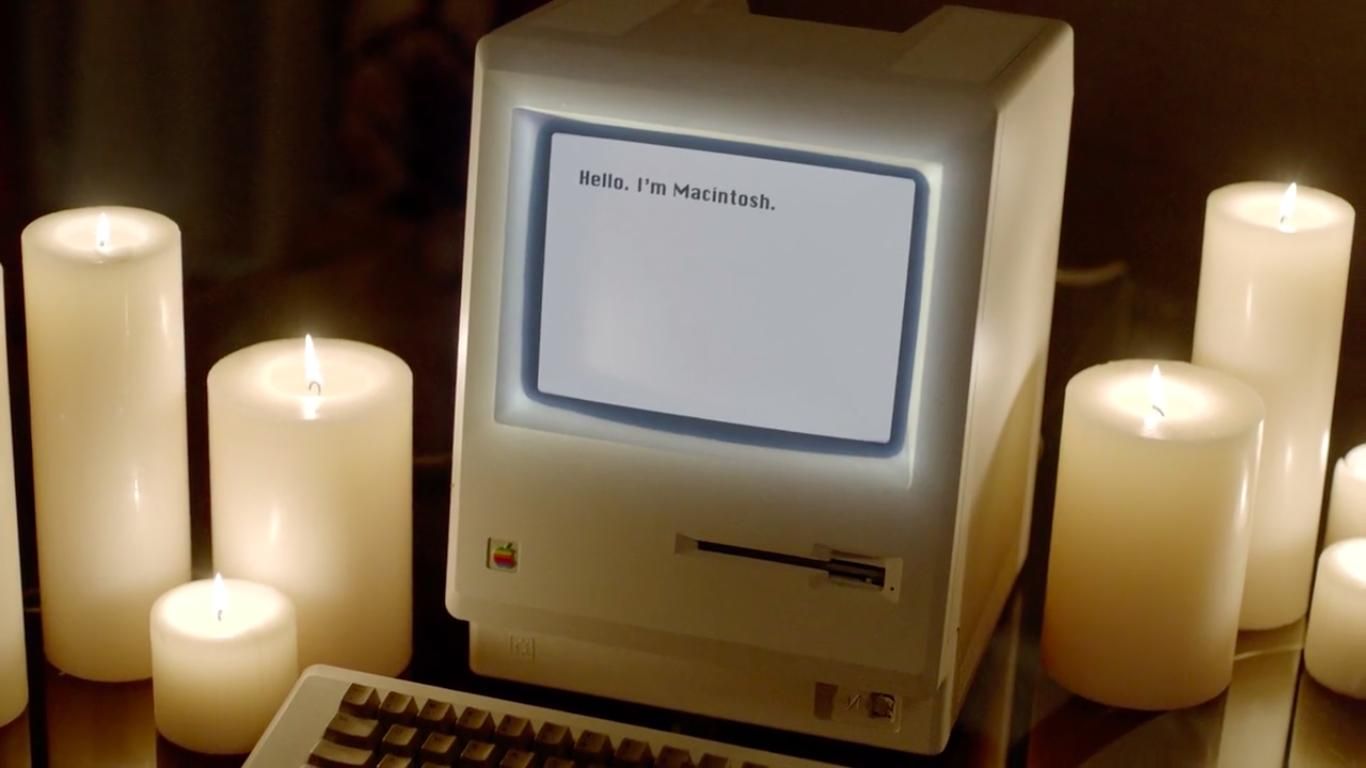
Once inside the room, Joe saw what everyone was looking at. On a desk in the room sat a computer surrounded by lit candles. But this wasn't just any computer. Instead of a boring beige box, its case was a cheerful, sunny white. Its design was pure whimsy, with a rounded screen that almost looked like cartoon eyes. Below the screen sat a disk drive, built specifically to look like a mouth. Next to the keyboard was some sort of periphery roughly the size of a mouse.
This computer did not look like a tool. It looked like a friend. This was what Cameron was trying to make the Giant be. It was her vision. And so much more.
The attendant put a disk in. He pressed a button. The screen lit up white, not the familiar green-on-black of every other computer in the convention center. A loading graphic appeared. Then text, in a font carefully chosen by a designer. And then it spoke.
Hello. I'm Macintosh.
Joe stood in the candlelight and listened to the future.
Footnotes
* This was the cheerful name Gordon and the hardware guys gave to the room where they built out the Giant.
** Windows is cool yet buggy! HP has a touch screen (totally a fad)! High-density floppy disks! It's 1983, everyone!
*** 1492 is the year of Columbus' first voyage to the Caribbean. Sometimes this show isn't subtle.
If you enjoyed this piece, share it with a friend!
Liked what I had to say and how I just kept talking about it? Do you like movies? There's plenty more where that came from over at Amy at the Matinee on Patreon! Every week, I release my feature pieces about a movie, Sunday at the Matinee. I just watched and talked about Tim Burton's hilarious debut feature film, 1985's Pee-Wee's Big Adventure. This Sunday, I'll be writing about Michael Verhoeven's excellent and biting movie The Nasty Girl (Das schreckliche Mädchen) from 1990. Try and make it, why don't you?
Also, to keep up with everything I am writing and creating, head over to Amy Wren Presents, my website!
As always, I thank you all for your support.